Clock Tower
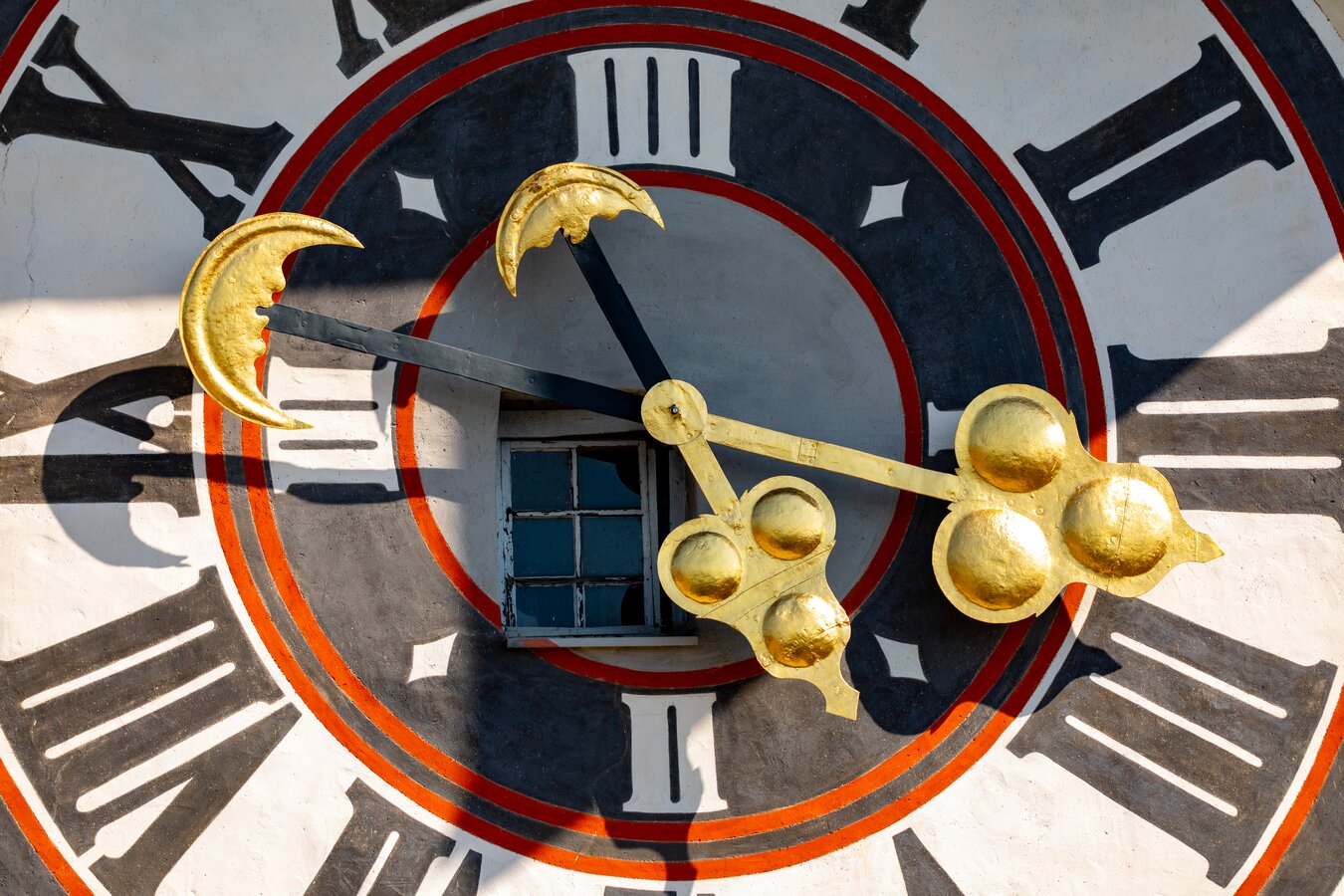
But something isn’t quite right here. What is odd about the face of the clock tower of Graz? A faulty city emblem? No way! Anyone taking a longer look will spot it readily; here time has a different priority. Hours count for more than minutes, and justifiably so, because the area beneath the clock tower is magical and, if you turn round and let your gaze wander over the gardens and city, you will also know why.
- The interior is only accessible as part of a guided tour.

Good to know
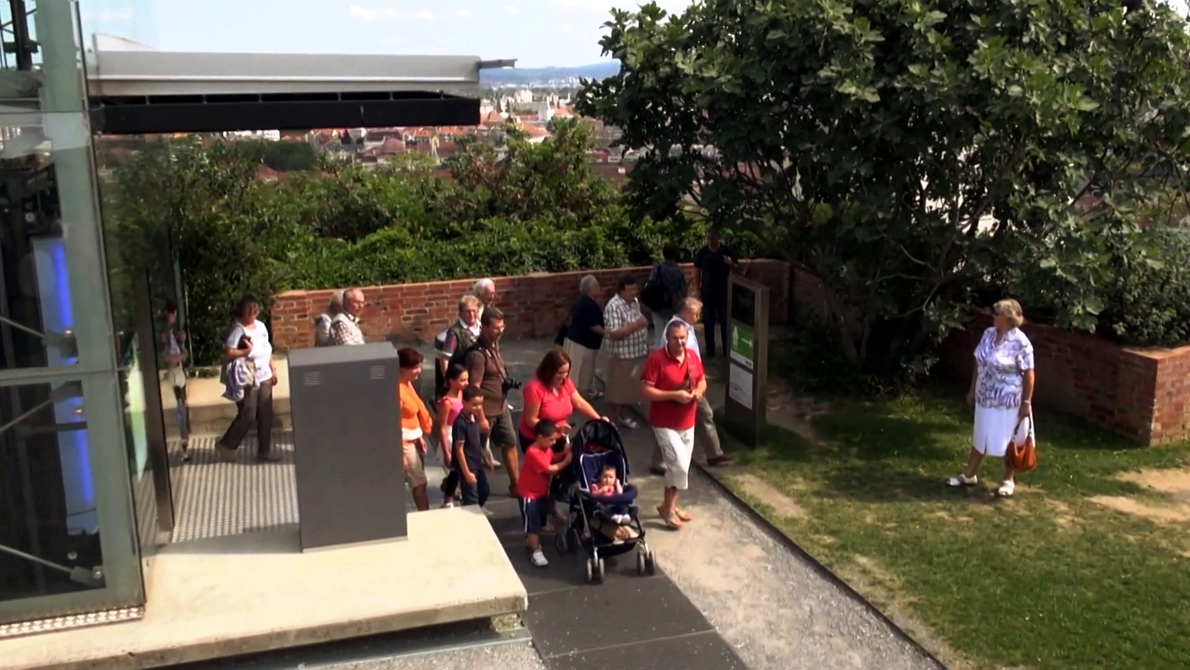
There are four ways to reach the Schlossberg and thus the Clock Tower - the landmark of Graz:
- On foot via the 260 steps of the Felsensteig from Schlossbergplatz
- Or via paths from Karmeliterplatz or Wickenburggasse
- By the Schlossbergbahn funicular railway - the lower station is located at Kaiser-Franz-Josef-Kai 38, and the ride takes less than 2 minutes
- With the Schlossberg lift, you can reach the top in about 30 seconds—the entrance is located directly at Schlossbergplatz
For a visit to the Clock Tower in Graz, you should allow around 15 minutes. This gives you enough time to admire Graz’s famous landmark from the outside, learn about the special features of its historic clockwork and enjoy the views over the city. Allow some time for photos as well. If you would also like to explore the Schlossberg, you should allow at least 2 hours in total.
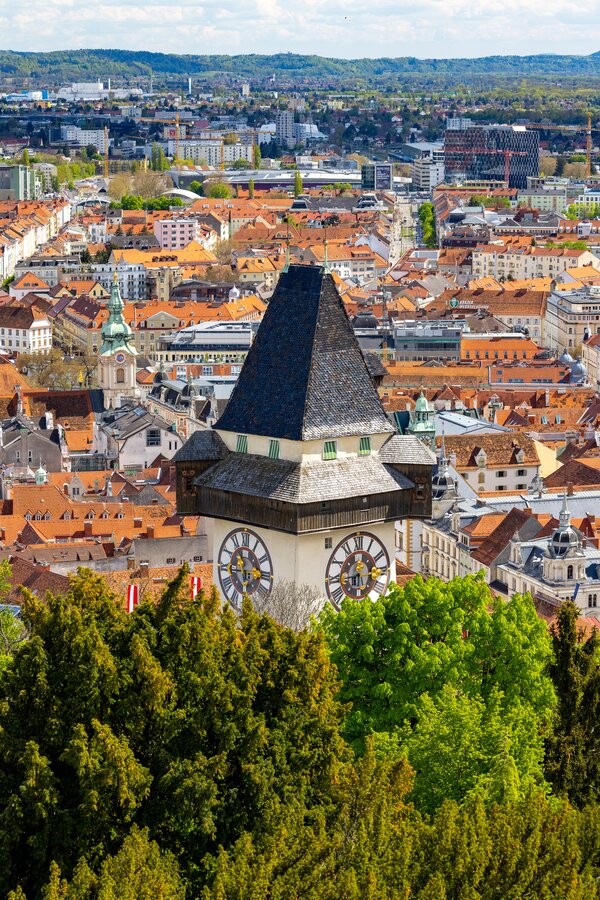
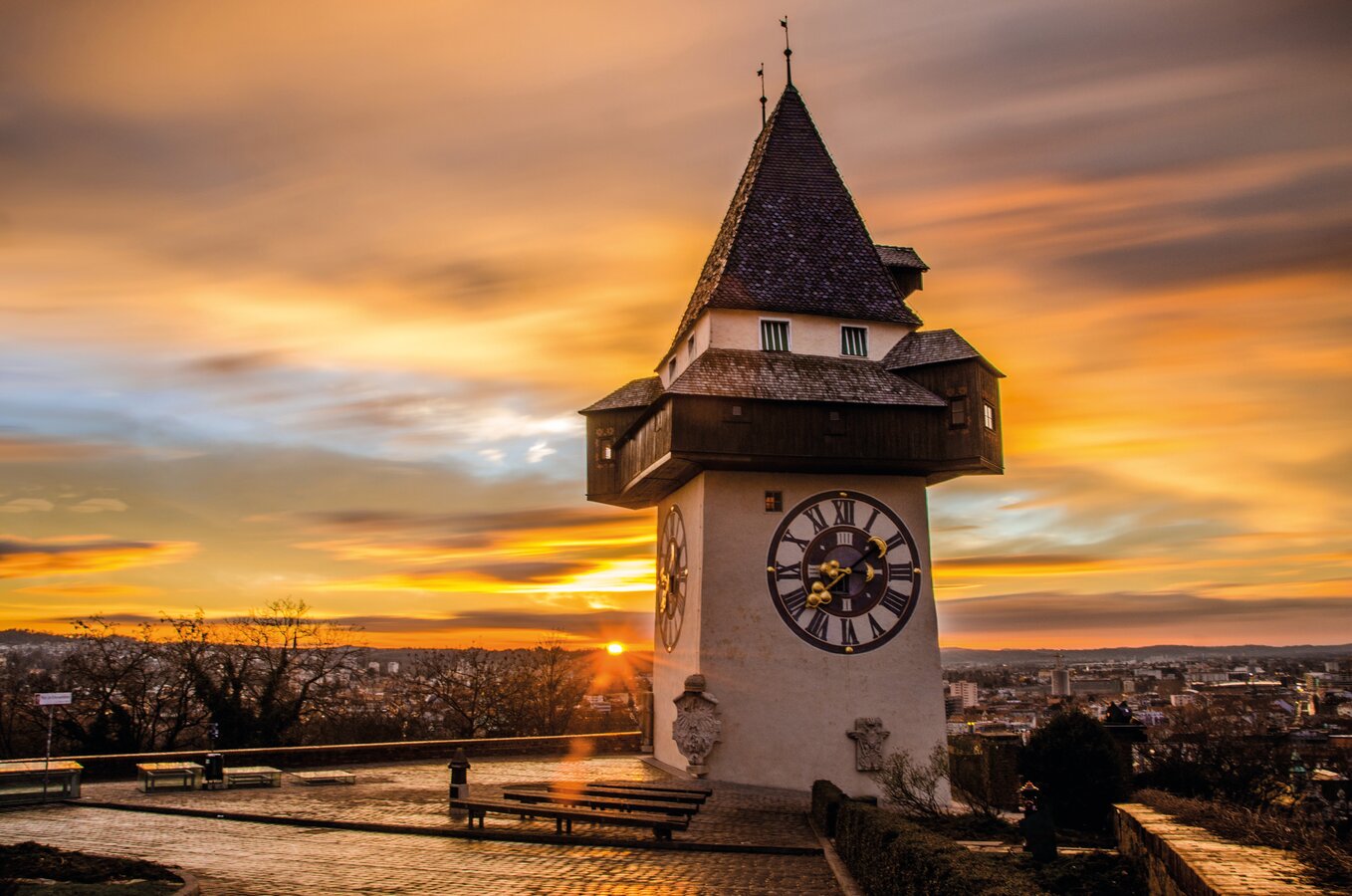
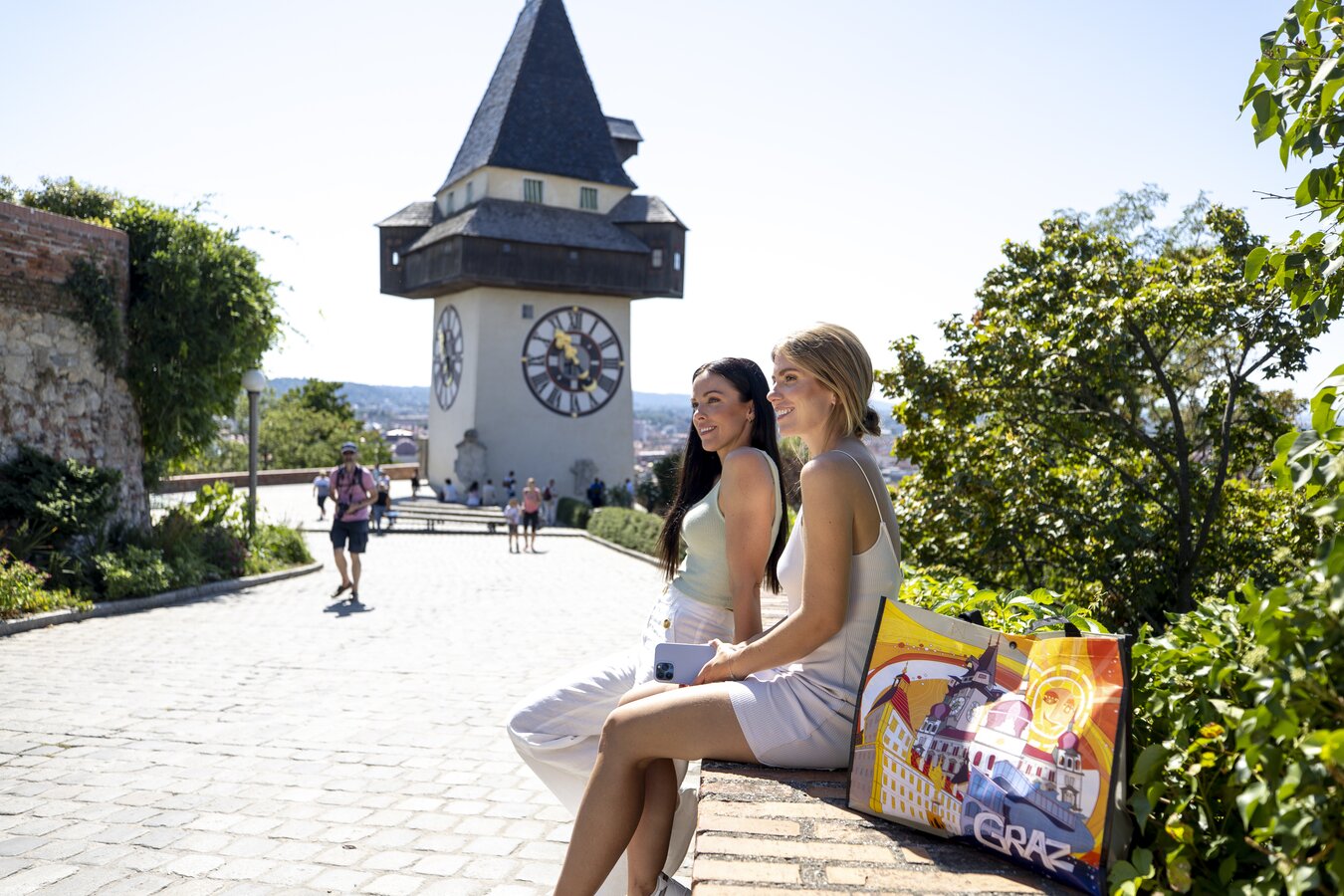
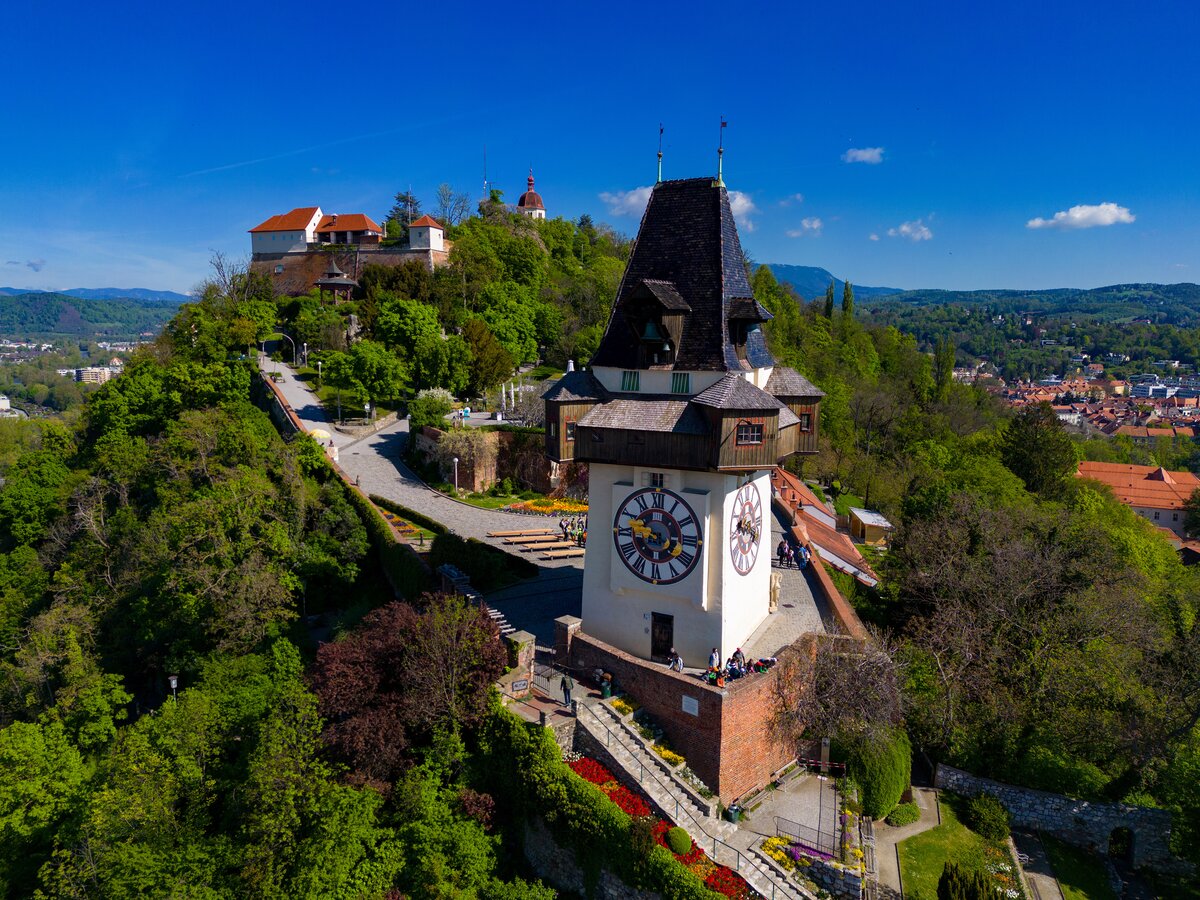
The Graz Clock Tower is a 29-meter-high tower. It stands on the Schlossberg and, with its clock faces measuring over five meters in diameter and its gilded hands, it is the landmark of Graz.
Yes, the exterior of the Graz Clock Tower and access to the Schlossberg are free of charge at all times. Visitors can admire the city’s landmark and enjoy panoramic views of the UNESCO World Heritage city of Graz without paying an entrance fee.
Those who would like to explore the interior of the 29-metre-high Clock Tower and see its more than 300-year-old clockwork up close can do so as part of an official Schlossberg guided tour. A participation fee applies for the tour. In addition, the clock tower is open during the Styrian summer holidays from Thursday to Sunday between 12 pm and 6 pm. The admission fee is € 2.00.
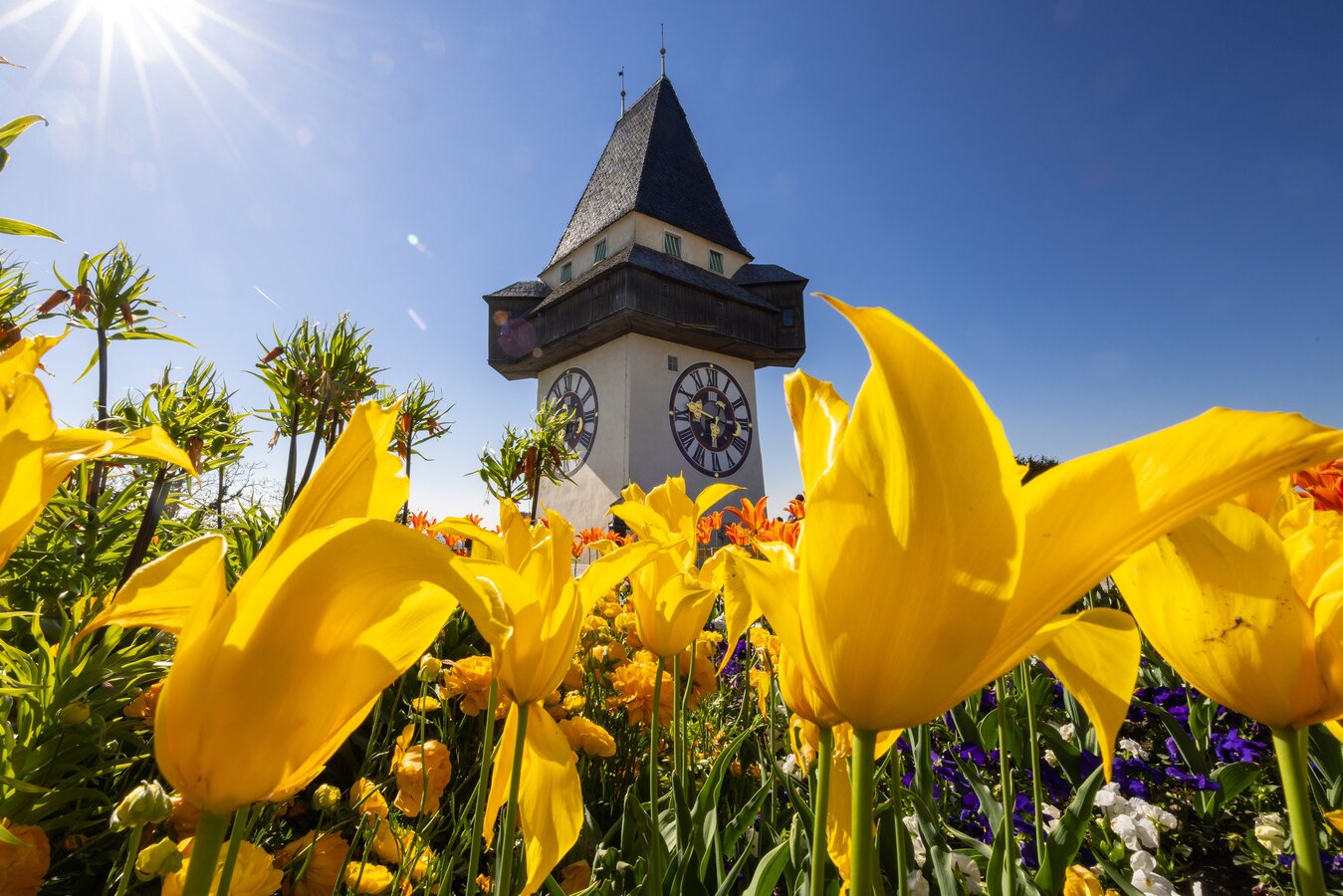
Originally, there were only large hands for the hours, and the minute hands were added later. This led to the hands being swapped. Therefore, the small hand of the clock shows the minutes, and the large hand shows the hours.
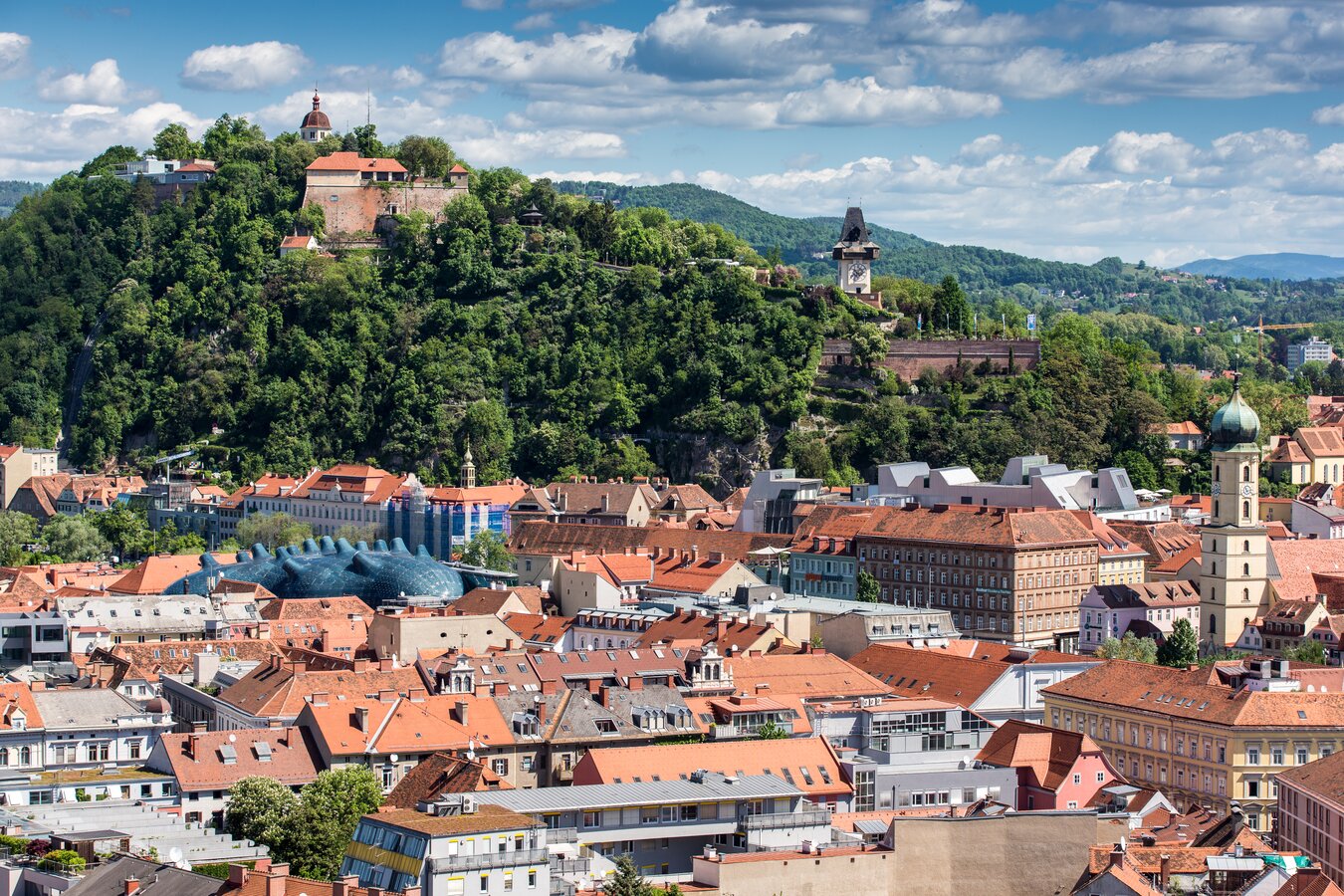
- The Skywalk on the rooftop terrace of Kastner & Öhler offers a breathtaking view of the red rooftops as well as the Graz Clock Tower.
- You can also enjoy a wonderful view of the Schlossberg from the Kunsthaus Graz. From the east-facing “Nozzle,” you get a direct view of the Graz Clock Tower - a great photo opportunity!
The “Clock Tower Shadow Object” – a work of art that lingers: In 2003, when European Capital of Culture 2003 Graz took place, the artist Markus Wilfling created a fascinating art project called the “Clock Tower Shadow Object.” He produced a duplicated silhouette of Graz’s landmark - a deep black, object-like shadow that, in contrast to the blue sky, paradoxically appeared real.
Since then, this materialized shadow has firmly embedded itself in the city’s memory and continues to influence how people perceive the Clock Tower today. An unintended but widely discussed interpretation as a “shadow of the past” also emerged - especially after the memorial did not remain in Graz but was eventually moved to the Shopping City Seiersberg. A work of art that raises questions and leaves a lasting impression.
Details
The fortified medieval tower got its present shape around 1560. And its characteristic wooden gallery as a fire station. Three bells are ringing from the Clock Tower. Three coats of arms decorate the walls.
A tower on this spot of the hill was first mentioned in the 13th century. When the fortress was reconstructed in the middle of the 16th century, the tower was given its present shape. The hands on the huge clockfaces often confuse people. Is the clock out of order? No. The fact that originally there were only long hands for the hours which could be seen from the distance, and that those for the minutes were added only later caused the "swapping" of the hands. The clockworks, made by Michael Sylvester Funck in 1712, are still working but have been driven electronically since the middle of the 20th century.
When there was fire in the city the fire bell informed the fire brigade about it.
The fire bell (1645) is one of three bells still hanging on the outside of the Clock Tower. The oldest bell of Graz (1385) strikes the hours. The "Armesünderglocke" or "poor wretches bell" (around 1450) was ringing during executions. In later years it reminded revellers of the curfew, which earned it the title "Lumpenglocke" (rogues bell). At three corners of the tower there are coats of arms, formerly decorating gates and walls of the Schlossberg fortress: the Styrian Panther with the crown of the Duchy of Styria on his head (around 1570), the single eagle as the coat of arms of the later Emperor Ferdinand I (1552), and the double eagle with the initial letters of Maria Theresa (2nd half of 18th century).
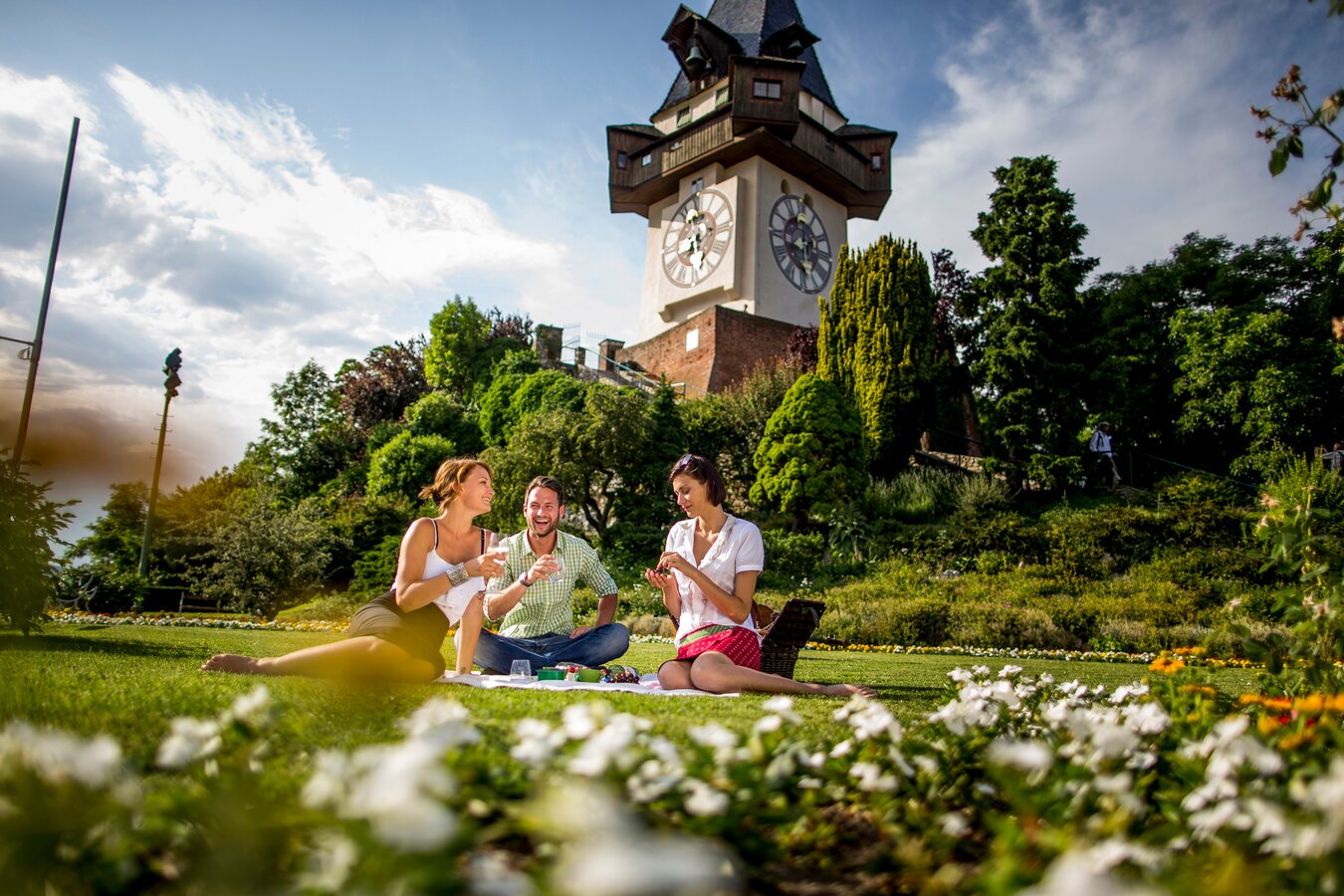
In times of war the massive "Bürgerbastei" (burghers bastion) bearing the Clock Tower had to be defended by the residents of Graz, hence its name. Today it is a splendour of flowers and quite southern plants. And there are benches. To relax and to enjoy the grand view of the city and beyond.
By the way: Near the Clock Tower, some steps down the street a dog of stone is keeping watch. According to a legend, it was a dog's barking which in 1481 saved the emperor's daughter Kunigunde from being kidnapped by the Hungarian King Matthias Corvinus, whose marriage proposal had been rejected.
Tip:
Schlossberg hill walking tour | May to October, every Saturday at 11 am (Language: German & English)
“Conquer” Graz’s fortress hill on this guided tour with the Schlossbergbahn. Let yourself be enchanted by stunning views and fascinating historical insights! You’ll climb creaky wooden stairs, admire the giant “Liesl,” and make your way up to the Clock Tower. The tour starts at Schlossbergplatz and ends with a lift ride down the hill. Book now!
Picture gallery
Video