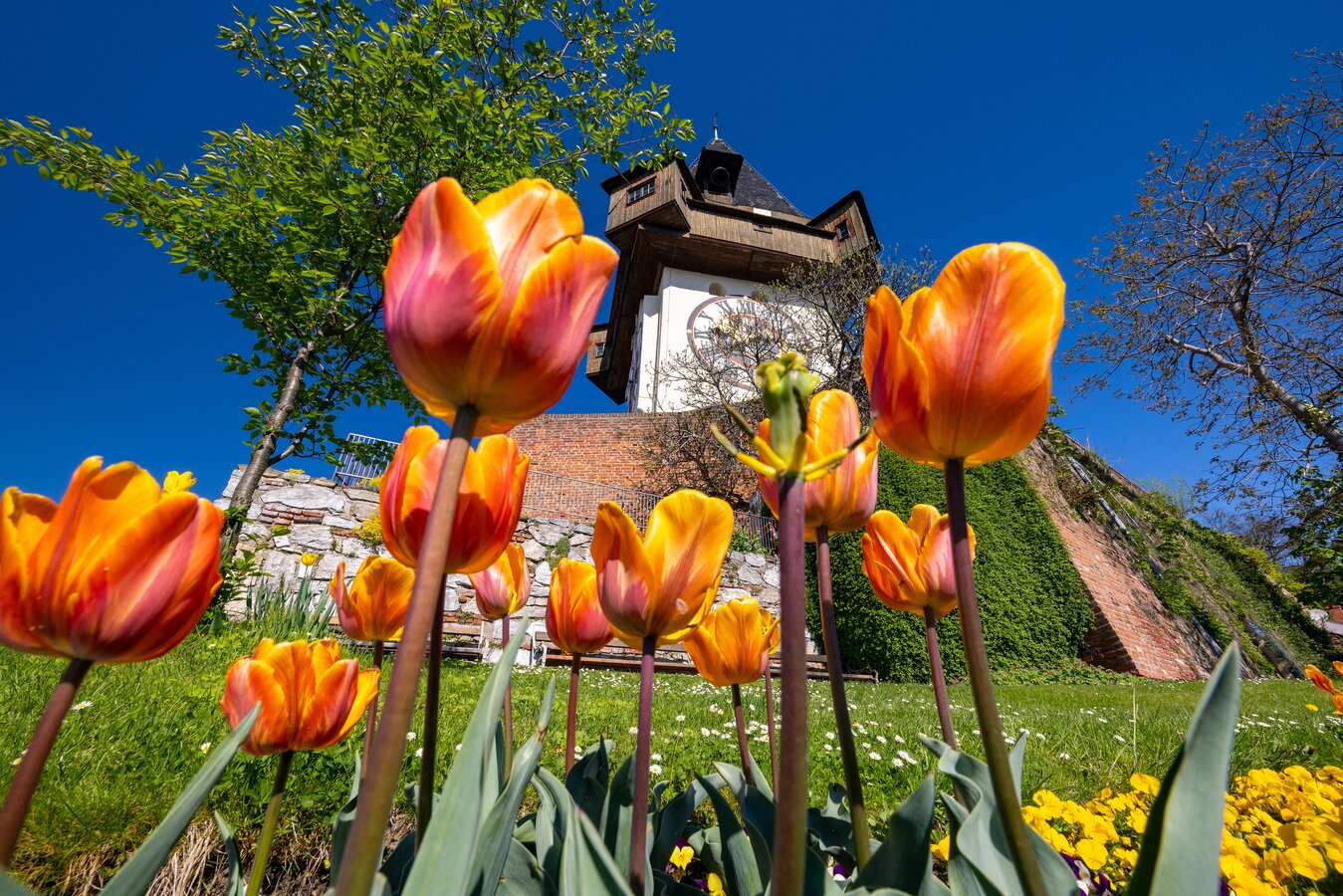
Burghers’ Bastion
The Burghers’ Bastion was built from 1551 on as part of the construction of the fortress according to the plans of Domenico dell’Allio.
When it was completed in 1559, it occupied a special position in the fortress complex, as the burghers of Graz were responsible for its defence. When Napoleonic troops unsuccessfully besieged the Schlossberg in 1809, Habsburg troops were able to hold the poorly repaired bastion. When the fortress was later ordered to be razed, the Burghers’ Bastion was to be blown up. The demolition was cancelled when the first blasting in the eastern area caused falling rocks in the Sporgasse.
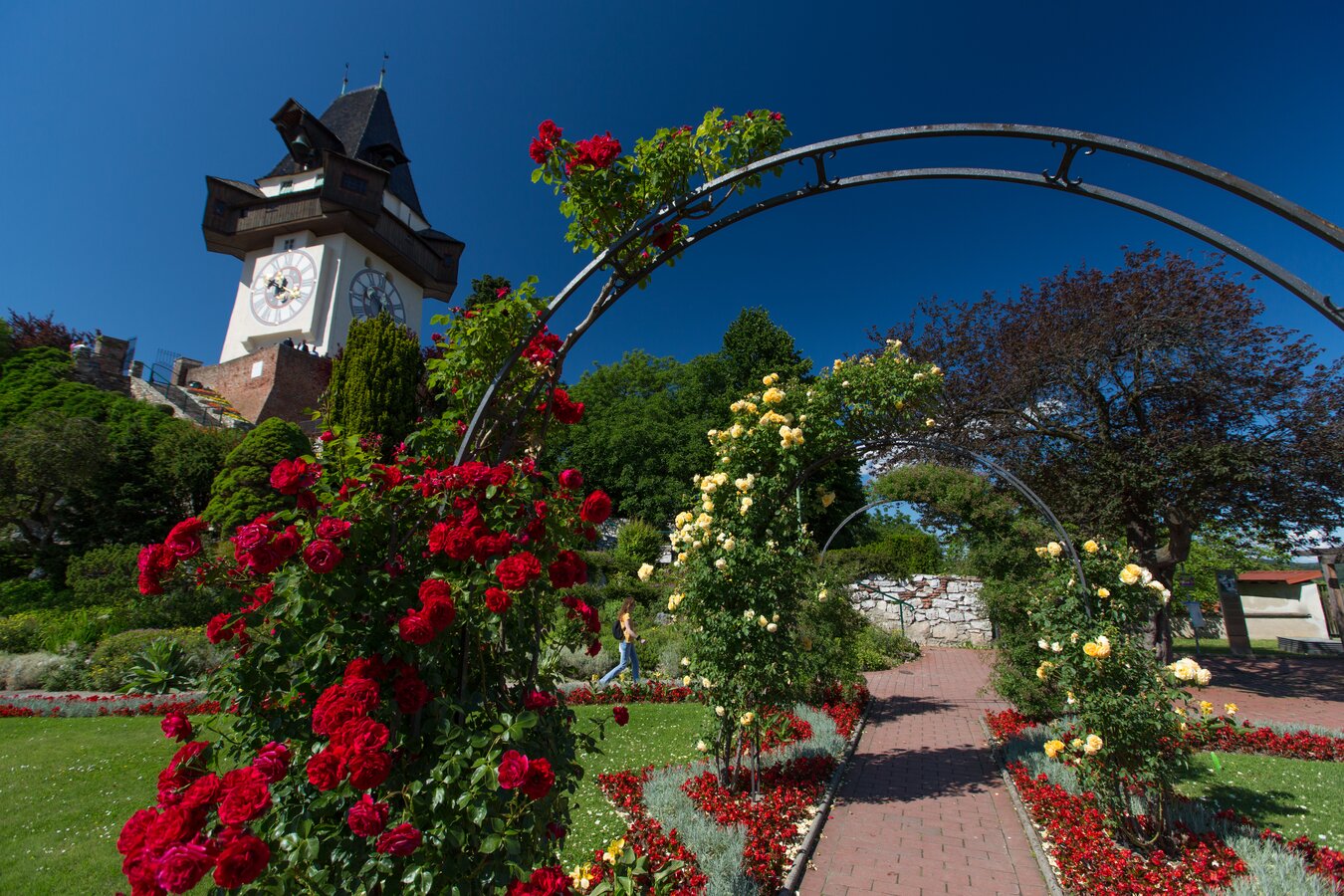
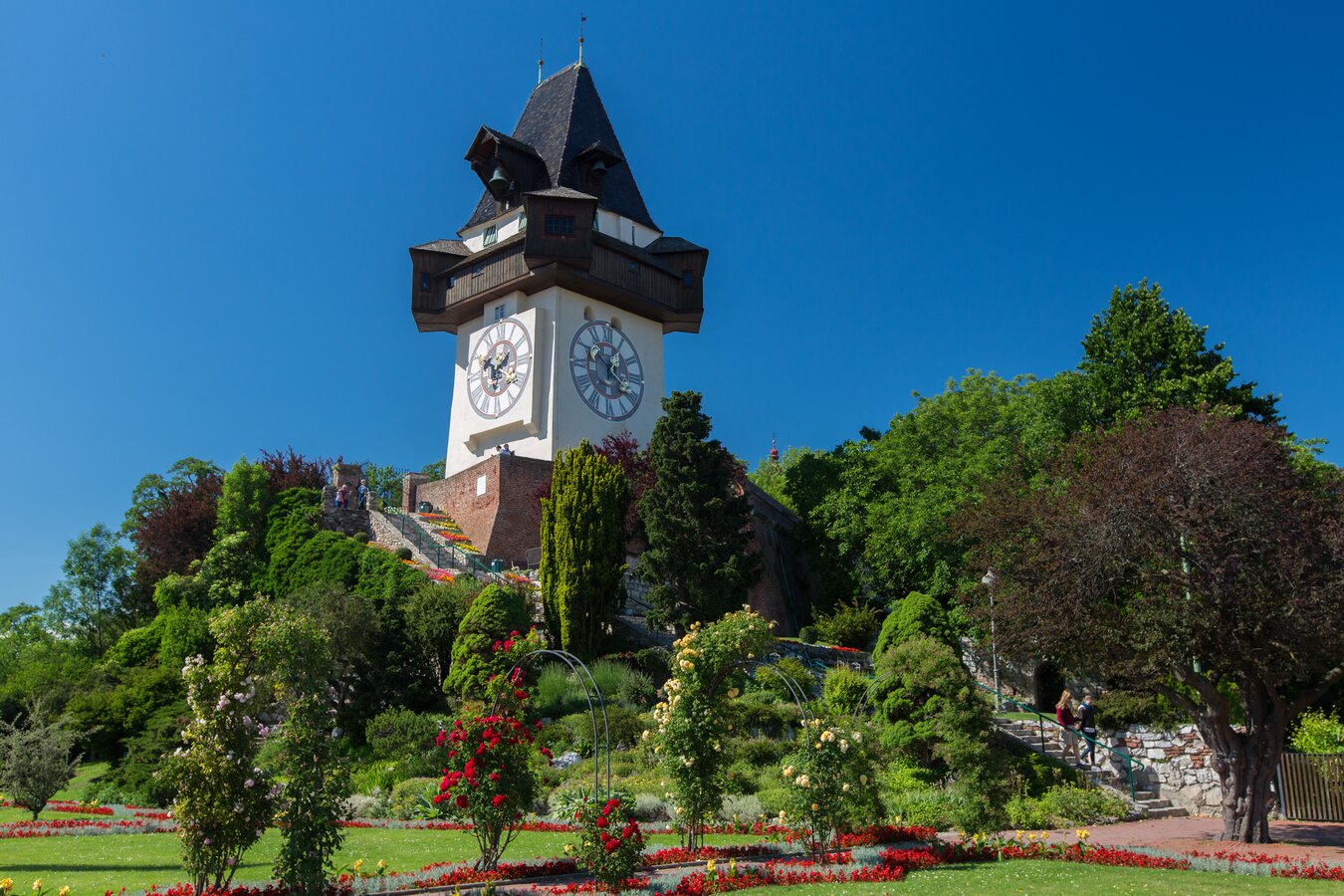
It is still largely intact today and has been open to the public as a rose garden since 1930.

Good to know
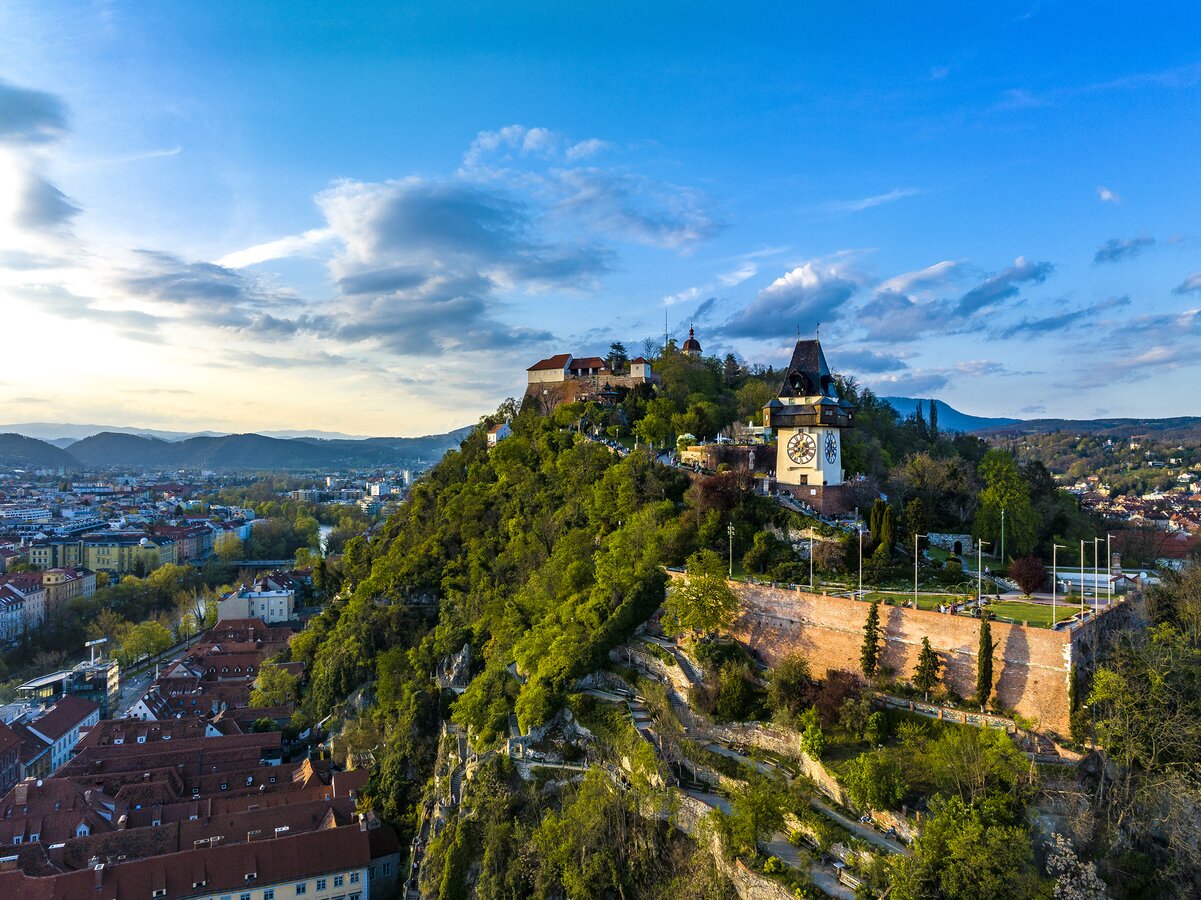
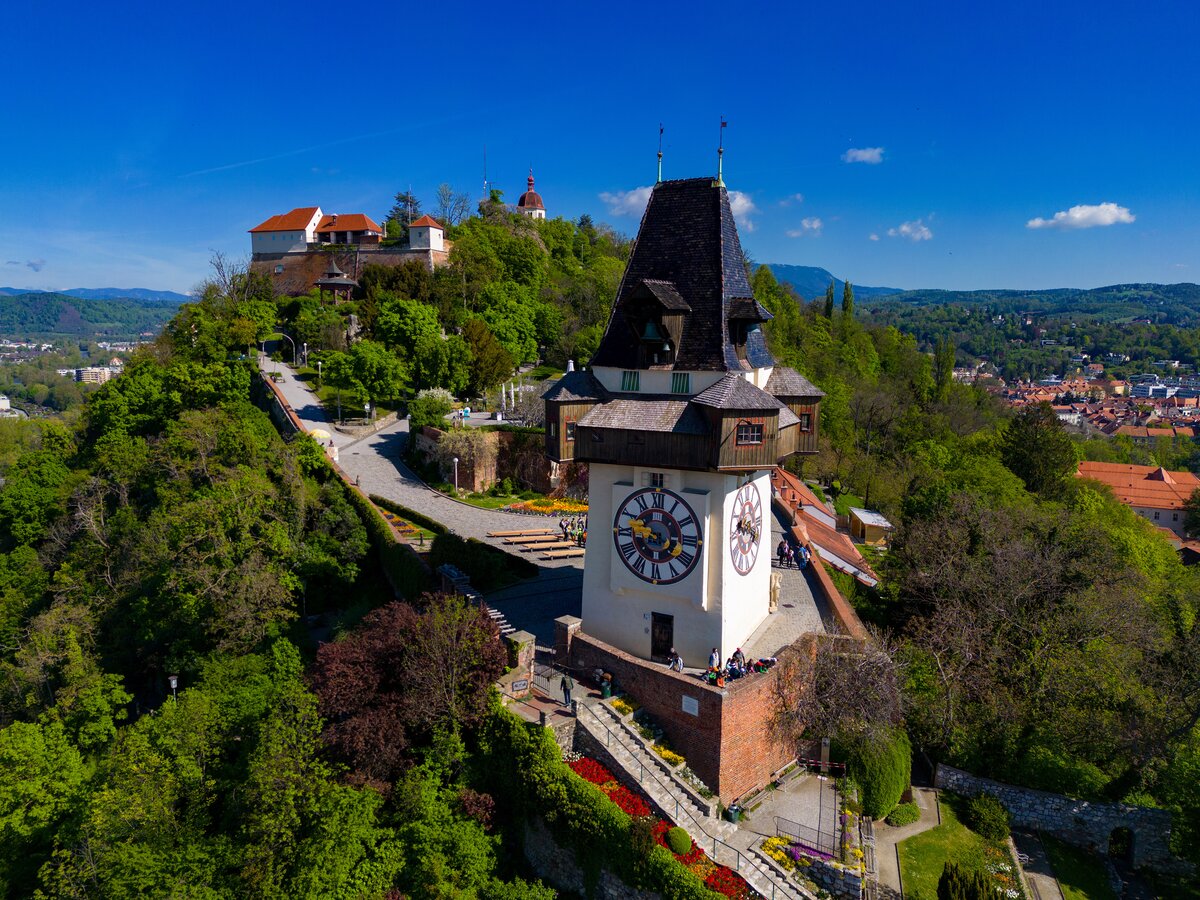
The Burghers’ Bastion is located on the Schlossberg hill in Graz, directly below the Clock Tower. It is considered the most flower-filled part of the Schlossberg and was built between 1551 and 1559 by the Italian fortress architect Domenico dell'Allio. The bastion owes its name to the fact that, during times of war, it was defended by the citizens of Graz, while the rest of the fortress was under the authority of the provincial ruler.
Domenico dell'Aglio was one of the first Italian master builders in Graz and one of the most important military engineers and fortification specialists of his time. In 1558, he was ennobled by Emperor Ferdinand I and chose garlic (aglio in Italian) as his coat of arms.
His work extended across Graz, Klagenfurt, Vienna, Marburg, Pettau, Radkersburg, and Fürstenfeld.
During the Siege of Vienna in 1529, the future Emperor Ferdinand I recognized the crucial importance of strong city fortifications for the defense of the realm. Since Graz, alongside Vienna, played a key role in resisting the Ottoman expansion, it was only natural to strengthen its defensive structures according to the most advanced military standards of the time. In 1545, Domenico dell'Aglio was appointed chief supervisor of the city's refortification, with the fortress on the Schlossberg forming the backbone of the defense system.
Among his most significant surviving military works are the Paulustor (St. Paul's Gate) and the Stall Bastion on the Schlossberg. The cistern he designed, however, proved unsuccessful and had to be rebuilt later, with the reconstruction financed from his estate.
His most important civilian building is the Graz Landhaus, a masterpiece of the Upper Italian Renaissance and a symbol of the Protestant Estates. Dell'Aglio's architectural legacy continues to shape the city of Graz to this day.
The Rose Garden on Graz's Schlossberg is an idyllic destination that enchants visitors with its magnificent blooms and the captivating fragrance of countless roses. Nestled within the historic surroundings of the Schlossberg, the garden offers not only an impressive variety of rose species but also breathtaking views over the city of Graz.
During the spring and summer months in particular, the Rose Garden reaches its peak beauty, making it a favorite destination for both locals and visitors. Whether you are looking for a romantic stroll, a perfect photo opportunity, or simply a peaceful place to relax, the Rose Garden on Graz's Schlossberg is always worth a visit.
Please note that the Rose Garden is less colorful during the winter months, as the roses are not in bloom at that time of year.
Picture gallery