St. Thomas Chapel
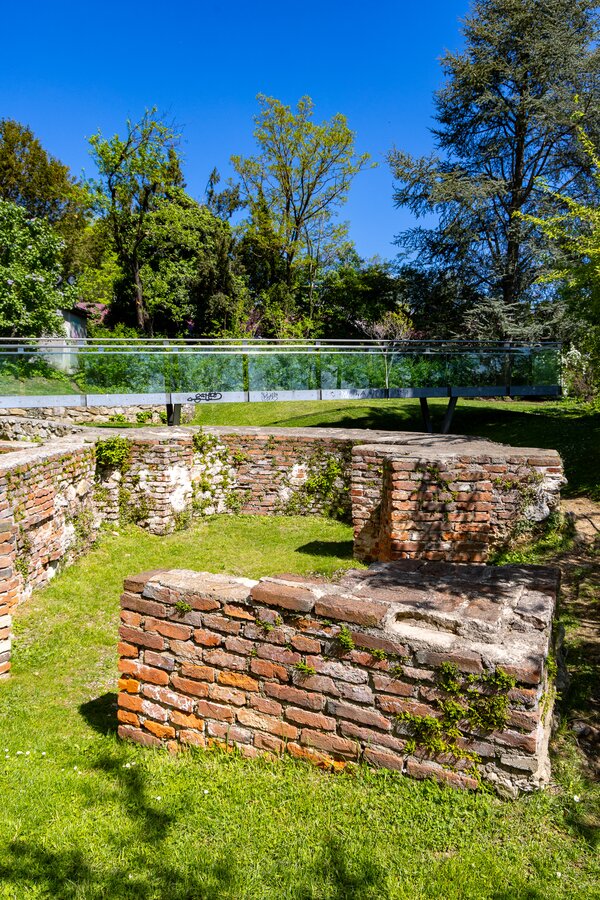
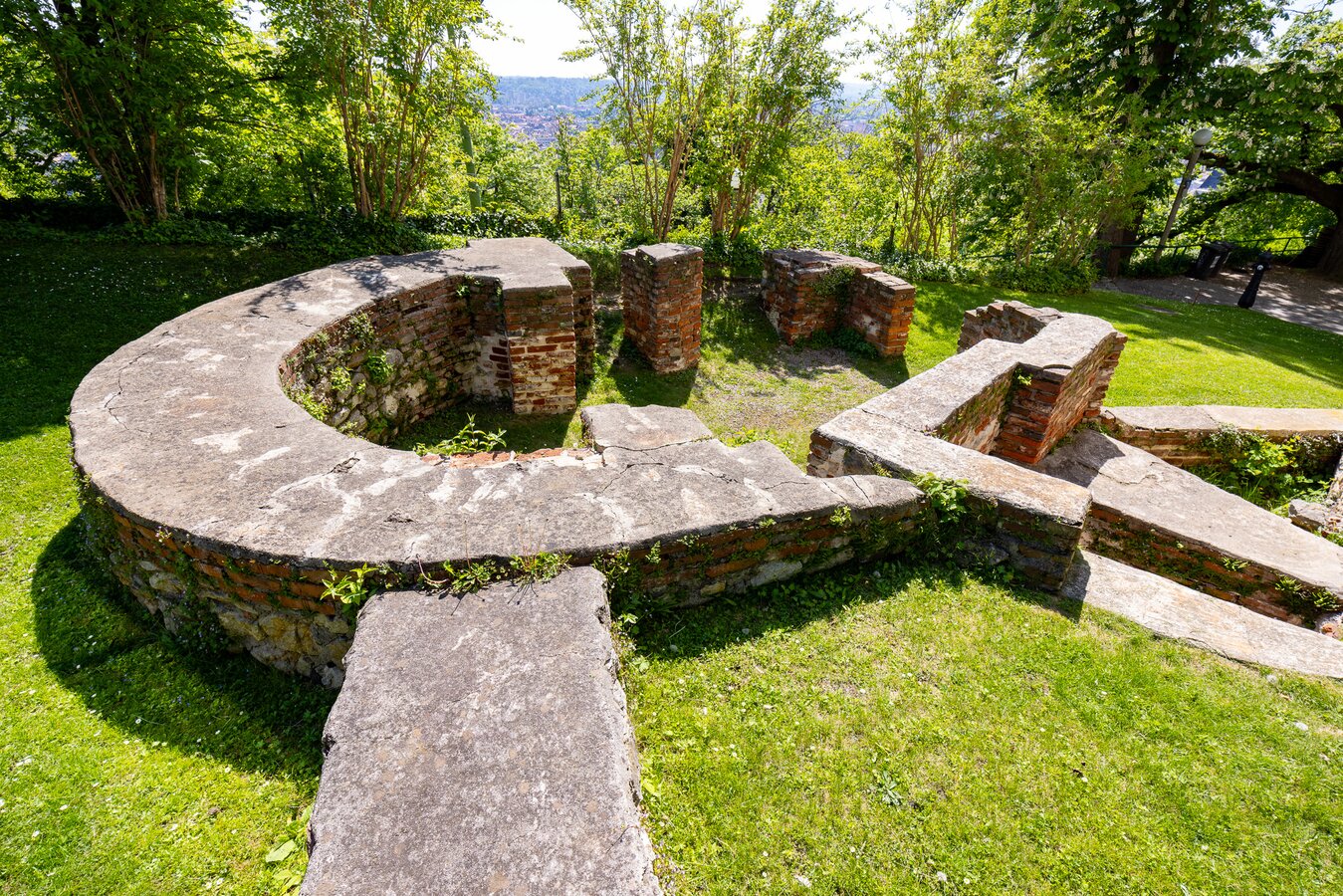
The remains of St Thomas Chapel are one of the few vestiges of the medieval castle complex. The round building with a semi-circular apse facing east was first documented in 1271. In contrast to the modest exterior, the interior of the chapel was lavishly decorated. In the 16th century, Protestant masses were also held here temporarily during the Reformation. Church services were held in St Thomas Chapel for the prisoners detained on the Schlossberg. The sacral building was spared from being razed in 1809 but was dismantled in 1810 due to structural damage.
Only the foundation walls that were uncovered in the 1990s have been preserved. The lion figures at the former entrance are replicas.

Good to know
The remains of the St. Thomas Chapel are located on Graz’s Schlossberg, directly next to the Bell Tower. They can easily be visited as part of a walk around the Schlossberg and are close to the Great Cistern, the Hackher Lion, and the Gothic Gate.
For centuries, the St. Thomas Chapel served as the castle chapel of Graz’s fortress. During the Reformation, Protestant services were also held here for a time. In addition, the chapel was used for religious services for prisoners held in the fortress on the Schlossberg.
Although the chapel survived the demolition of the fortress in 1809, it had suffered such severe structural damage that it had to be demolished in 1810. It was not until the 1990s that its foundations were uncovered during archaeological excavations and made accessible to visitors.
The two Romanesque lion sculptures that once decorated the entrance are no longer the original figures. Today, replicas stand at the site, while the original sculptures have been preserved and are kept elsewhere.
The historic altarpiece of the St. Thomas Chapel is now on display at the Graz Museum Schlossberg, where visitors can also learn more about the history of the Schlossberg, its fortifications, and the development of the city of Graz.
Allow around 10 minutes to visit the chapel remains and take photographs. Thanks to its location, the visit can easily be combined with the Bell Tower, the Great Cistern, or the Graz Museum Schlossberg.
Picture gallery