City Parish Church
You experience more than a customary visit to the house of God when you enter the Stadtpfarrkirche church in Graz. This sacred place has a very interesting history, reflected in aspects originating from various epochs including the Gothic, Baroque and modern eras. But wait, just who are those two familiar faces in the stained glass behind the altar? At this church steeped in history, there’s something of a surprise in store in the depiction of the torment of Christ.

Good to know
Graz Parish Church is located at Herrengasse 23, in the heart of Graz’s Old Town. Its central location makes it an ideal stop during a walk through the UNESCO World Heritage city of Graz. Attractions such as the Main Square, the Landhaushof and the Mausoleum are only a few minutes away on foot.
Although it is located directly on the lively Herrengasse, Graz Parish Church offers a peaceful atmosphere for quiet reflection. Its open doors invite both locals and visitors to escape the bustle of the city and enjoy the unique ambience of this historic church.
Yes. Graz Parish Church is open during the day and admission is free. As it is an active place of worship, services, concerts and other events are held regularly. Visitors are kindly asked to respect religious services during their visit.
You should allow around 20 to 30 minutes to visit the church. If you also wish to attend an organ concert, you may wish to stay longer.
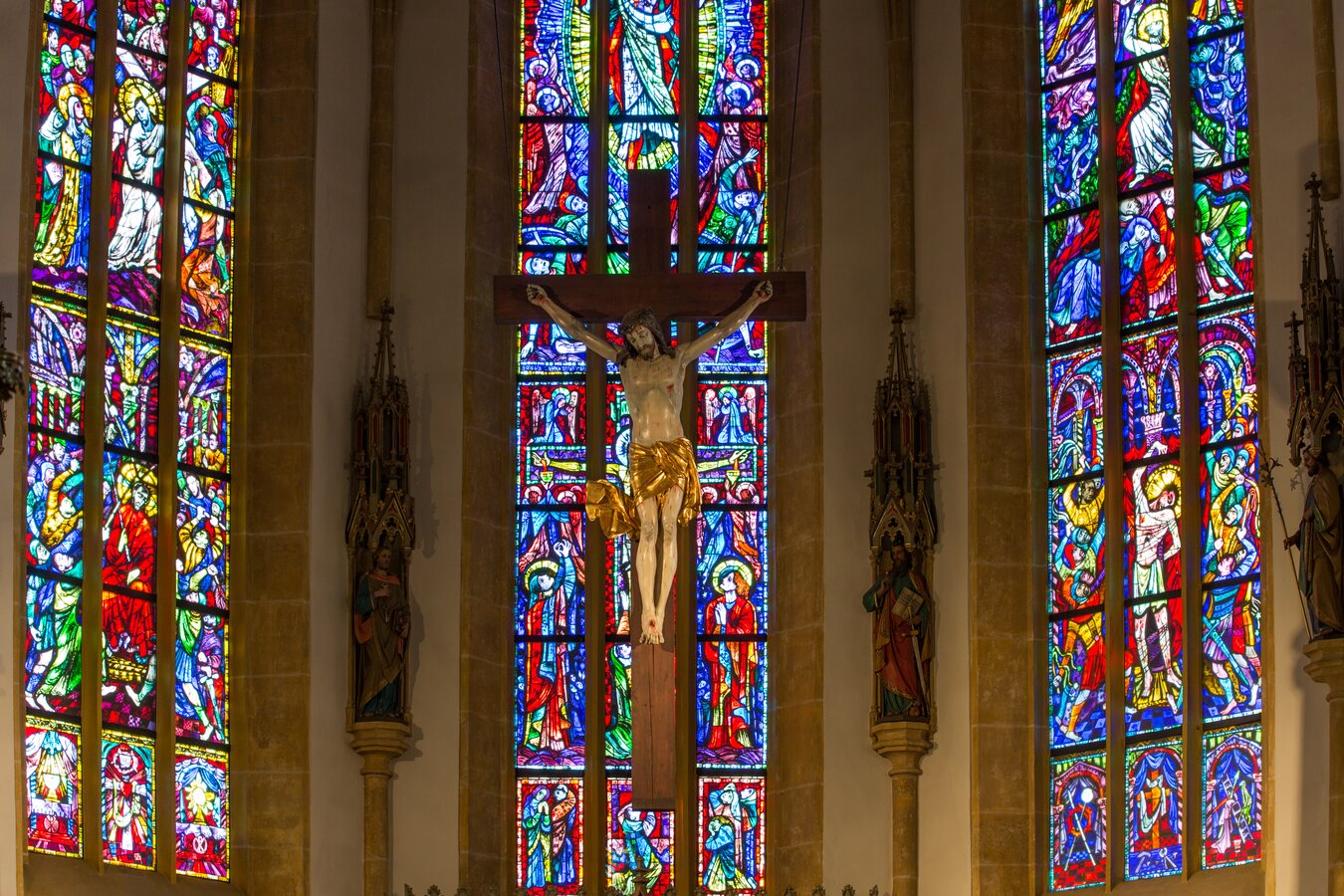
The stained-glass windows in the chancel are among Graz’s most extraordinary works of art. Designed after the Second World War by artist Albert Birkle, they depict not only biblical scenes but also the dictators Adolf Hitler and Benito Mussolini as Christ’s tormentors. This unusual representation caused considerable controversy in the 1950s and makes the church a remarkable place of remembrance.
The organ of Graz Parish Church, built in 1970 by the renowned Vorarlberg organ builder Rieger, is one of the most important church organs in Styria and is celebrated for its impressive sound. The church regularly hosts services accompanied by organ music as well as organ concerts, allowing visitors to experience the remarkable acoustics of the historic church. Music lovers should therefore consider combining their visit to the church with an organ concert. You can find upcoming concert dates here.
Details
You experience more than a customary visit to the house of God when you enter the Stadtpfarrkirche church in Graz. This sacred place has a very interesting history, reflected in aspects originating from various epochs including the Gothic, Baroque and modern eras. But wait, just who are those two familiar faces in the stained glass behind the altar? At this church steeped in history, there’s something of a surprise in store in the depiction of the torment of Christ.
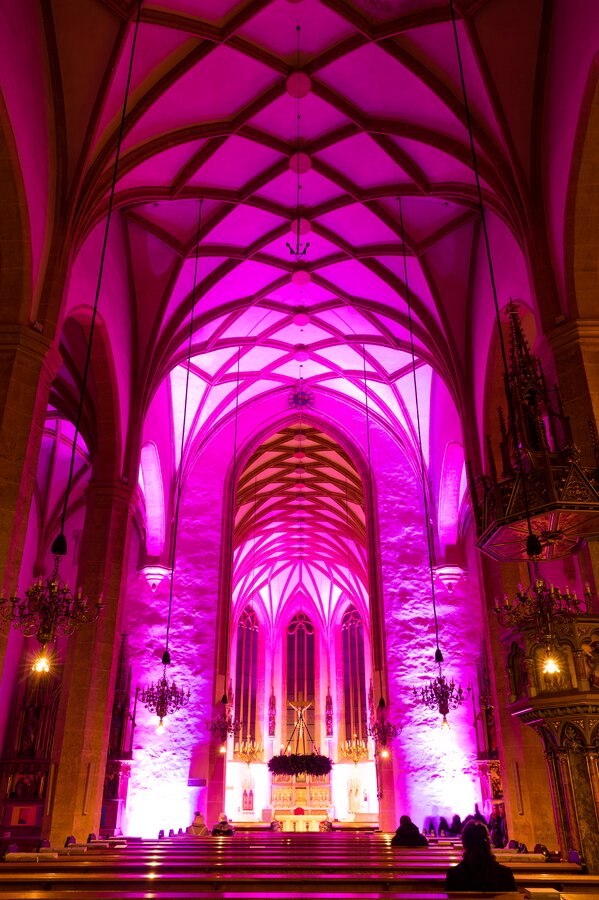
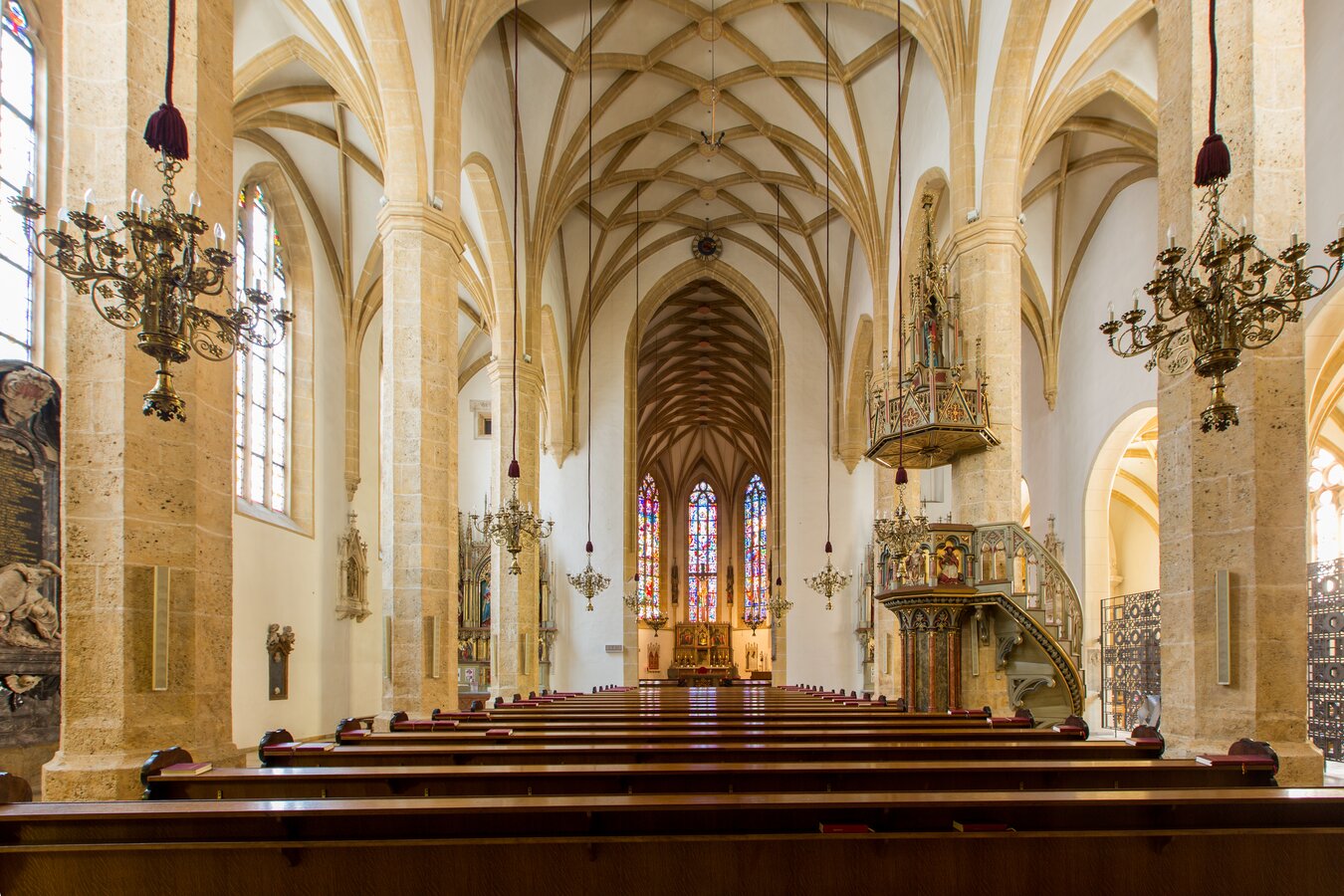
It was in the year 1440 that Emperor Frederick III had a little Corpus Christi chapel erected in the former Jewish quarter of Graz. The Dominicans, to whom the chapel had been turned over by Frederick, added a three-nave late Gothic church with a long, narrow chancel. Gothic architecture and the former cloister in the south with its partly preserved ribbed vault even today remind of the Dominican period in the history of the building. But the Dominicans themselves had to leave their monastery. In 1585 the church was made the municipal parish church by order of Archduke Charles II. The former parish church, today's cathedral, had been turned over to the Jesuits.
The gorgeous altars from the Baroque period were replaced by neo-Gothic ones in the 19th century. The Baroque Johannes Nepomuk Chapel, however, has been preserved. It was erected by Josef Hueber on an oval ground plan, and today contains the former altarpiece of the high altar "Mariae Himmelfahrt" ascribed to the Venice painter Tintoretto.
A bomb explosion in Word War II destroyed, among other things, the Gothic stained-glass windows in the chancel. Albert Birkle, an artist from Salzburg, was commissioned with making new ones. They predominantly depict the Passion but also the Resurrection of Jesus Christ.
The organ of Stadtpfarrkirche is among the best in Styria. It was built in 1970 by the company Rieger from Vorarlberg. You can hear the organ play at services, at organ concerts and in summer as "Mittagsklänge" (sounds at noon) inviting to a pause in the rush of the city.
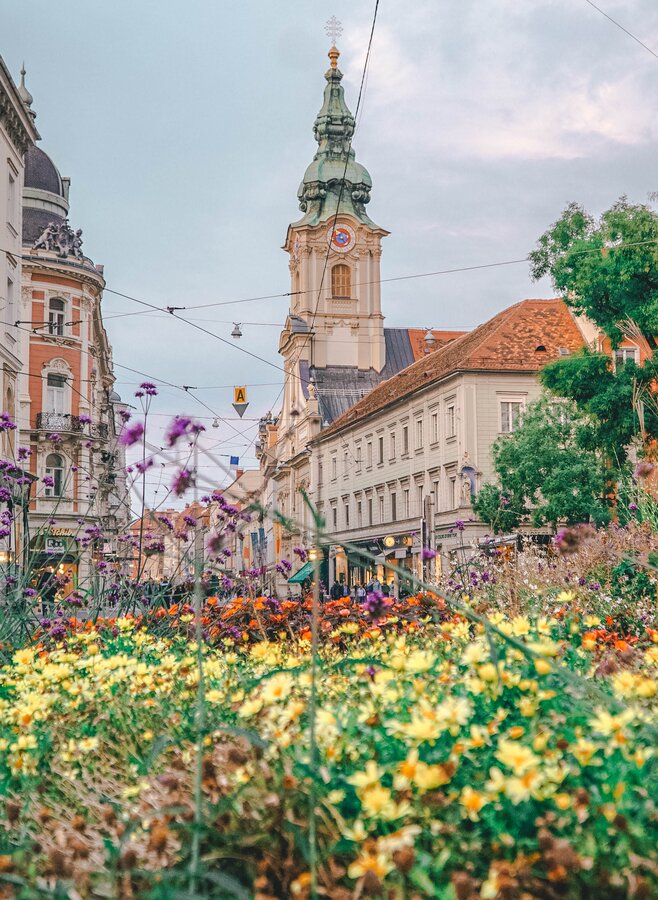
Coming back to the tower: what seems to be so solid is just a wooden roof turret, richly decorated with stucco and a splendid copper cupola. The eyecatcher in Herrengasse was designed by Joseph Stengg and built around 1780.
By the way: The new stained-glass windows by Albert Birkle made headlines in the fifties. What was causing the stir? The faces of Hitler and Mussolini in the windows. But Birkle, whose works were regarded as "degenerated art" in the Nazi era, shows the two dictators side by side with Christ's tormentors.
Picture gallery