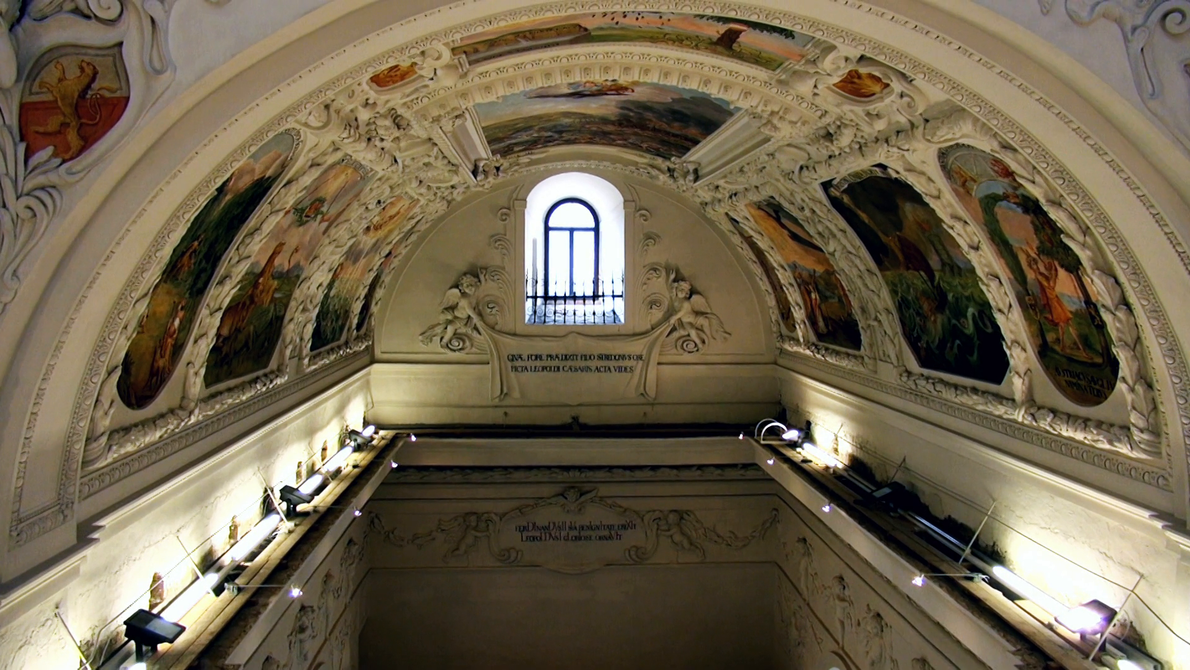
Mausoleum
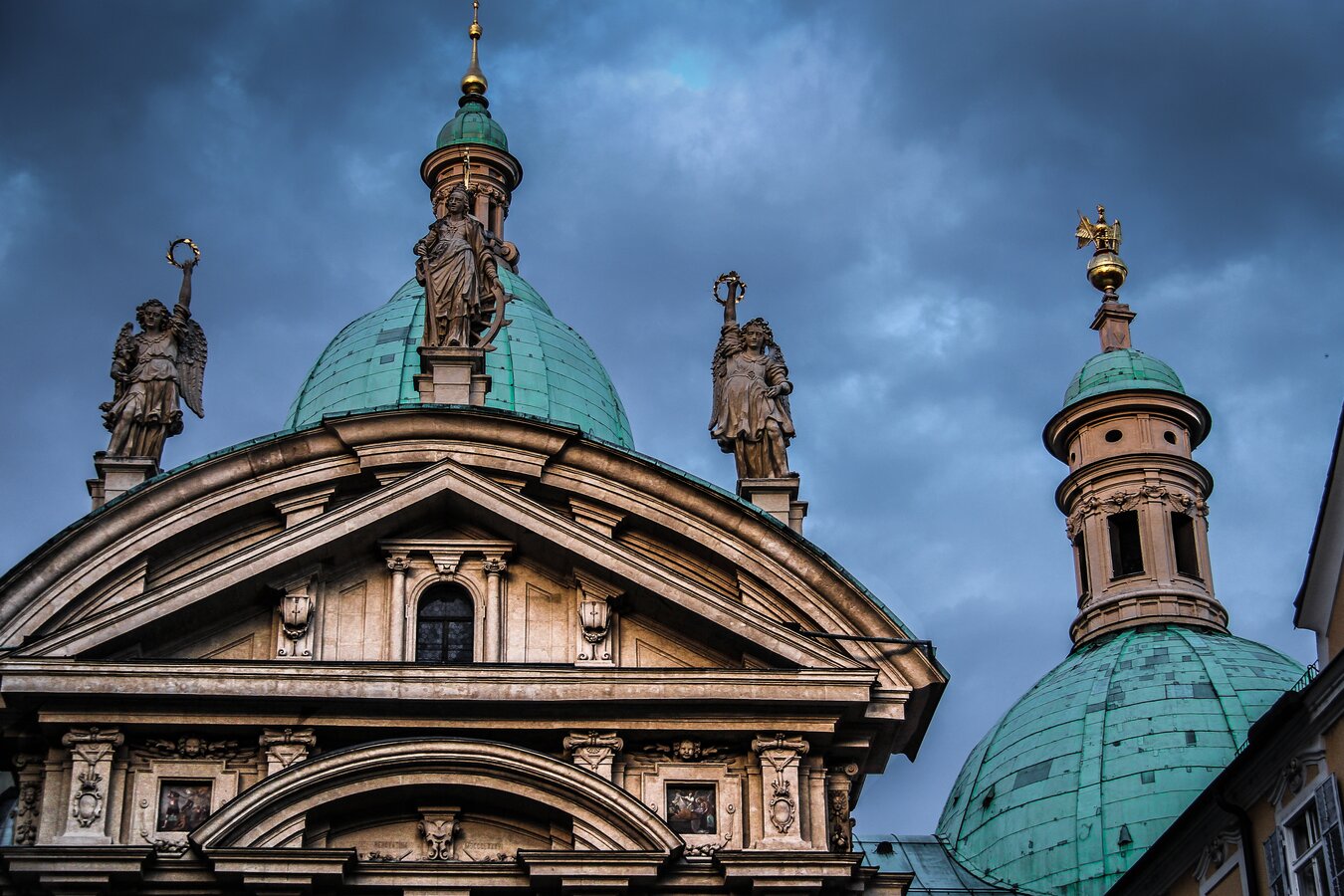
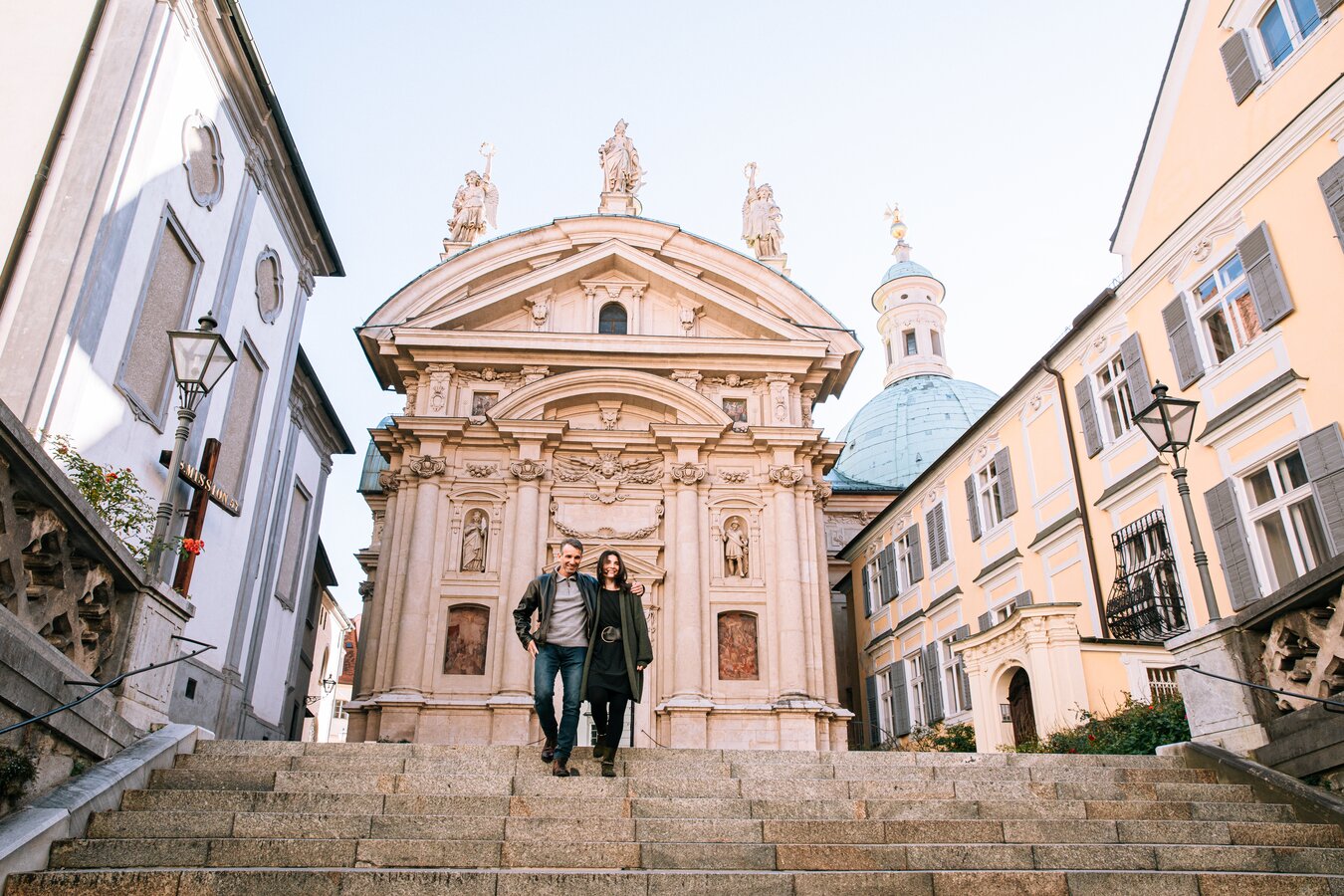
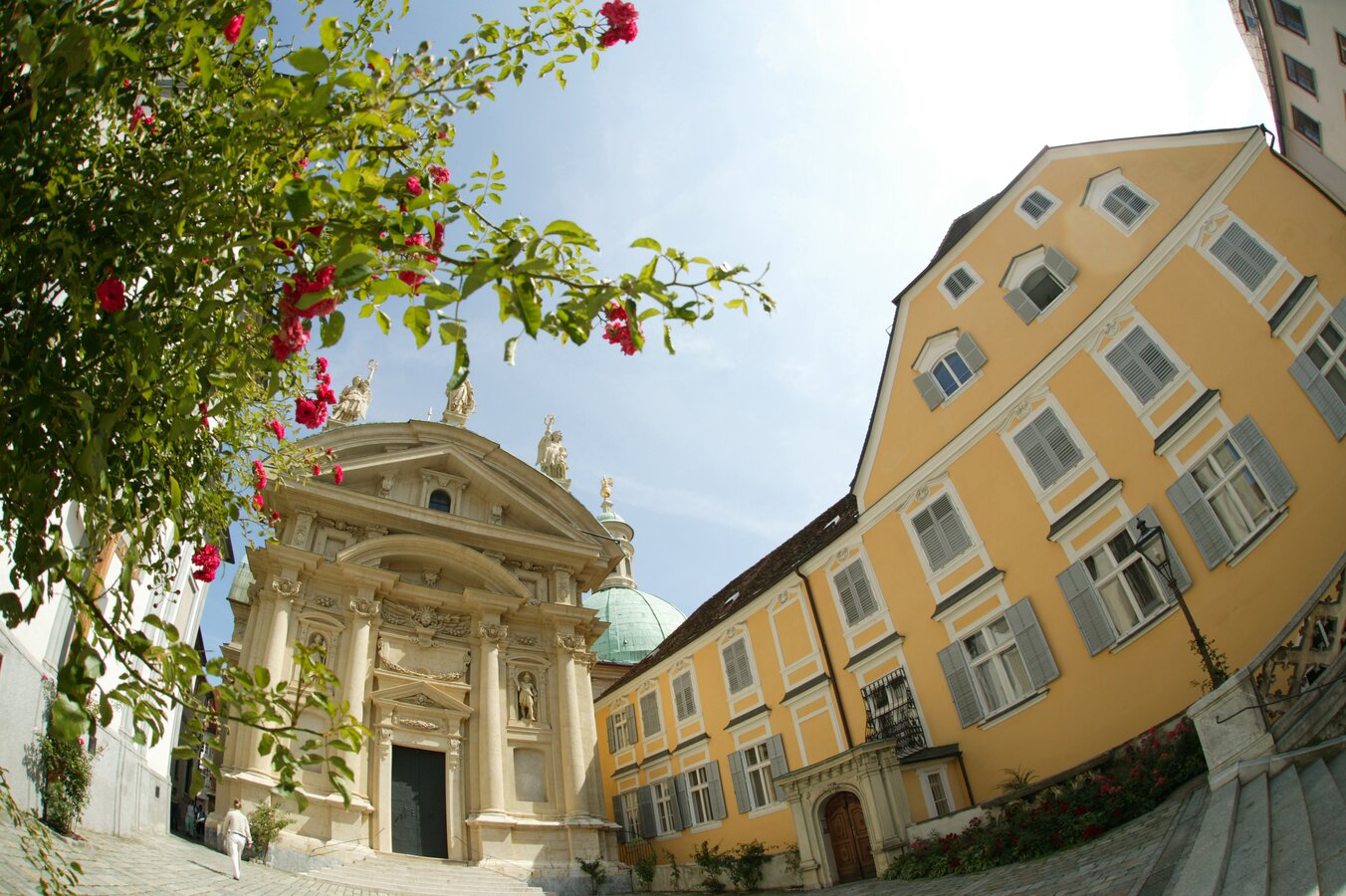
An imperial place of rest next to the Dom. Turquoise domes stand out against the blue sky above the Mausoleum and, together with the Dom and Katharinenkirche church, define one of the city’s magnificent views. You could almost have been whisked away to the lands to the south, given how this ensemble enchants any visitor with more than just a hint of Florentine flair. Here in Graz, Emperor Ferdinand II had his court artist Giovanni Pietro de Pomis lay out the impressive tomb.

Good to know
The Mausoleum of Emperor Ferdinand II is an imperial burial site located right next to the Graz Cathedral. Its turquoise domes stand out against the bright blue sky and, together with the cathedral and St. Catherine’s Church, create an impressive cityscape.
The ensemble has an almost Florentine flair, transporting visitors to the feeling of southern Europe. Emperor Ferdinand II, Holy Roman Emperor commissioned his court painter Giovanni Pietro de Pomis to design this remarkable tomb in Graz.
For a visit to the exterior of the Mausoleum, you should allow around 30 minutes. This gives you enough time to admire the impressive architecture and take some photos. If you would also like to explore the interior on a guided tour, you should allow some extra time.
The Mausoleum of Emperor Ferdinand II is the burial site of Ferdinand II, Holy Roman Emperor (d. 1637) and Maria Anna of Bavaria (d. 1616), his first wife. These tombs are marked by inscription plaques.
The mausoleum also contains a so-called “heart crypt,” where the hearts of Ferdinand II., his mother Maria Anna of Bavaria, his second wife Eleonora Gonzaga, and other members of the archducal family are kept.
In the crypt chamber, there is a red marble sarcophagus with sculpted reclining figures of Ferdinand II.’s parents -Charles II, Archduke of Austria and Maria Anna of Bavaria - although only his mother is actually buried there. The sarcophagus comes from the former Poor Clares convent in Graz and was likely created around 1608 by Sebastian Carlone.
The “Graz City Crown” refers to a unique ensemble consisting of Grazer Burg, Graz Cathedral, Mausoleum of Emperor Ferdinand II, the Old University, and the seminary.
This ensemble is located at the foot of the Schlossberg and forms an absolutely unique architectural complex that cannot be found in this combination in any other provincial capital.
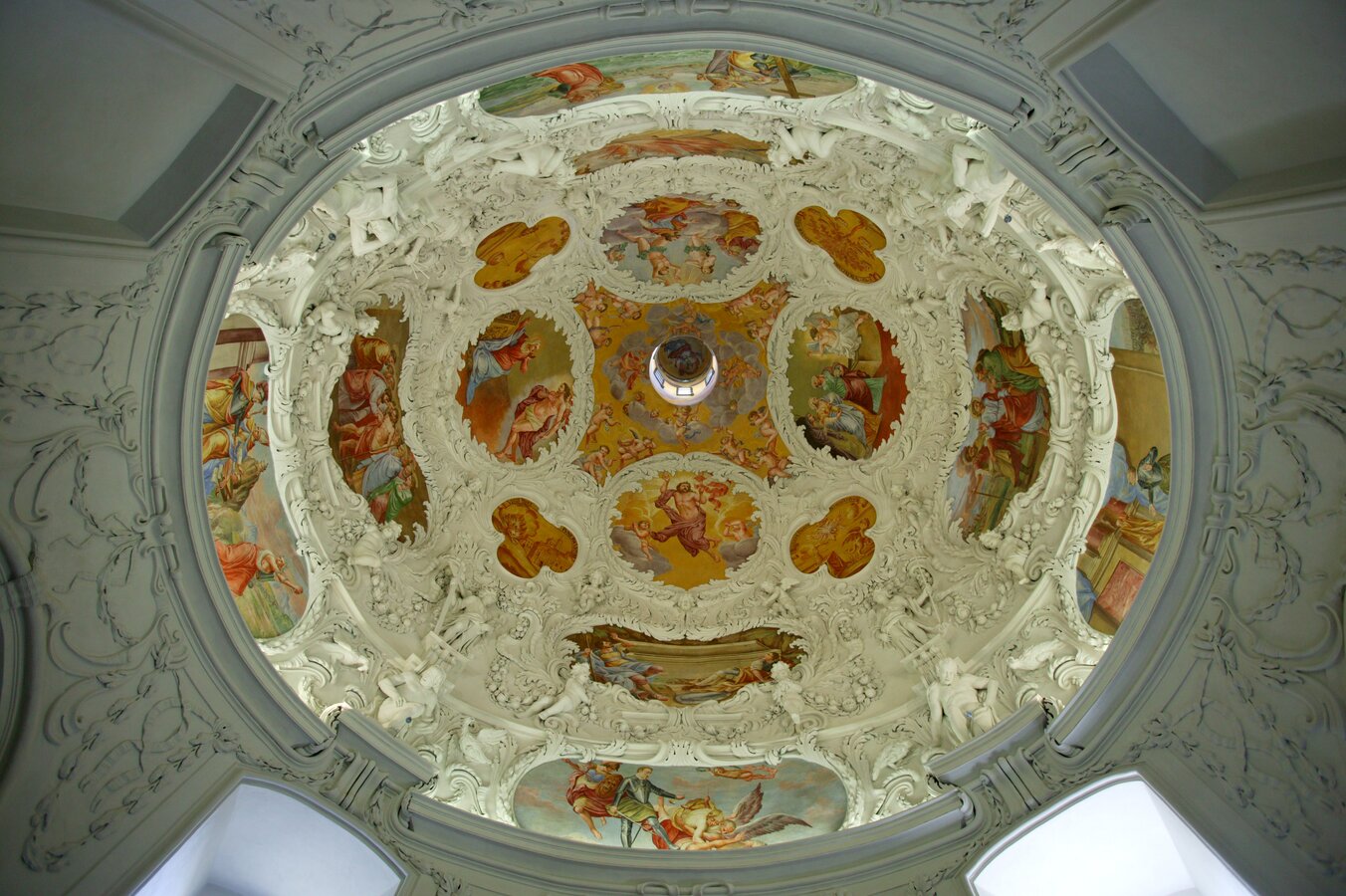
In 1614, Emperor Ferdinand II commissioned his court architect Giovanni Pietro de Pomis to design the mausoleum and the adjoining St. Catherine’s Church. The complex is considered one of Austria’s most important examples of Mannerist architecture. Particularly remarkable is the oval dome above the burial chapel, the first of its kind built outside Italy.
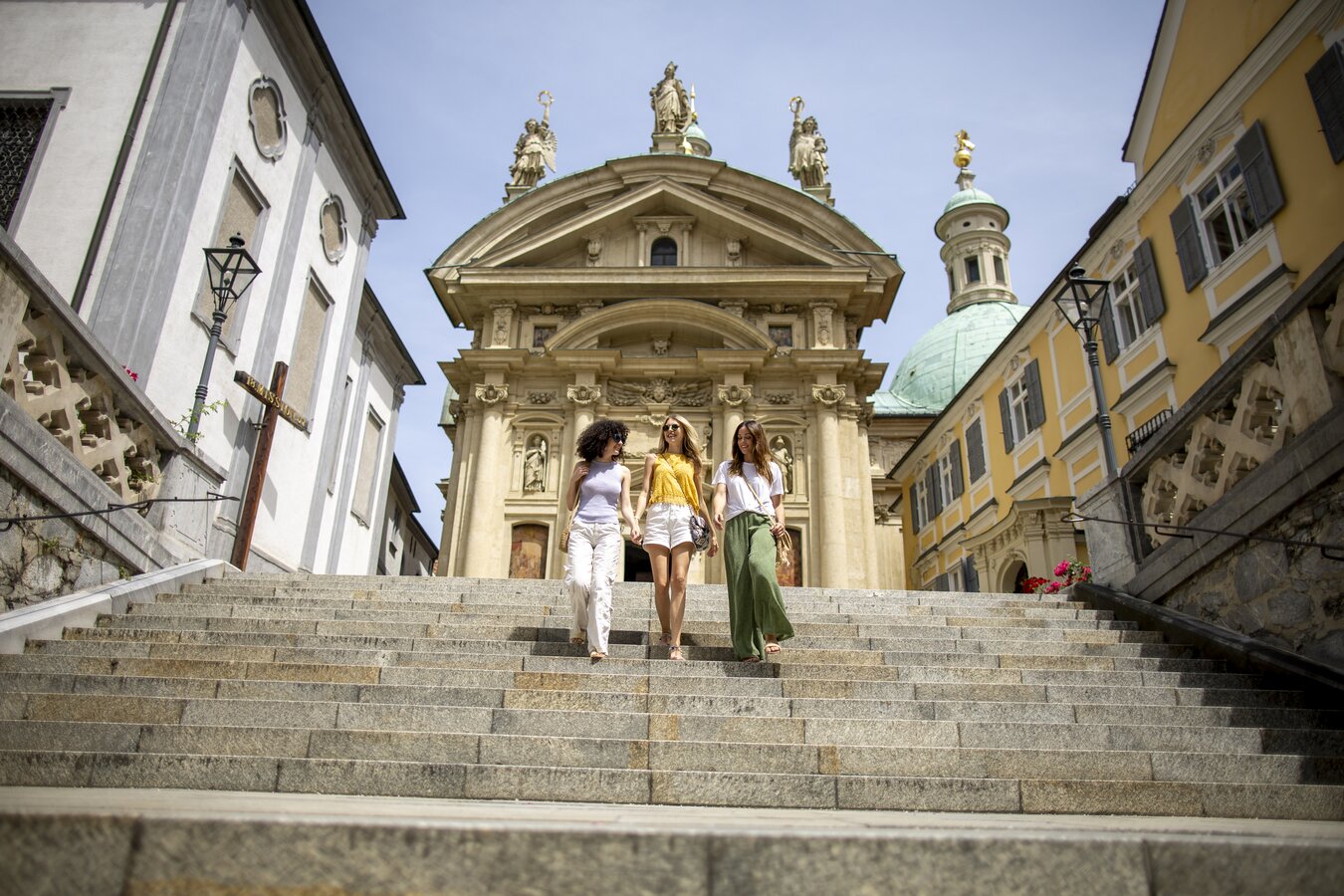
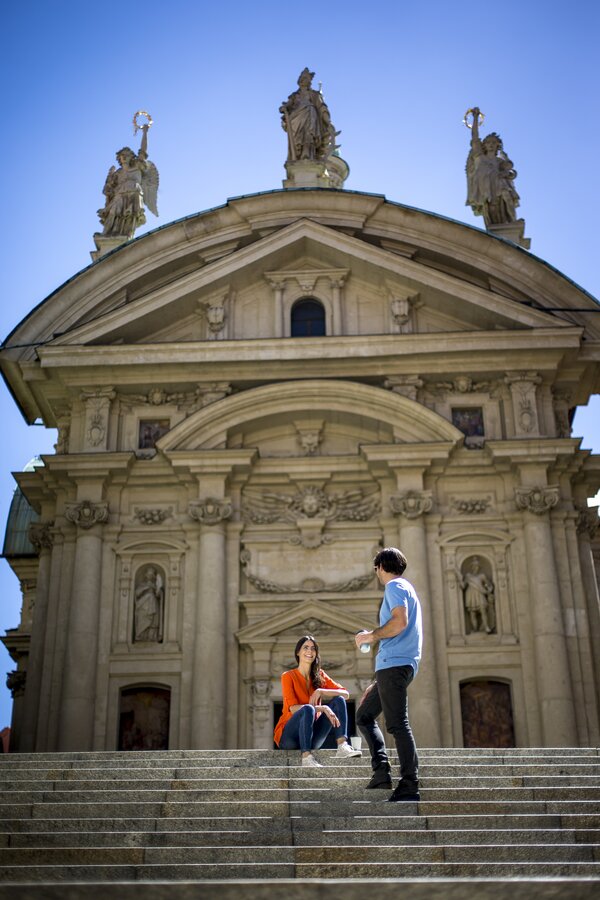
Incidentally, the monumental staircase in front of the mausoleum is one of the most popular photo spots in Graz’s old town.
Yes, the Mausoleum combines history, art and architecture in an impressive way. Visitors can explore one of Europe’s most significant Habsburg memorial buildings while enjoying views of the Graz City Crown. Thanks to its central location next to Graz Cathedral, it can easily be included in a walk through the UNESCO World Heritage city centre of Graz.
Details
The so-called Stadtkrone ("Crown of the Town") of Graz comprises such important buildings as the Cathedral, the Burg, the Old University and today's Seminary (former Jesuit college). But it is the domescape of the Mausoleum which also visually crowns the city.
In 1614 Ferdinand commissioned his Italian court painter and architect to erect a mausoleum and an adjacent St. Catherine's Church next to today's Cathedral. It was to become one of the most important buildings of the early 17th century in Austria. The oval dome above the tomb chapel was the first of its kind built outside Italy. The façade of St. Catherine's is composed with rich small details and demonstrates the taste of time at the threshold of Renaissance and Baroque. As a gable statue, St. Catherine of Alexandria is looking to the former Jesuit college opposite, where in 1585 Graz University was founded. After all, St. Catherine is worshipped as the patron saint of universities.
In 1619 Ferdinand was elected emperor and left Graz for Vienna. Construction work at the Mausoleum came to a standstill. So in 1637 Ferdinand was laid to rest in a half-finished, "draughty" tomb. Only his grandson, Emperor Leopold I, commissioned a young Graz artist to make the interior. The young artist later on became the famous Austrian Baroque architect Johann Bernhard Fischer von Erlach.
The vault is dominated by an impressive sarcophagus of red marble. It is the final resting place of Ferdinand's mother, Maria of Bavaria. Just a plain tablet on the wall indicates the grave of Emperor Ferdinand.
By the way: An interesting painting in the barrel vault of St. Catherine's illustrates the relief of Vienna from the Turks in 1683. Up in the skies, Emperor Leopold I is glorified as the great defeater of the unbelievers. Though he had fled from the Turks to Passau in time and had returned to Vienna only after their retreat...
Picture gallery
Video