Priests' Seminary
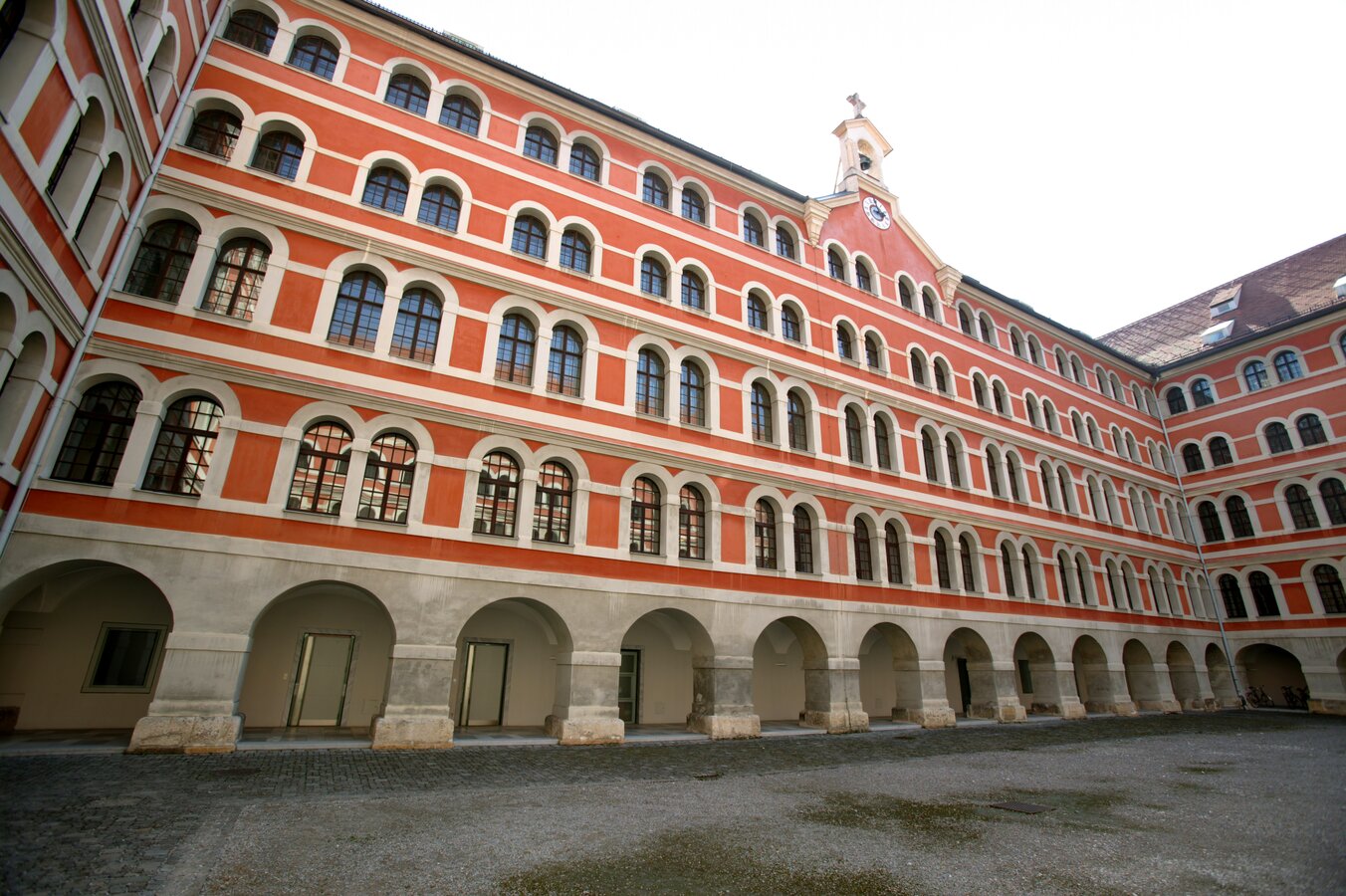
Study, discipline, entertainment. With its linear architecture, the Priesterseminar makes its purpose clear. In the spacious inner courtyard you can feel the presence of history and it is understandable why the building was used entirely for educational purposes following the dissolution of the Jesuit order – it housed a school, barracks and even a prison. Today it serves the Catholic Church once again, with the interior courtyard sometimes hosting lively theatre and concert events in Graz.

Good to know
The Seminary is located at Bürgergasse 2 in the heart of Graz’s Old Town. It stands next to Graz Cathedral and, together with the Mausoleum, Graz Castle and the Old University, forms part of the historic Graz City Crown within the UNESCO World Heritage city of Graz.
You should allow around 15 minutes to visit the courtyard of the Seminary in Graz. This gives you enough time to admire the historic architecture at a leisurely pace and take a few photos.
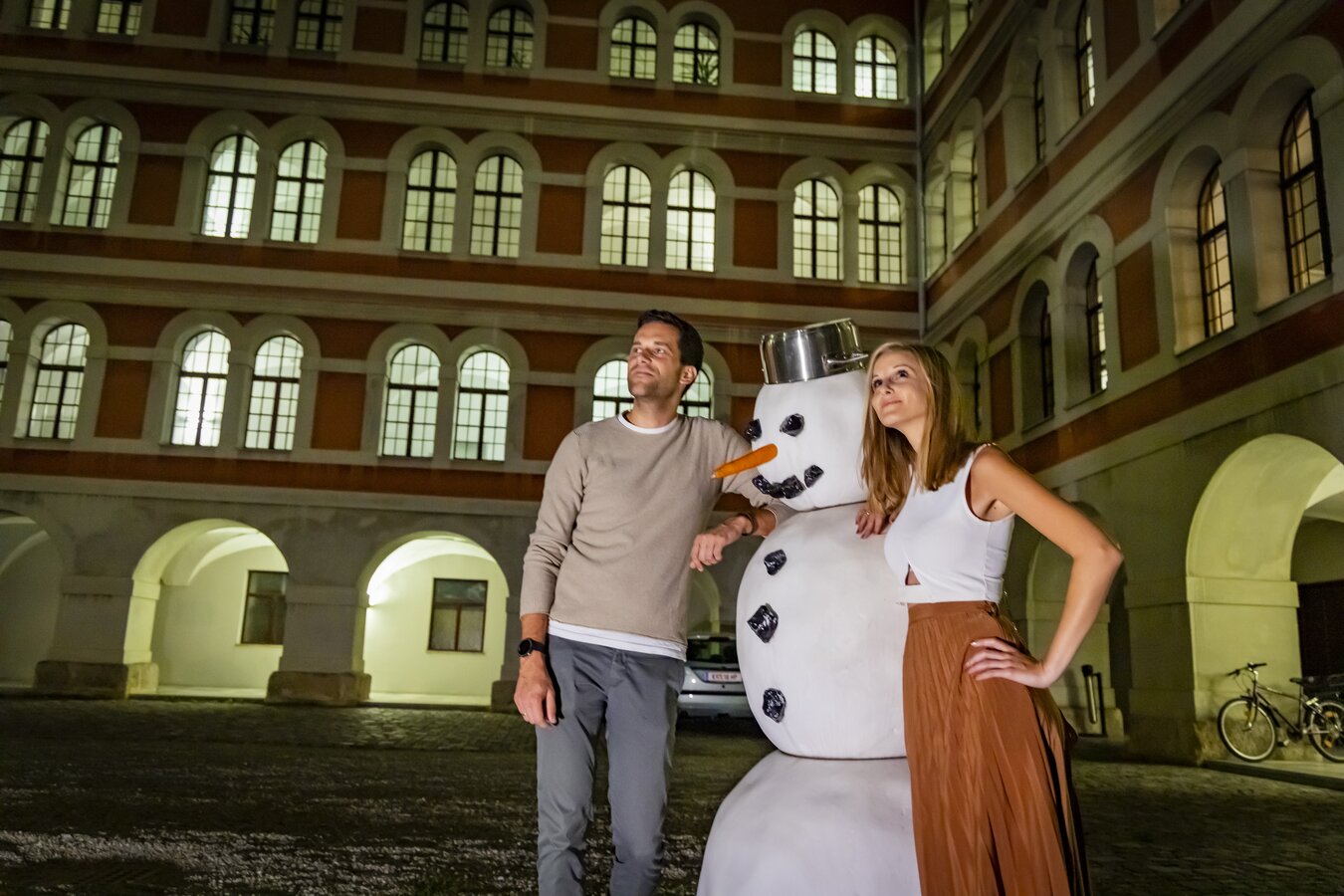
The snowman in the courtyard of the Graz Seminary is not there by chance, but is a work of art by the Styrian artist Manfred Erjautz. The white marble sculpture, entitled “Exploring Duration” (Das Erforschen der Dauer), was created in 2005. The snowman gazes into an artificial puddle of water, inviting visitors to reflect on transience, change and the continuous passage of time. The striking contrast between the historic Renaissance architecture and the contemporary artwork makes the sculpture a distinctive feature and a popular photo spot in the Seminary courtyard.
The courtyard of the Seminary is generally open to the public and is a pleasant place to spend a few quiet moments. As the building is still used as a seminary today, visitors are kindly asked to respect the privacy and daily activities of the institution. The interior of the building is not open to the public.
A visit to the courtyard usually takes 10 to 20 minutes. Thanks to its close proximity to Graz Cathedral, the Mausoleum, Graz Castle and the Old University, the Seminary is an ideal stop on a walking tour through the Graz City Crown and the UNESCO World Heritage city of Graz.
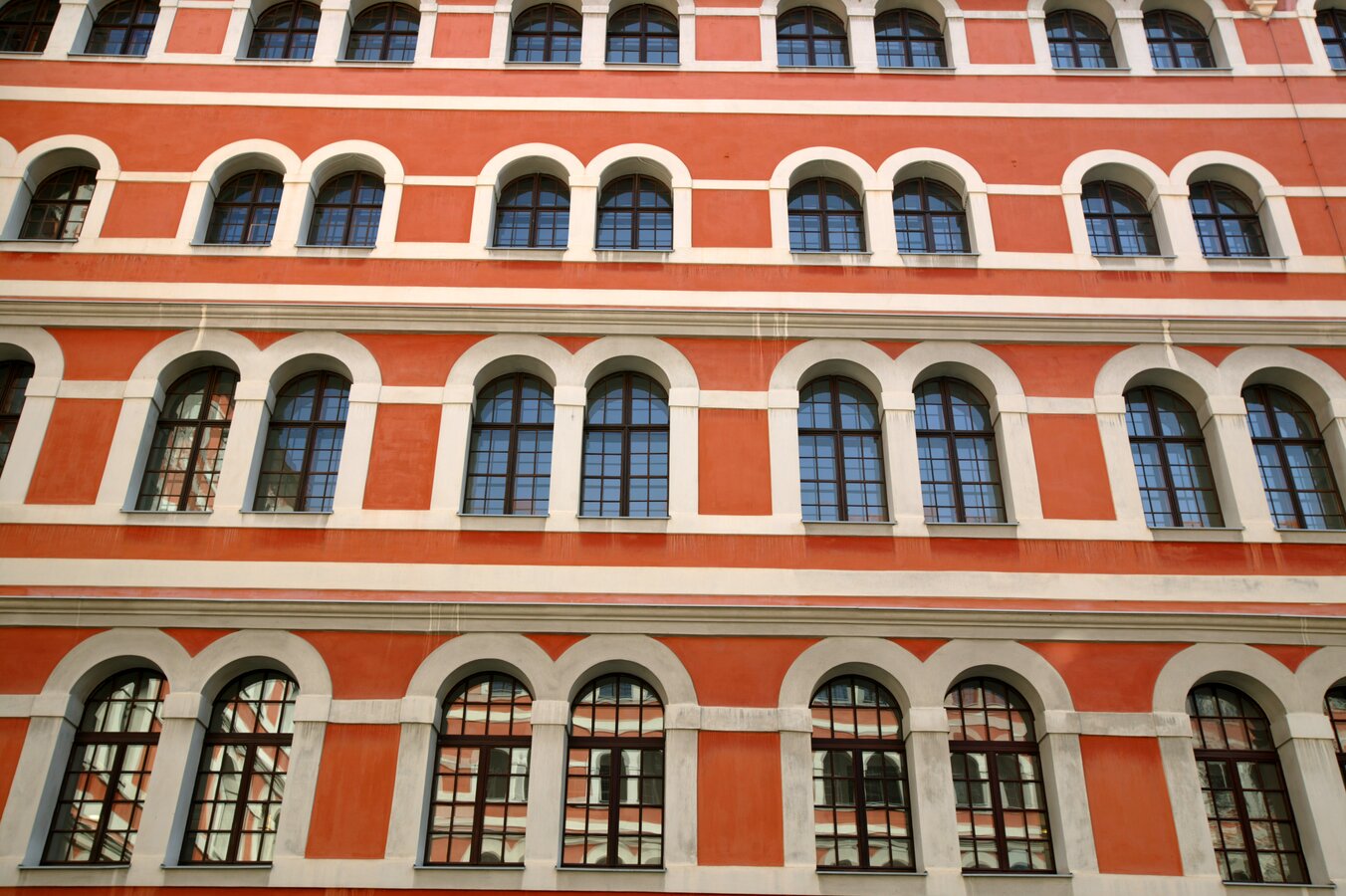
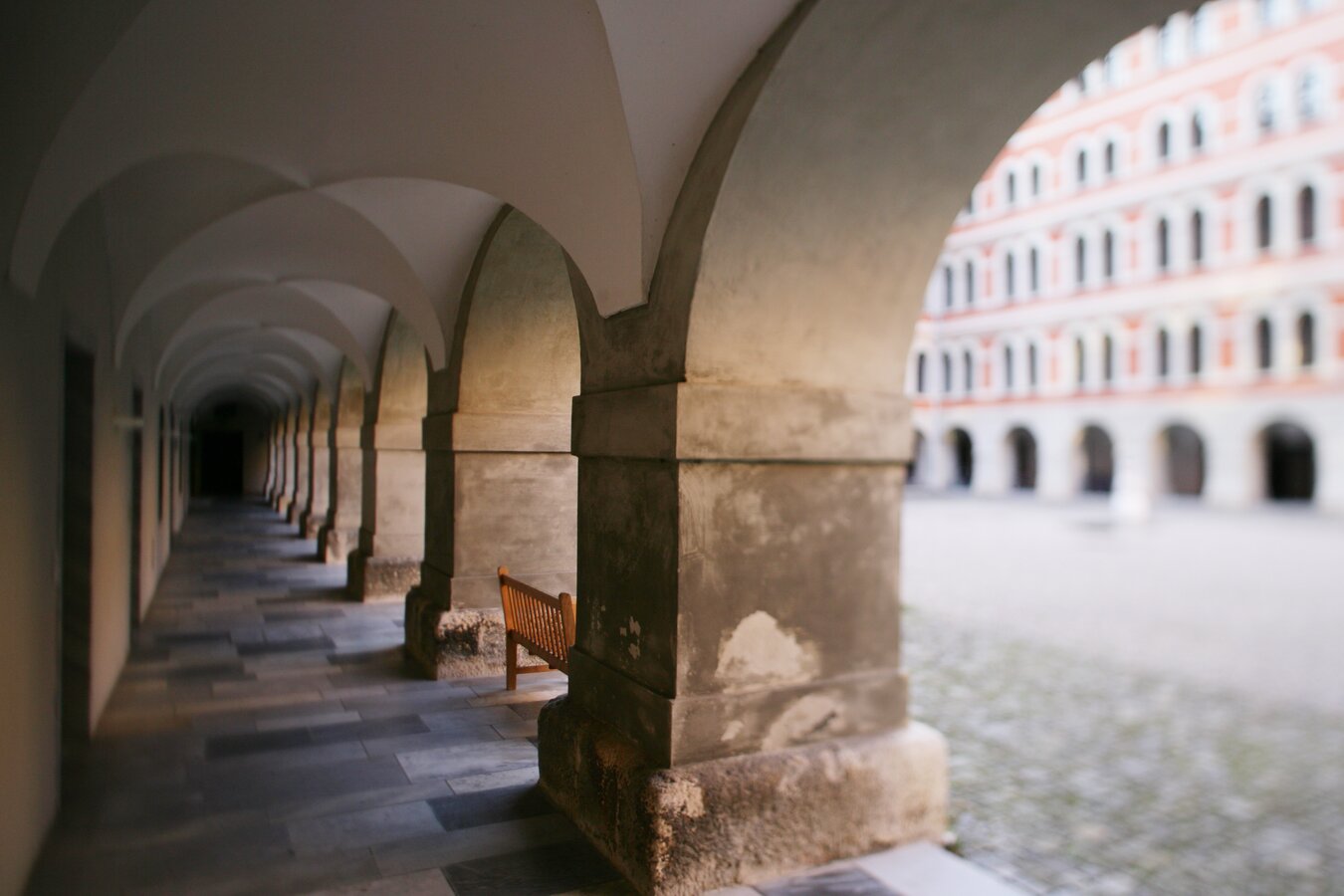
The Seminary’s arcaded courtyard is one of the finest Renaissance courtyards in Graz. Its elegant arcades, historic façades and peaceful atmosphere make it a special place in the heart of the Old Town. As it is less well known than many other attractions, it is also considered a true hidden gem for visitors.
Details
In the second half of the 16th century Styria was mainly Protestant. The Catholic prince, Archduke Charles II, relied on the support of the noblemen to fight the Ottoman Turks. Which lead to religious tolerance. When the noblemen founded a Protestant school, Charles was forced to take countermeasures at least in the field of education. In 1572 he called the Jesuit Order to Graz who immediately took up teaching and started to build a college. In 1585 the Jesuit university was founded. In 1600 Protestant burghers were expelled by Archduke Ferdinand. For 200 years the Jesuits controlled religious and educational life in Graz.
Up to the 19th century the college, erected by Vinzenz de Verda, was connected to the Jesuit church, today's cathedral. While the courtyard covering 1,300m² is characterized by its original Renaissance style, the interior features Baroque jewels. For instance, the so-called Prunkstiege (grand staircase) - a quite narrow, originally humble staircase which was exuberantly decorated with stucco and paintings with banderols in c. 1712.
The building adjacent to the Seminary is the Old University. It was opened in 1609 by Archduke Ferdinand (later Emperor Ferdinand II). The coats of arms of Ferdinand and his Bavarian wife still embellish the building. On the ground floor there were lecture rooms, above them an aula and a theatre which under Empress Maria Theresa was converted into a huge library in the Rococo style.
By the way: This can be considered to be a sign of reconciliation: in the building of the former Jesuit college, the stronghold of Catholicism, in 1792 the first Protestant service in Graz after the enactment of the Edict of Tolerance was held.
Picture gallery