Chinese Pavilion and Bishop’s Seat
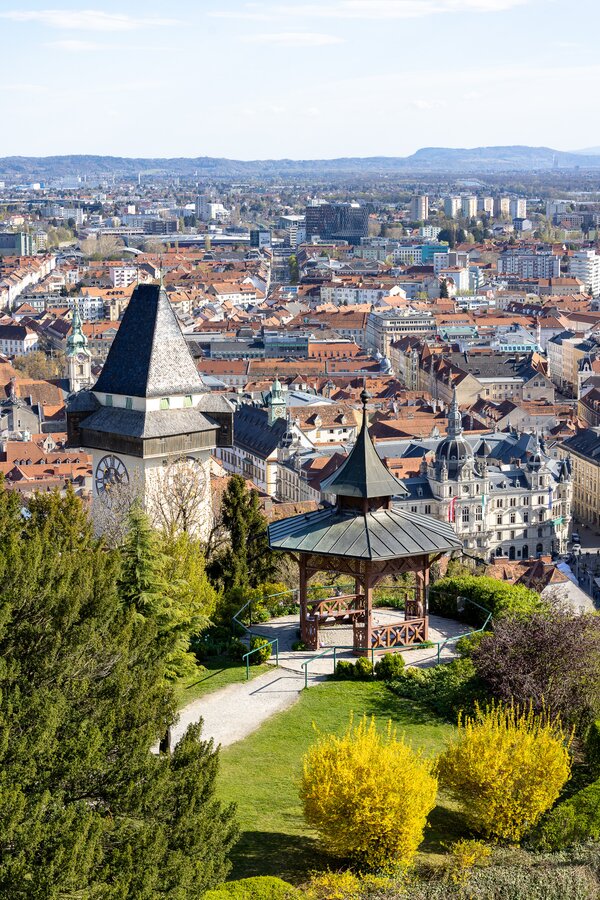
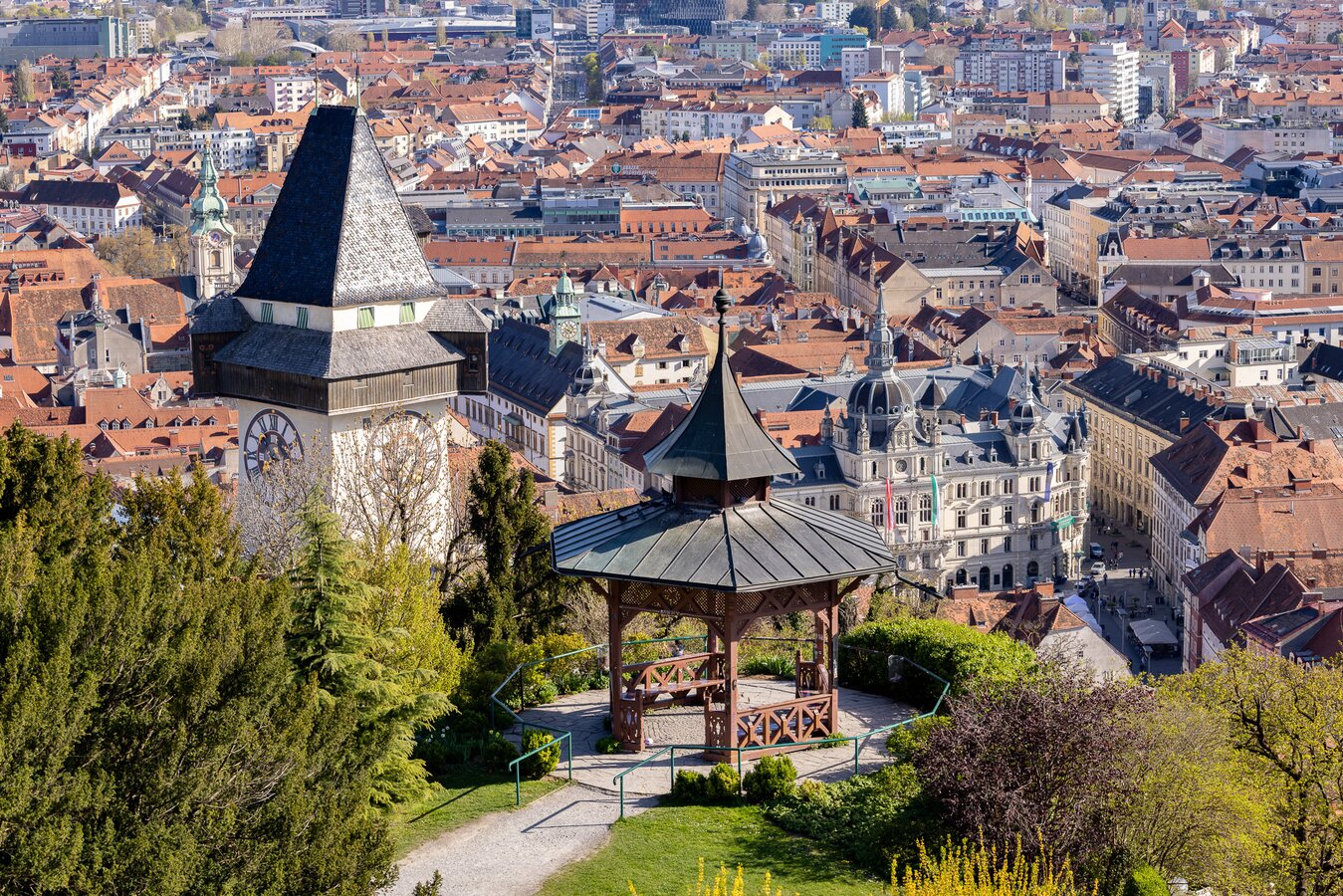
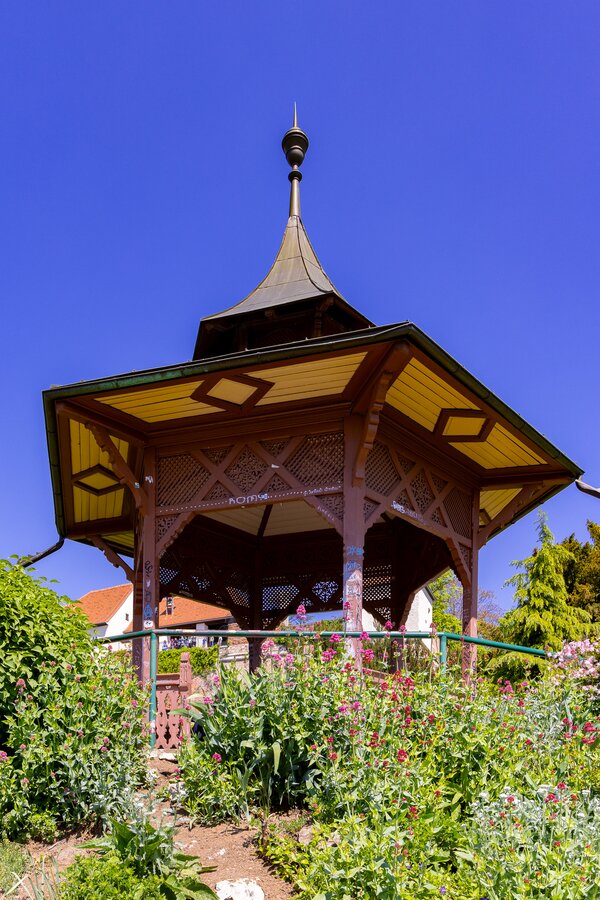
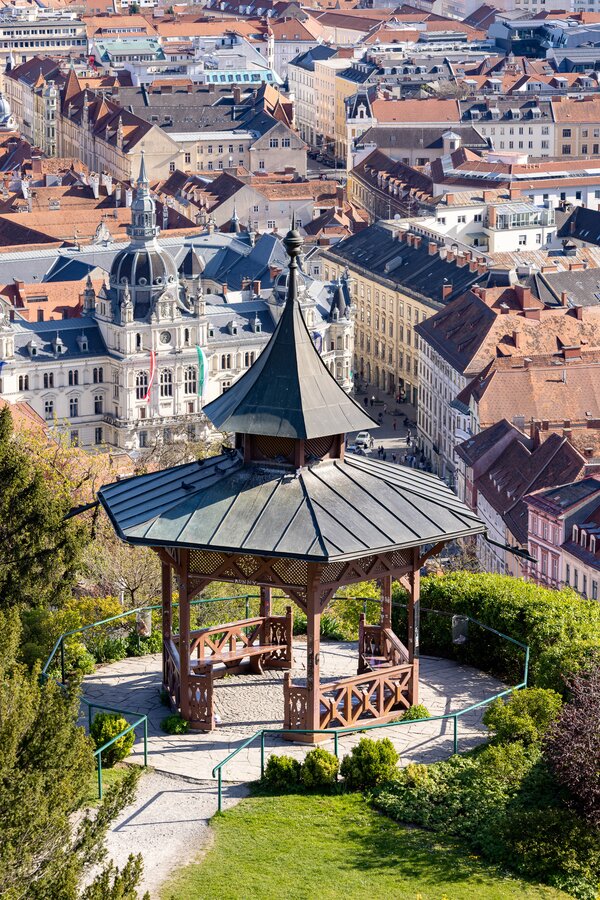
The Chinese Pavilion has been inviting visitors to take a break since 1890. It is a late example of chinoiserie, which adopted East Asian stylistic elements from the 17th century onwards. Before that, a vine arbour had stood here.
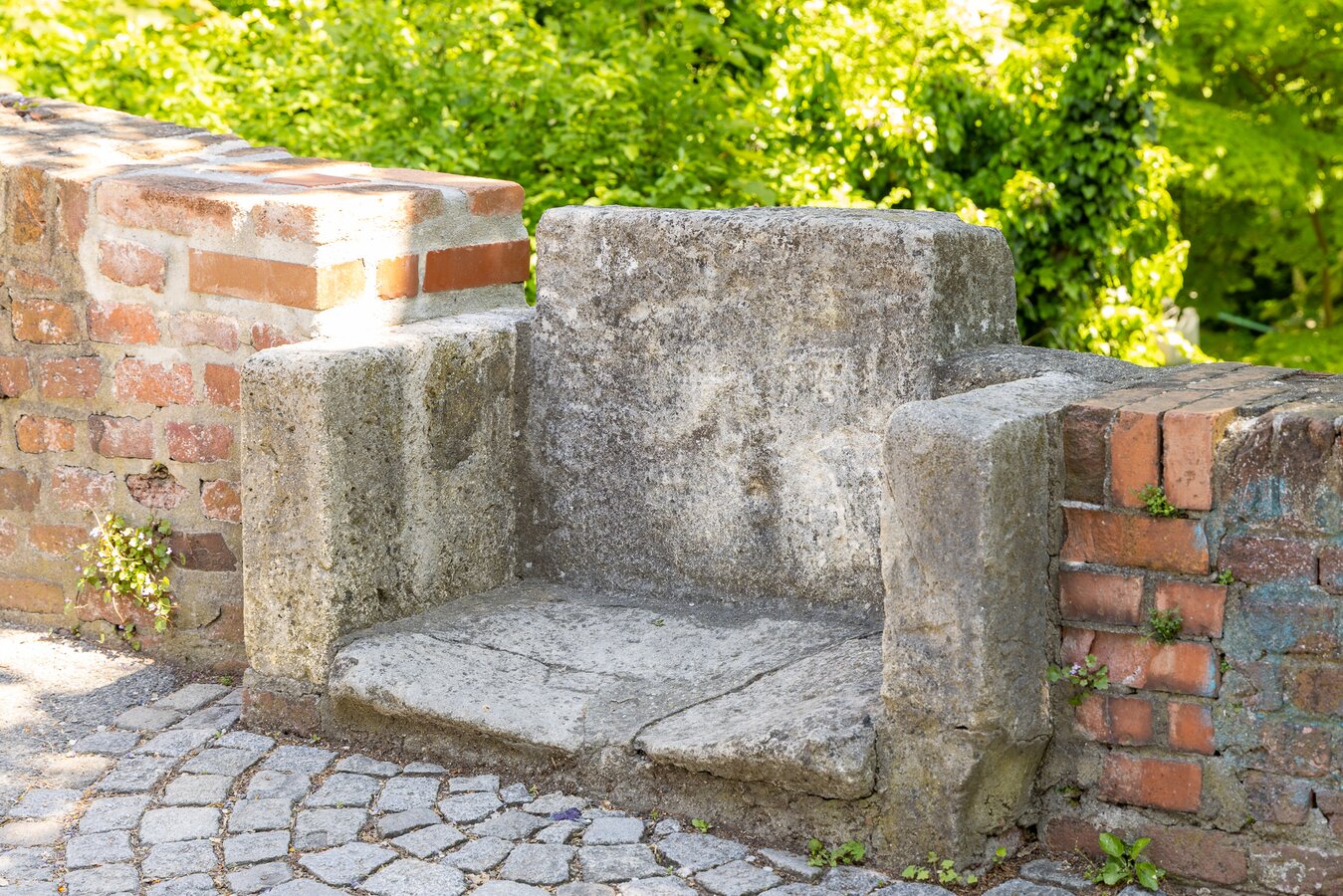
A legend is connected to the stone bench with weathered lettering and Gothic tracery on the back, which is known as the Bishop’s Seat. In 1796, a bishop named Nádasdy is said to have died on the bench after being released from 40 years of detention on the Schlossberg. The site was therefore named Bishop’s Seat. But there is no evidence of a bishop of this name, nor of his tragic death. The bench might have been made from the remains of a part of the Grazer Burg that was demolished in 1854.

Good to know
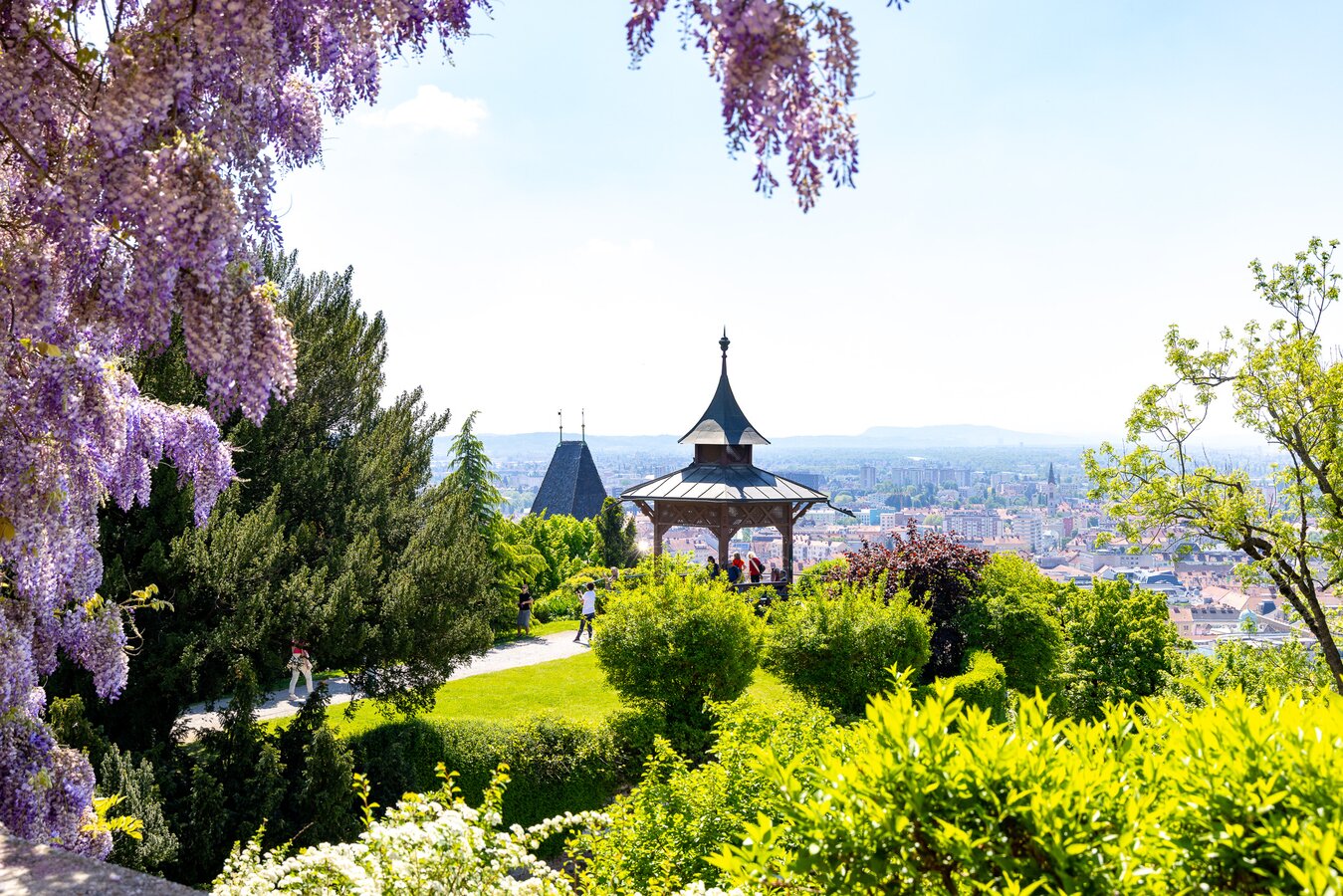
The Chinese Pavilion is one of the most romantic viewpoints on Graz’s Schlossberg. Built around 1890 in the Chinoiserie style, this elegant wooden pavilion offers magnificent panoramic views over the rooftops of Graz’s Old Town. It is a popular place to relax, take photographs and enjoy the unique atmosphere high above the UNESCO World Heritage city of Graz.
The Chinese Pavilion is situated on Graz’s Schlossberg, just a few minutes’ walk from the Clock Tower. Thanks to its peaceful location, it is a popular stop during a walk around the Schlossberg.
The Bishop’s Seat is a historic stone bench decorated with Gothic tracery and weathered inscriptions. According to local legend, a bishop died here in 1796 after decades of imprisonment. However, there is no historical evidence for this story. The stone bench is believed to have originated from a demolished part of Graz Castle.
Allow around 15 to 20 minutes to visit the Chinese Pavilion and the Bishop’s Seat. Both attractions can easily be combined with a walk around the Schlossberg and visits to the Clock Tower, the Kasematten and the Bell Tower.
The elegant wooden structure in an East Asian style, its historic surroundings and the spectacular views over Graz make the Chinese Pavilion one of the Schlossberg’s most beautiful photo locations. It is especially popular at sunrise and in the evening, when the lighting creates a magical atmosphere.
Yes. Both the Chinese Pavilion and the Bishop’s Seat are located in the freely accessible area of the Schlossberg and can be visited free of charge at any time.
Built around 1890, the pavilion is a fine example of Chinoiserie, a European artistic style that adopted East Asian design elements from the 17th century onwards. Its elegant wooden construction recalls traditional Chinese garden architecture and adds a distinctive architectural feature to the Schlossberg.
Picture gallery