Kunsthaus Graz
Universalmuseum Joanneum
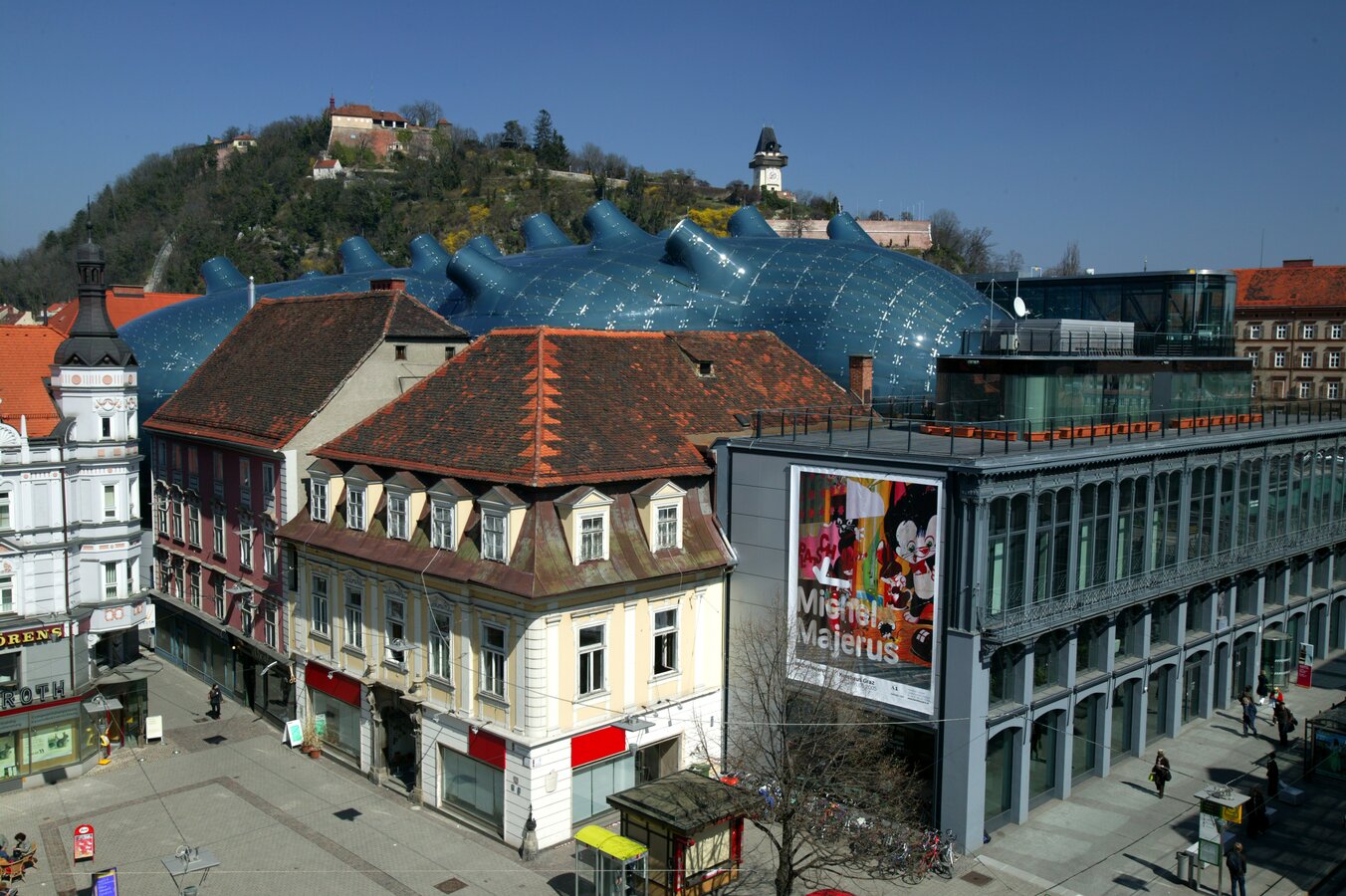
Wonder, enthusiasm, incredulity. The spectacular architecture of Graz Kunsthaus leaves nobody cold. Whilst it’s not common for existing, traditional urban buildings to sit so perfectly next to breathtaking new architecture, with the setting of this museum of contemporary art in Graz it’s definitely the case. The Kunsthaus floats like a mysterious blue balloon between the roofs of the historic city centre. Named friendly alien by its creators, its fascinating magic draws visitors in.
Opening hours:
Tuesday - Sunday & public holidays: 10 am - 6 pm
Open during normal opening times on the following special days or public holidays:
04/06/2026, 05/25/2026, 10/26/2026
Closed on the following special days or public holidays:
01/01/2026 (10 am - 1 pm), 02/17/2026, 12/24/2026, 12/25/2026
- Entrance fees & opening hours in detail
- Free entry with Graz Card and Graz Card Light

Good to know
The Kunsthaus Graz is open from Tuesday to Sunday and on public holidays from 10 am to 6 p.m.
You can find details about admission prices and current exhibitions on the museum’s website.
By public transport:
- Tram lines 1, 4, 6, 7 (stop: Südtiroler Platz – Kunsthaus)
- Tram lines 3, 5 (stop: Hauptplatz – Graz Congress, then walk towards Murgasse and Südtiroler Platz)
By car: A parking garage is available directly underneath the building (entrance at Lendkai). In addition, there are many other parking garages in the city center with varying rates.
You should allow around 1.5 hours for a visit to the Kunsthaus Graz. This gives you enough time to explore the current exhibitions and take in the extraordinary architecture of the “Friendly Alien”. If you only want to see and photograph the Kunsthaus from the outside, allow around 15 to 20 minutes.
Tip: Combine your visit with a break at the Kunsthauscafé. If you would like to enjoy a coffee, breakfast or a meal there, make sure to allow some extra time.
The Kunsthaus Graz is known by several nicknames, including “baby hippo,” “sea snail,” “porcupine,” “whale,” and especially the “friendly alien.” The latter name was given by the architect Colin Fournier, who designed the building together with Peter Cook for the European Capital of Culture year 2003.
The Kunsthaus attracts thousands of visitors from around the world every year and has become an integral part of the city’s urban identity. It showcases international contemporary art and is part of the Universalmuseum Joanneum, which includes 20 museums in Graz and Styria.
Colin Fournier, one of the building’s two architects, described the Kunsthaus Graz as a biomorphic, indefinable “something” - a hybrid that is both strange and familiar, with the “charm of a friendly stray bastard with a highly questionable pedigree.”
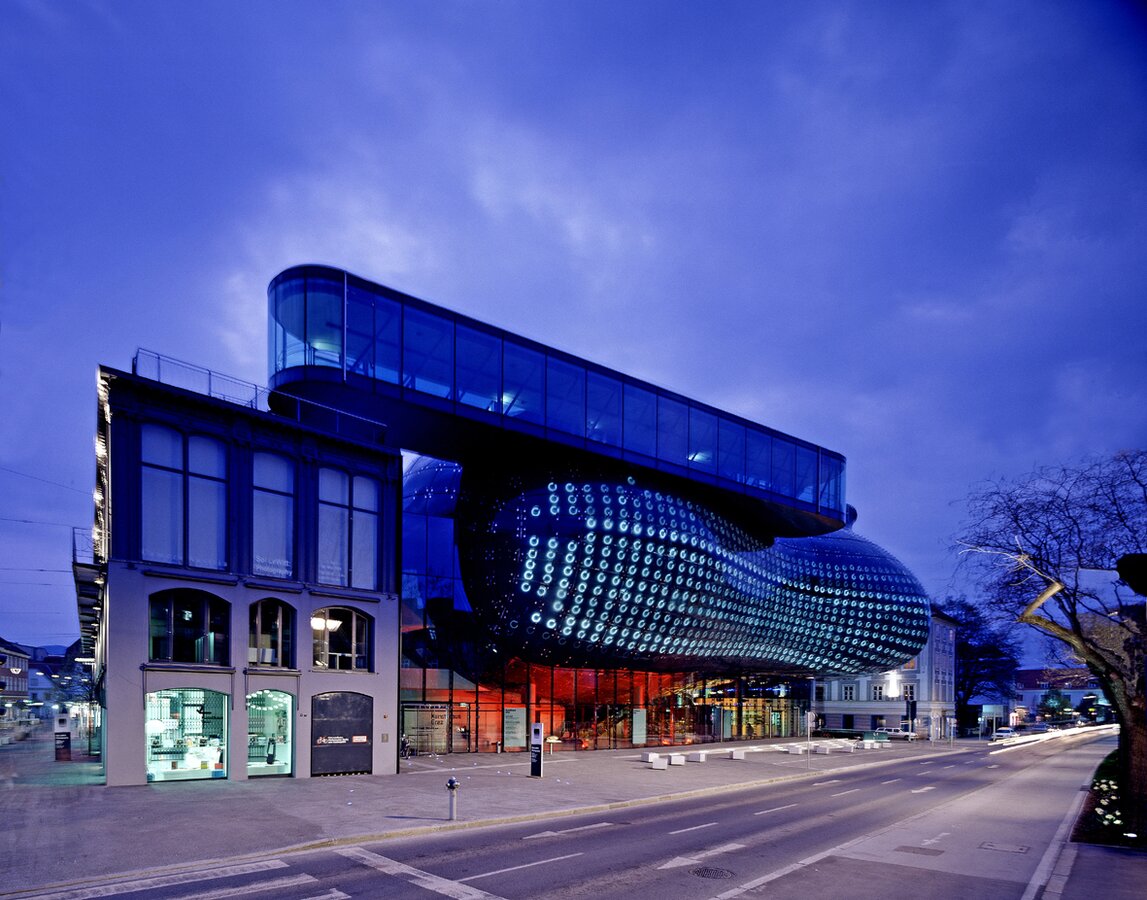
The building fascinates with its unusual shape and striking color. In the evening, it communicates with the urban space via the BIX media façade by realities:united. Since the European Capital of Culture year 2003, this light and media façade has served artists as a platform for communication and interaction. Through its constantly changing displays, the façade emphasizes the building’s organic form.
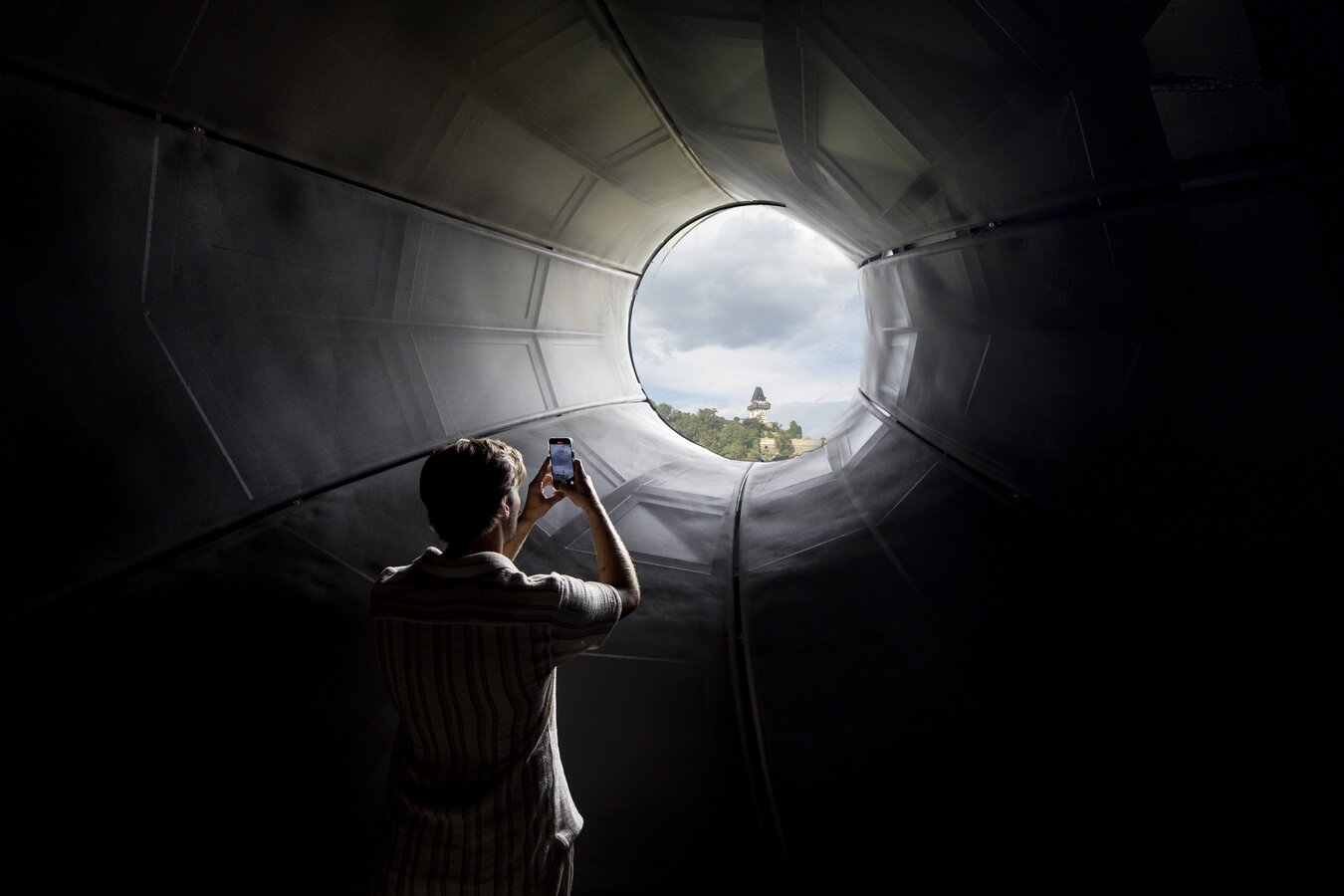
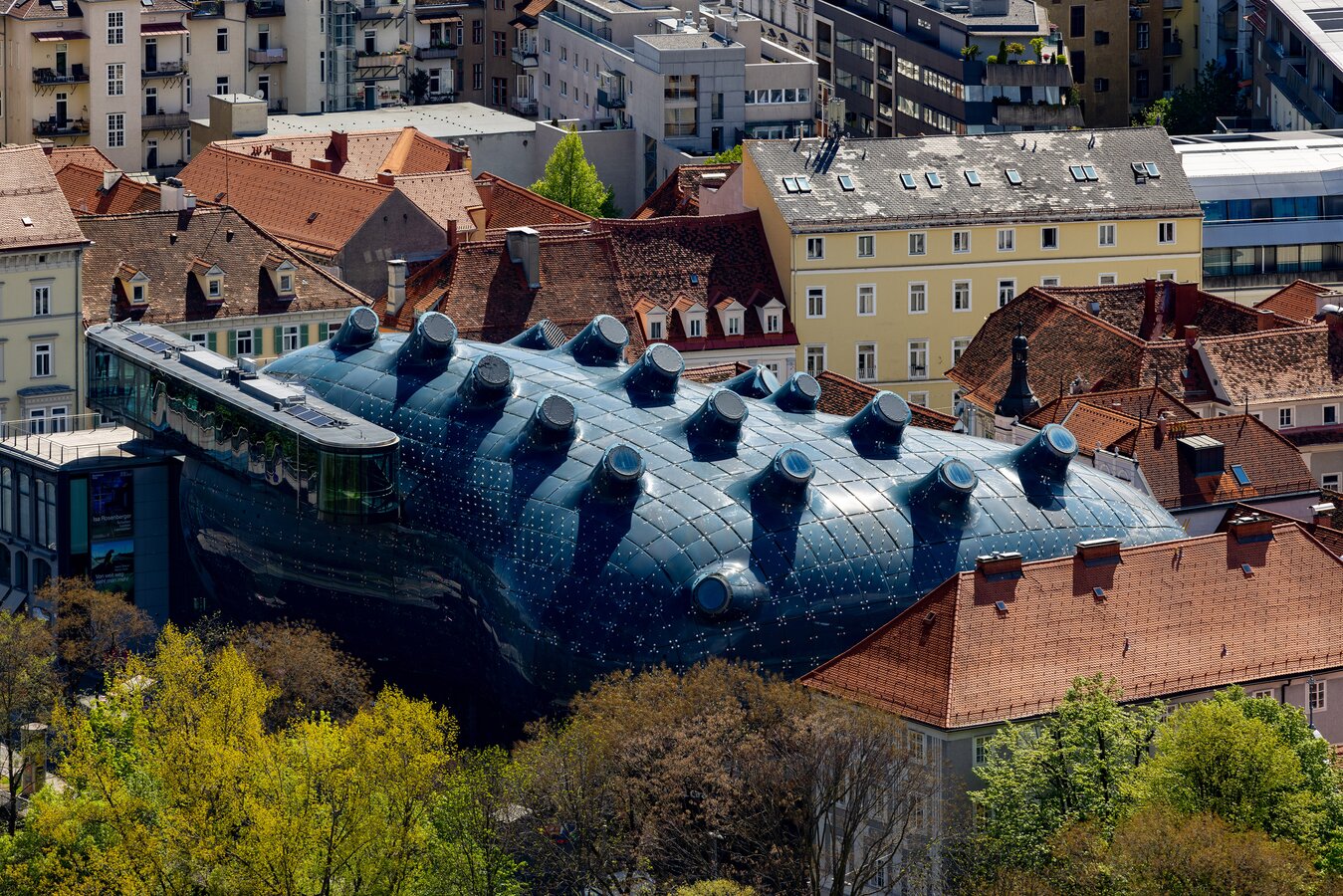
From the structure of the “bubble,” the blue body of the Kunsthaus Graz, emerge 16 so-called “nozzles” or light inlets. Fifteen nozzles are oriented դեպի the north, while one faces east toward the Clock Tower. It thus creates a dialogue between the old and the new landmark of the city of Graz.
The “Needle” is a 40-meter-long glass gallery that connects the “Iron House,” the historic, protected part of the Kunsthaus Graz, with the new “Bubble.” The “Needle” serves as a viewing platform and offers visitors a great view of Graz’s old town.
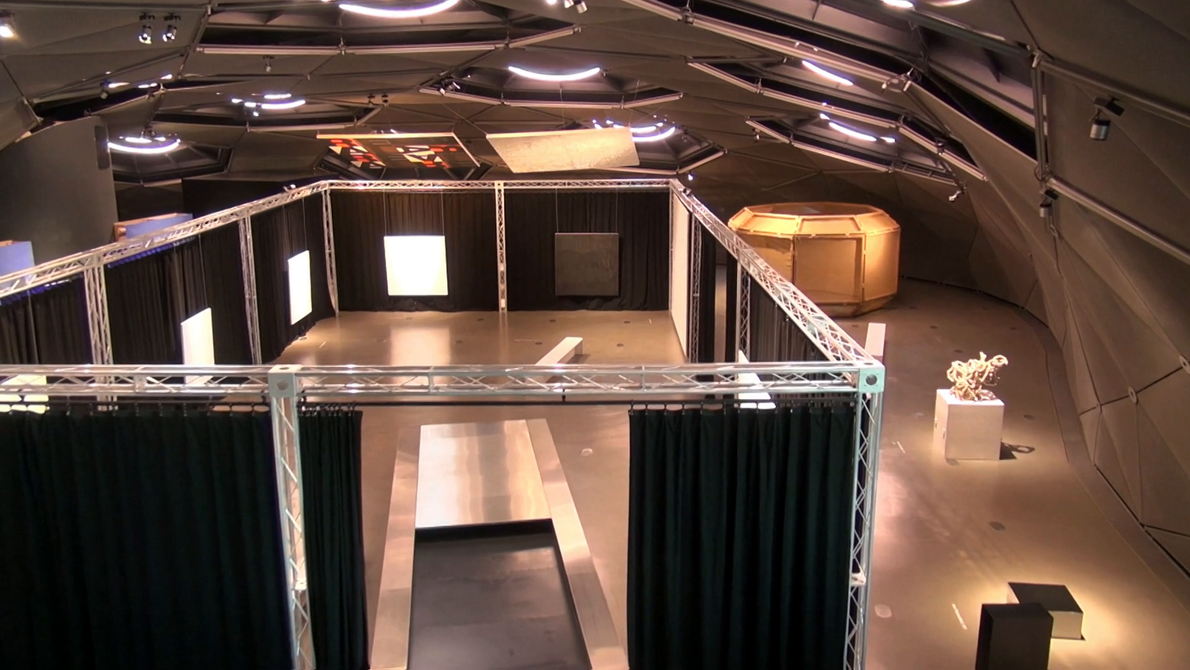
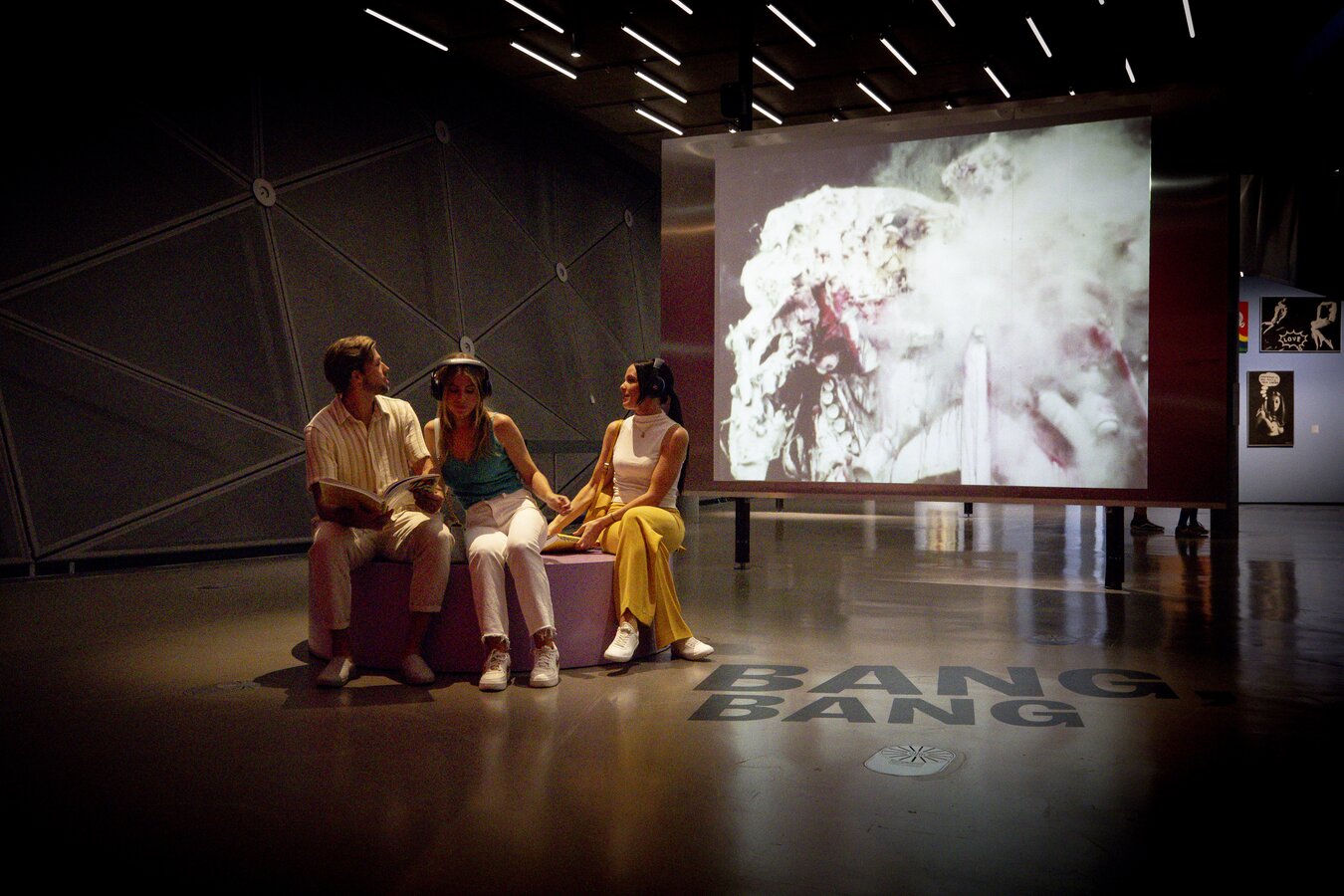
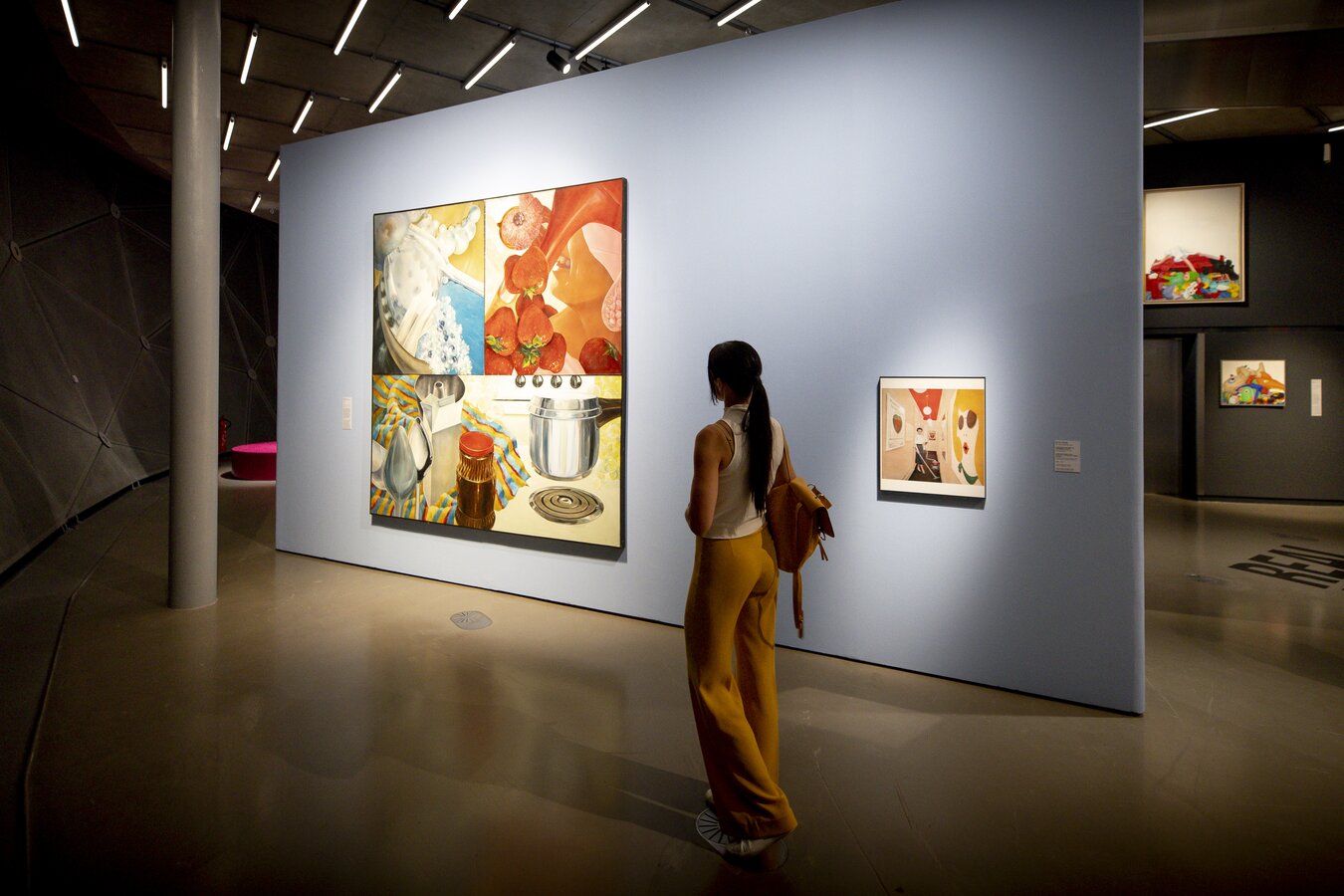
At Kunsthaus Graz, visitors can explore exhibitions addressing current social issues and presenting contemporary art from a variety of perspectives. In addition, new artworks and innovative educational and mediation projects are developed here, encouraging visitors to engage actively with art. The programme also includes impulses relating to design, architecture, and exhibition-making. Through collaboration with numerous partner institutions in Austria and abroad, Kunsthaus Graz offers a diverse and internationally connected exhibition programme.
Yes. The exterior of the building alone is worth seeing. Highlights include its futuristic architecture, the illuminated BIX media façade in the evening, and the 40-metre-long glass viewing platform known as the “Needle”. Even without entering the museum, the Kunsthaus is one of Graz’s most fascinating attractions.
Architects: Peter Cook, Colin Fournier (2003), J. B. Withalm (1848)
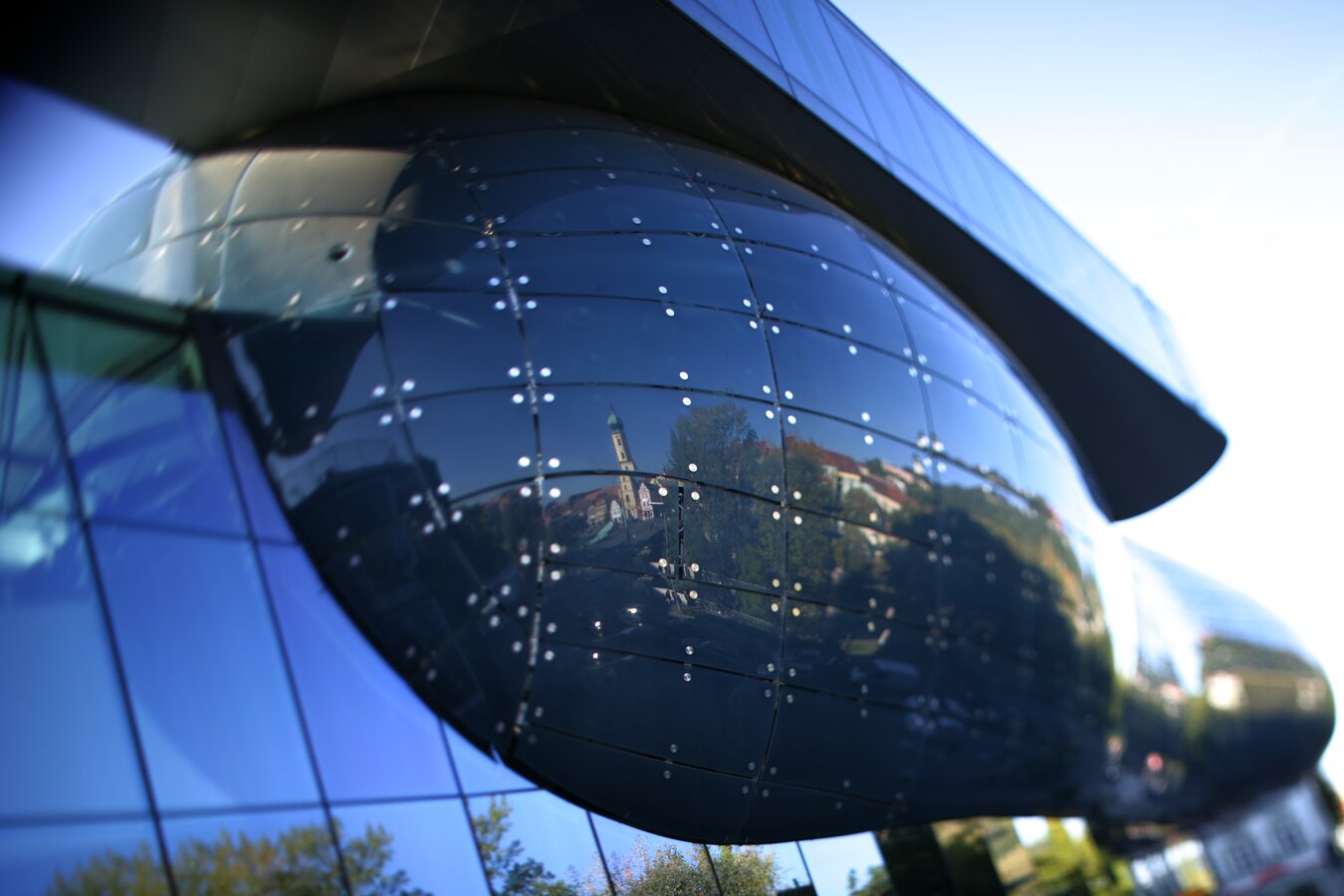
Whatever you choose to call this deep-blue, otherworldly structure, it rapidly became the city’s most famous building, a second landmark. The “Bubble” rests on a glass plinth, appearing to float weightlessly. Its outermost “skin” consists of more than a thousand uniquely curved acrylic panels, which are illuminated from behind. And “nozzles” that are designed to bring soft light from the northern side to the upper level. Highly functional at its core: two exhibition levels, accessed via sloping walkways, are situated one above the other. The gallery of the upper, domed space leads to the “Needle”, a city loggia made of glass. It provides the visual link between the “Bubble” and the listed building next door, the Eiserne Haus. Its cast-iron construction and flat roof were a source of great amazement as far back as 1848.
The Kunsthaus Graz is one of Graz’s architectural landmarks. With its extraordinary shape and distinctive blue exterior, it creates a striking contrast to the historic Old Town. Since its opening in 2003, when Graz was the European Capital of Culture, the museum has become a symbol of the city’s creative spirit and a highlight of the UNESCO City of Design Graz.
Details
Sometimes dreams come true. As is the case with the dream about a Kunsthaus in Graz. The site was a good choice. The right bank of the river Mur, so far a more or less neglected part of the city. The neighbourhood:
the Eisernes Haus (Iron House), a nearly forgotten, as hardly visible, formerly bold cast-iron construction built by Graz architect Josef Benedict Withalm in 1848.
The British architects Peter Cook and Colin Fournier won the Europe-wide competition to revitalize the Eisernes Haus and to extend it to a Kunsthaus (Art House). The biomorphic construction in shape and material consciously contrasts with the surrounding gabled houses and their red-tiled roofs, nevertheless, in great respect, snuggles up to older buildings.
1,066 acrylic glass elements form the skin of the friendly alien. At night it sends light signals or written messages from its "BIX façade" to the other side of the river. It sucks daylight from the north through its "nozzles" on top. The "needle" is a glazed viewing platform, stretching over Eisernes Haus and Kunsthaus on the eastern façade. Inside the Eisernes Haus there is the museum shop, the Kunsthaus administration and Camera Austria - an institution which in exhibitions and the eponymous magazine has devoted itself to photography.
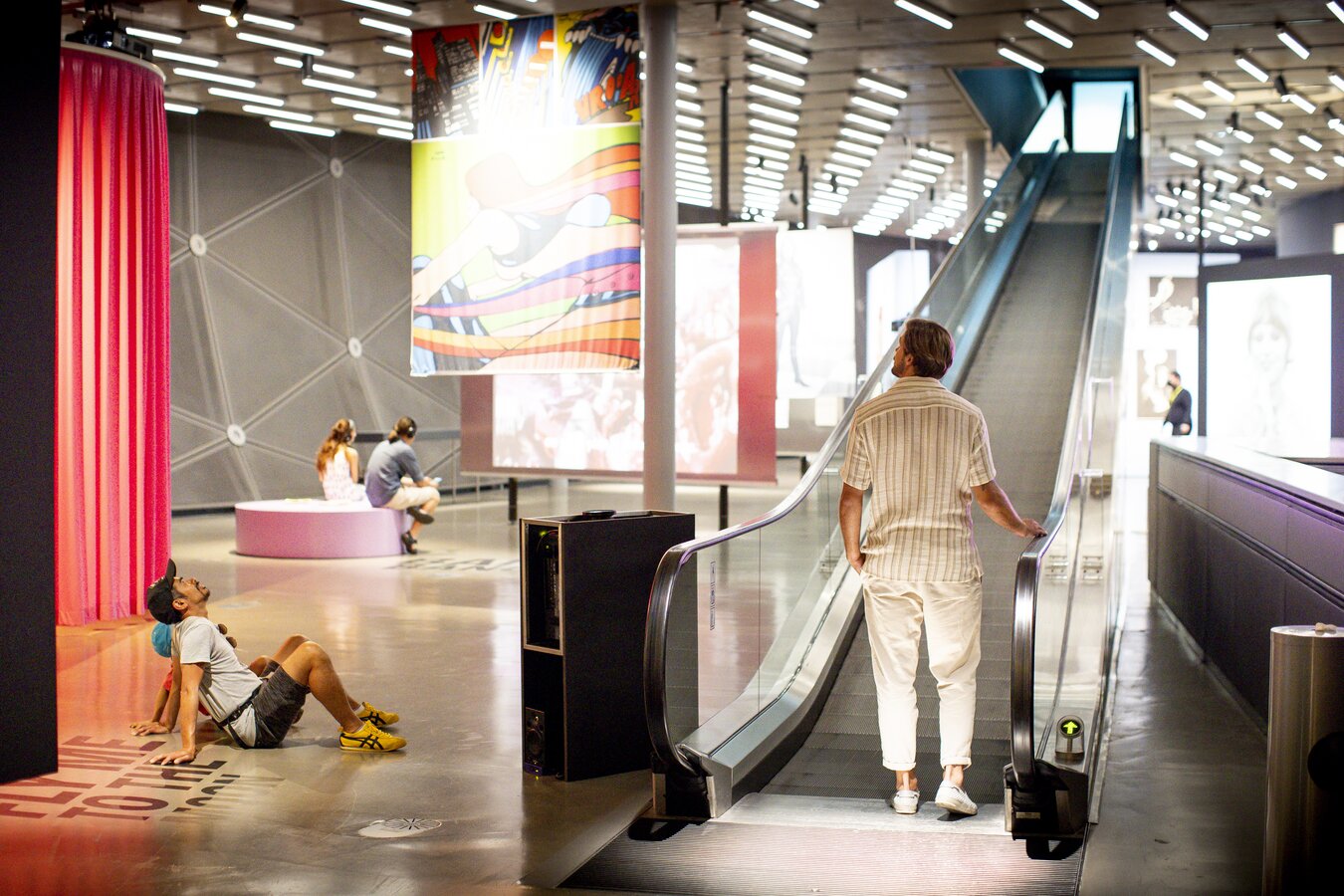
The transparent base of the Kunsthaus houses a restaurant and a media lounge. The travelator, a slanted moving belt, draws the visitors into the interior of the alien. Which on its two floors offers quite favourable conditions for different kinds of exhibitions. Even though the Kunsthaus allows itself the luxury of showing exclusively art of the past four decades.
By the way: Not all of the nozzles are directed towards the north. One of them peers to the east. It brings the Clock Tower, the traditional landmark of Graz into the Kunsthaus - as an exhibit, so to speak.
Picture gallery
After dark, the Graz Art Museum reveals a completely different side of itself. Its unique BIX media façade becomes a stage for artistic light and media installations. The futuristic architecture of the “Friendly Alien” stands out dramatically against the historic backdrop of Graz’s UNESCO World Heritage Old Town, making it one of the city’s most popular photo spots. Whether during an evening walk along the River Mur or through the city centre, visitors can enjoy impressive views of one of the most iconic landmarks of the UNESCO City of Design Graz.
Video