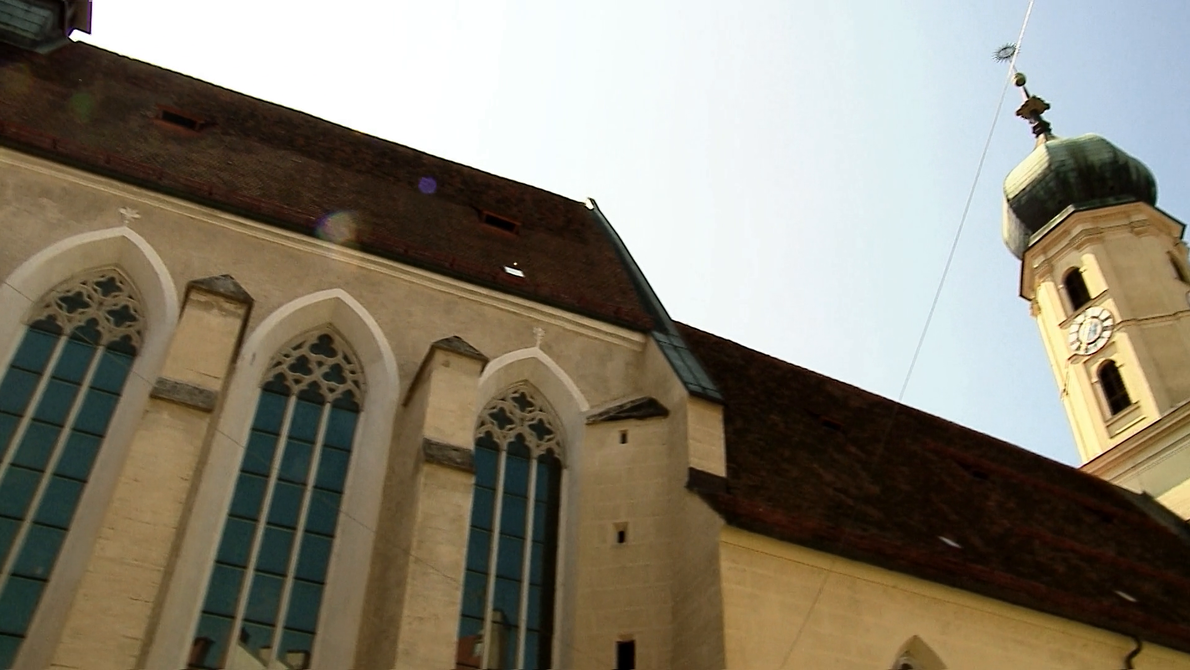
Franciscan Monastery
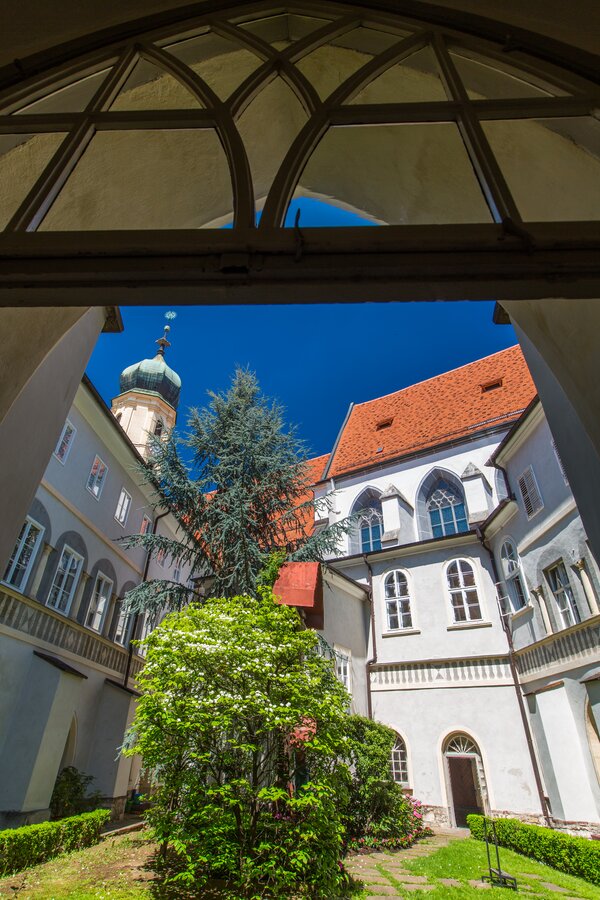
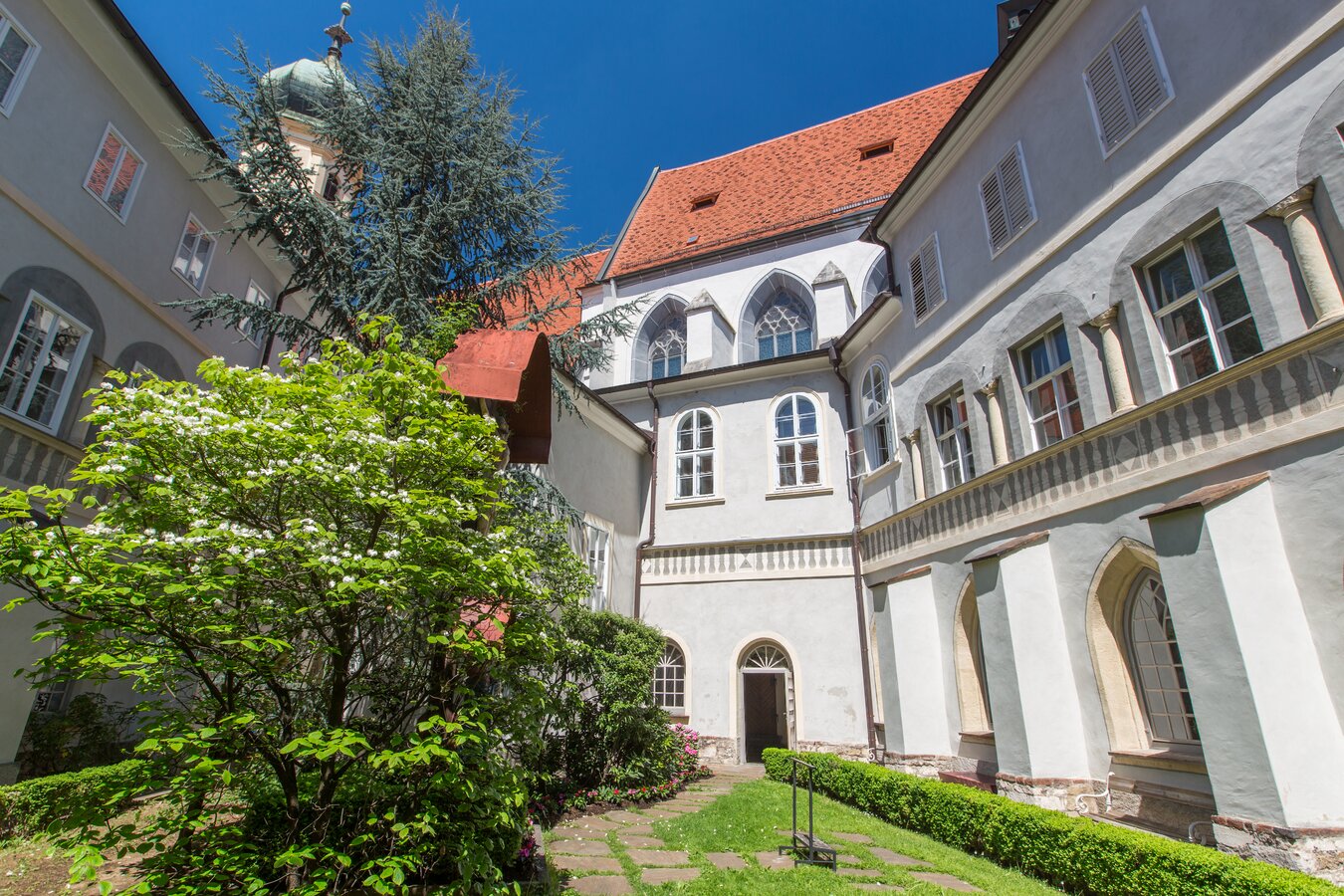
The Franciscan Monastery with its church is the oldest monastery in Graz. A visit to the cloister with its rose-covered courtyard is well worthwhile.
Cobblestones, beautiful buildings, as pretty as a picture. The Franciscan church is in one of the most beautiful and popular locations in Graz. Small, historic shops nestle against the exterior walls of this Gothic church and contribute to the square’s romantic image. Attached to the church is the Franziskanerkloster monastery, where a visit to the cloister, with its rose-covered courtyard, is well worthwhile. A place steeped in tranquillity and peace.
- Franciscan Monastery
- admission free

Good to know
For a visit to the Franciscan Church and Monastery in Graz, you should allow around 30 minutes. This gives you enough time to explore the church with its historic and modern design elements and take a look at the atmospheric cloister. If you only want to see the complex from the outside and stop for a few photos, allow around 15 minutes.
The Franciscan Church is one of the most famous churches in Graz and is located on the picturesque Franziskanerplatz in the historic city centre. Highlights include its Gothic architecture, the impressive cloister and its peaceful atmosphere in the heart of the city. The church and monastery are among the oldest religious institutions in Graz.
Yes, visitors can explore the Franciscan Monastery and its historic cloister. The Gothic cloister, which includes St. James’ Chapel, is considered one of the most beautiful and tranquil places in Graz. Admission is free, making it an ideal place to discover the city’s religious and cultural heritage.
The Franciscan Church is situated on Franziskanerplatz in the heart of Graz’s Old Town, just a few minutes’ walk from the Main Square. The surrounding area is filled with historic streets, small shops and cosy cafés, making it a perfect stop during a sightseeing tour of Graz.
The name “Kälbernes Viertel” dates back to the 16th century. At that time, local butchers drove cattle past the monastery walls on their way to the slaughterhouse. Today, the district is known for its lively atmosphere, charming restaurants and fascinating history.
Yes, entry to the Franciscan Church and many areas of the monastery is free. The church is a place of peace and reflection and welcomes both worshippers and visitors interested in history, architecture and culture. The cloister, courtyard and church interior are particularly worth seeing.
Details
Apart from the Clock Tower, the tower of the Franciscan church is probably the most prominent among the traditional Graz landmarks. It belongs to the oldest monastery in town, founded in 1239 as a monastery of the Minorites. In the south-west, next to the town walls, in a strategically important position. So the stately tower, uncommon for beggar's orders, was built in the 17th century as a fortified tower on the orders of the city authorities. Adjacent to the Gothic parish church Mariae Himmelfahrt there is the monastery of the Franciscans. Atmospheric cloisters are open to everybody seeking silence in the heart of the city.
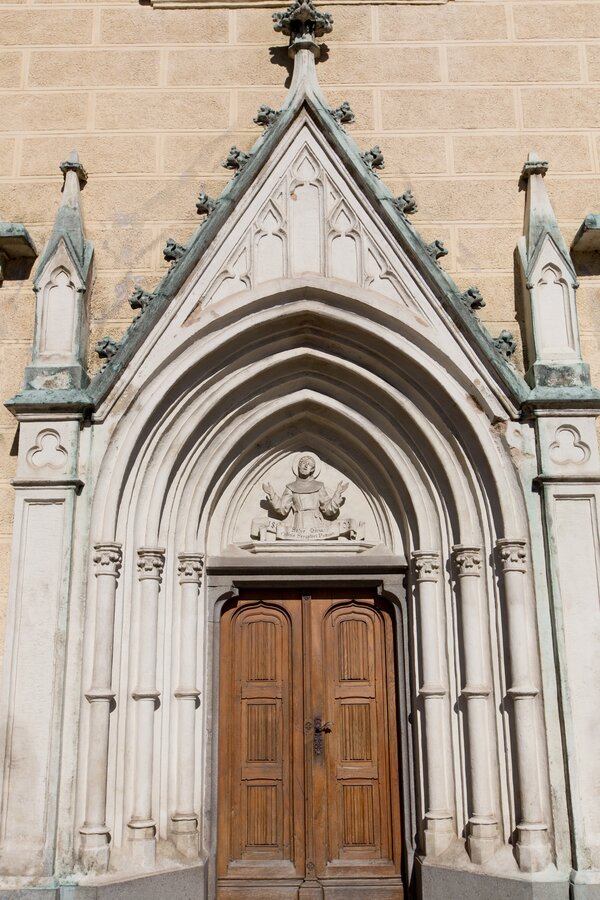
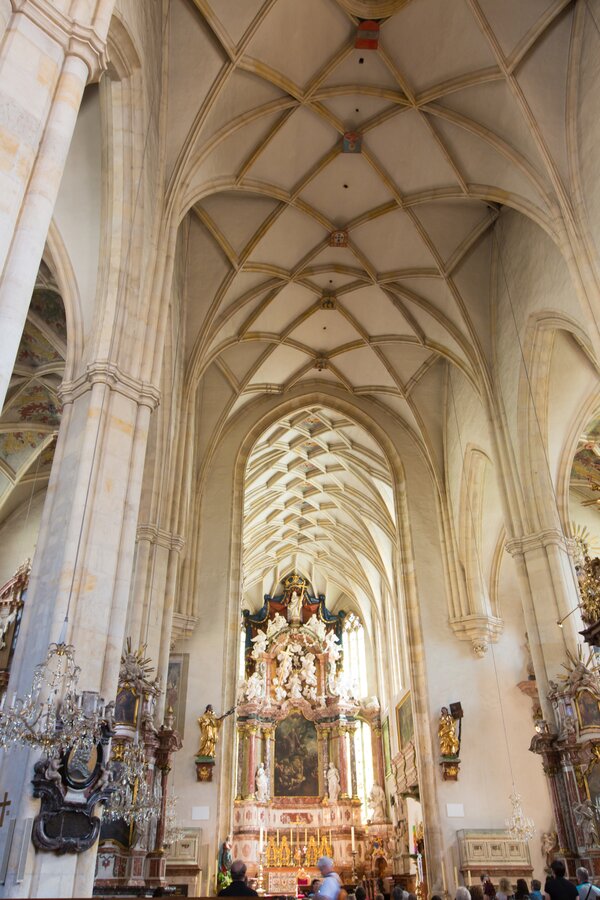
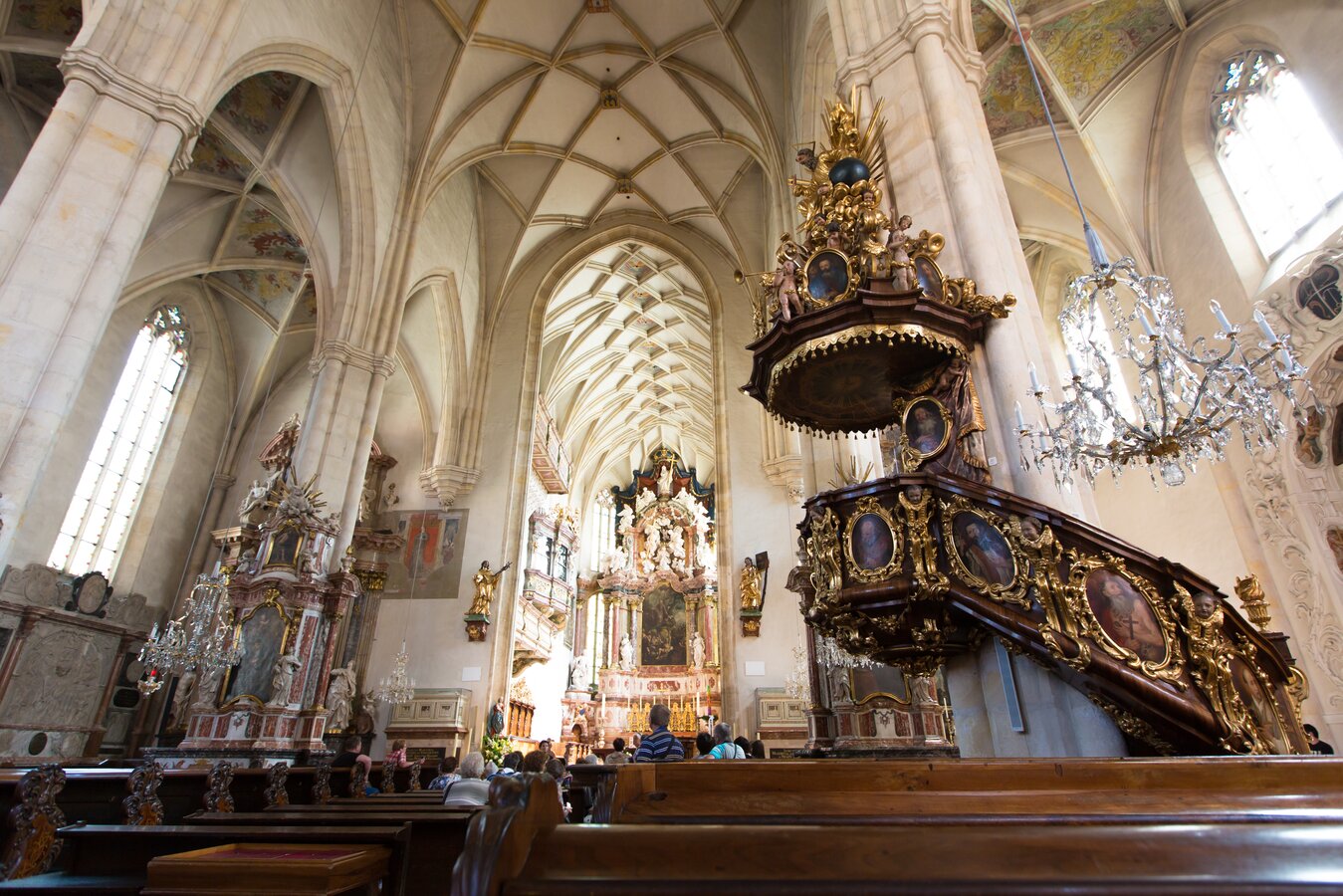
On entering the Franciscan church Mariae Himmelfahrt, visitors are often touched by the harmonious interplay of Gothic architecture and 20th-century works of art. The high, narrow 14th-century chancel stands up from the comparatively low and wide nave. The chancel was gutted by a bomb in World War II. When it was rebuilt, a new contemporary interior was made by Styrian artists. The church is bathed in spheric light by the stained glass-windows. A simple, seemingly hovering crucifix in grey cast iron dominates the chancel. Since December 2004, the latest work of contemporary art in the Franciscan church strikes a chord with church visitors - the bold organ built by the Potsdam company Schuke.
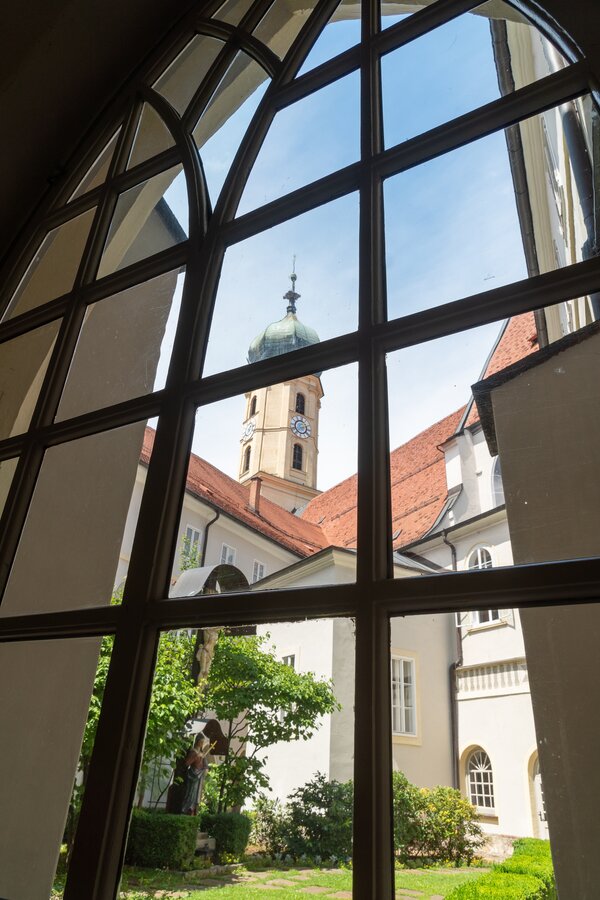
The originally Gothic cloisters enclose an idyllic monastery garden. Benches invite to have a rest. Epitaphs on the walls of the cloister inform about the names, professions and life data of the distinguished burghers and noblemen who were buried in this place between the 15th and the 18th centuries. The small and quiet Jacobean chapel in the cloister combines Gothic, Baroque and neo-Gothic elements.
On the first floor, with its windows showing into the chancel of the church, there is the oratory, where the monks meet for their canonical hours. But everybody is invited to join them for vesper. In an atmospheric room within a room, designed in 2003 by architect Lingenhöhle as a light wooden structure with small coloured glass elements.
By the way: The quarter between Franciscan monastery and Mur river is also called "calf district". There, in the 16th century, the butchers of Graz built their shambles over the river. Cattle was driven to slaughter along the monastery building. Numerous small traders settled immediately at the walls of the monastery. So one can easily imagine that the monks complained to the city authorities about "all that noise and stench"...
Picture gallery
Video