Burg & Double Spiral Staircase
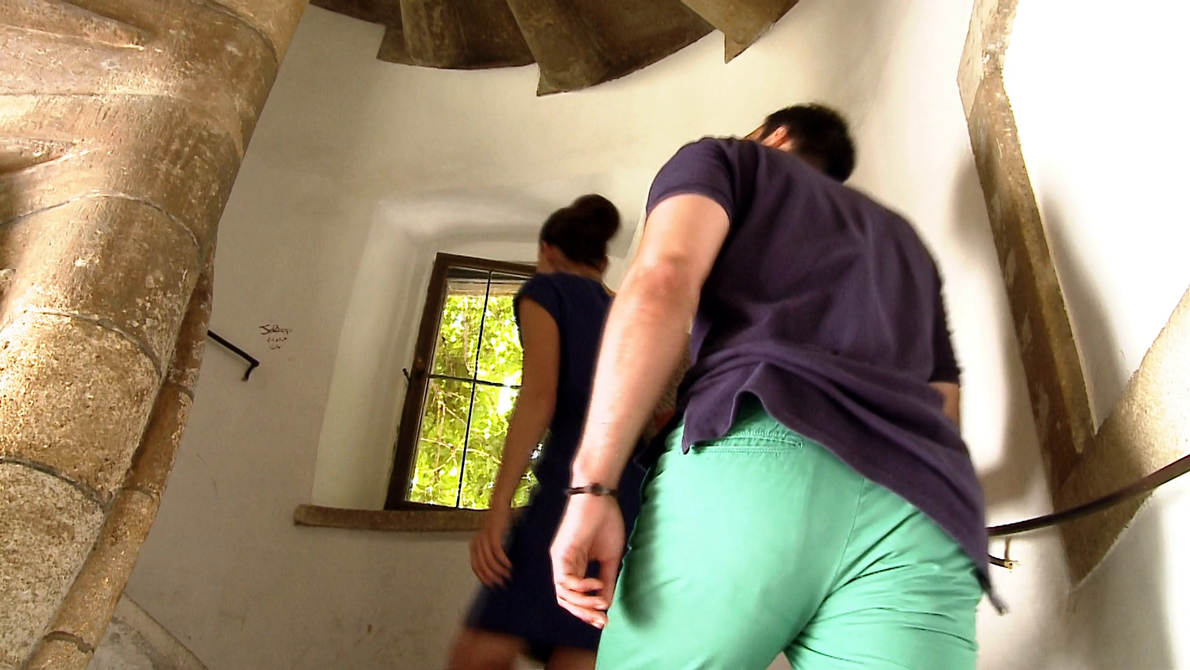
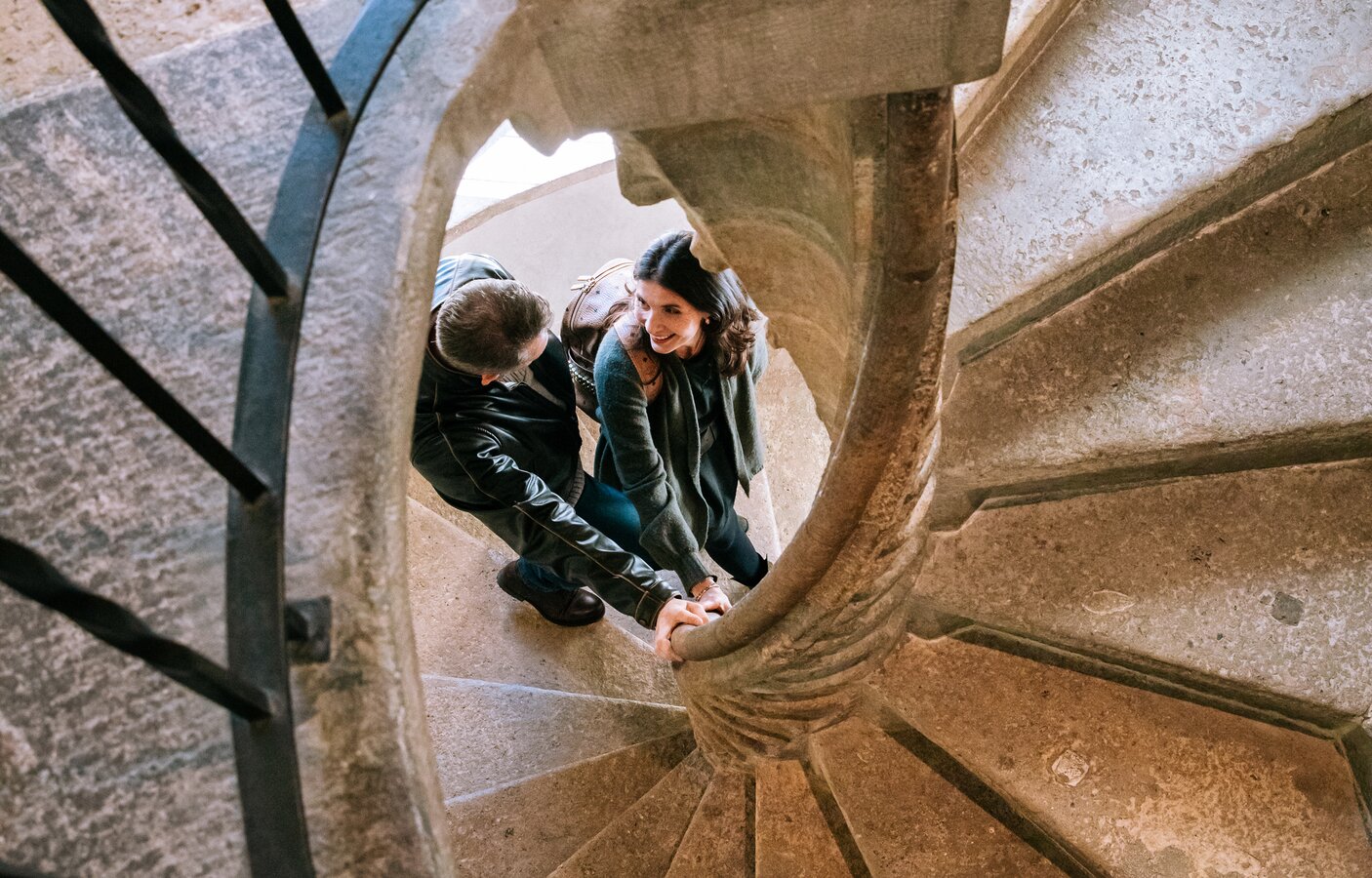
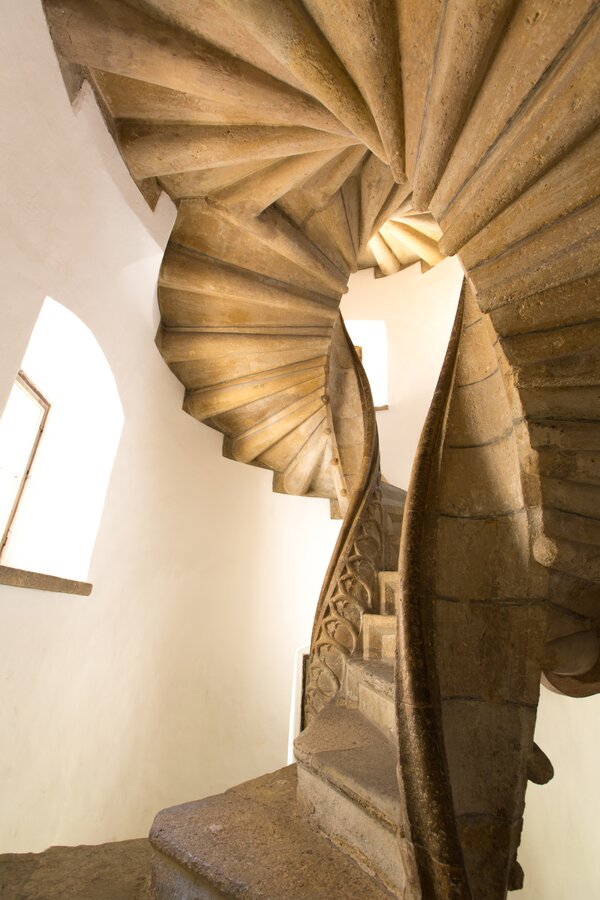
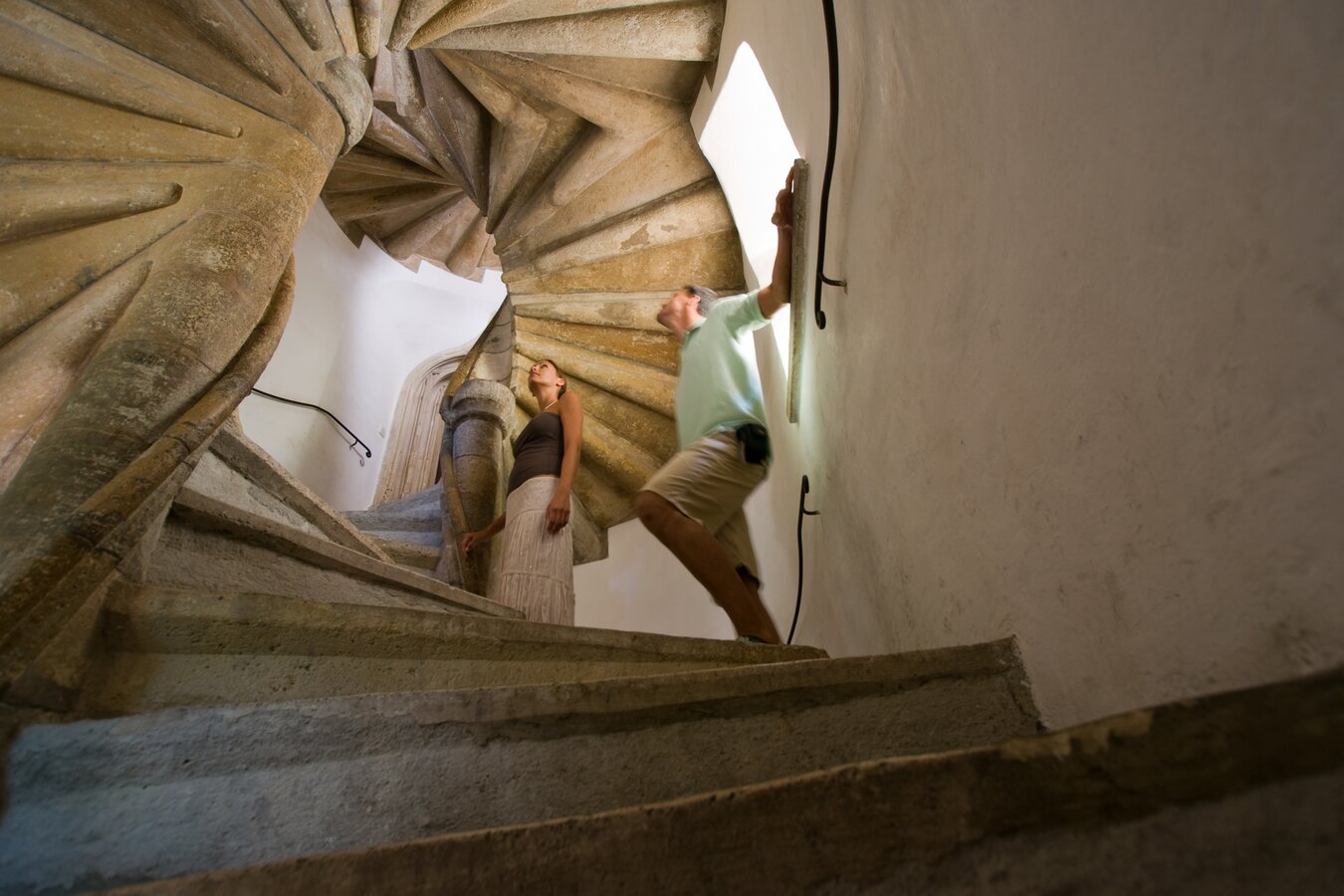
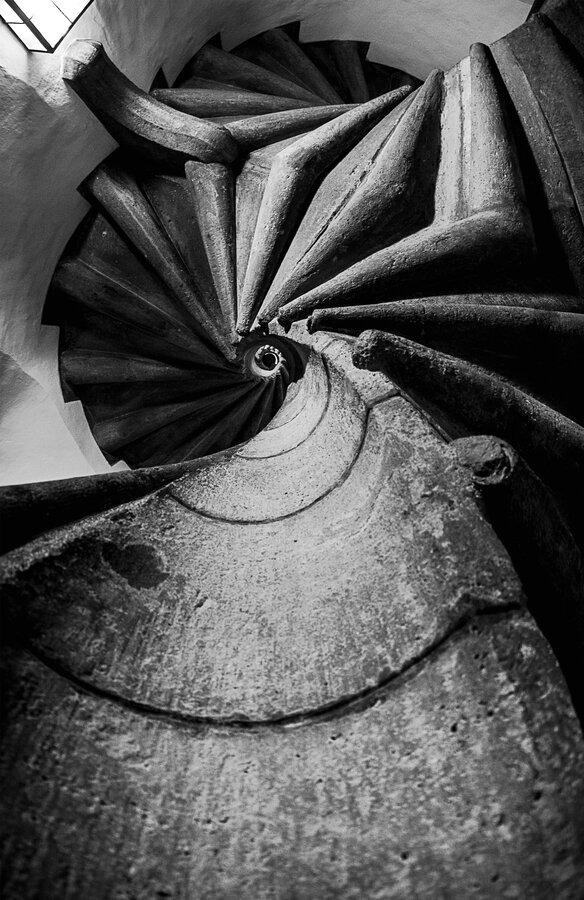
Separation and reconciliation. Even official architecture can harbour surprises. The Burg in Graz, official headquarter of the regional government, is a real gem. Centuries of reconstruction have yielded interesting elements of the Gothic, Renaissance and Biedermeier eras. Particularly striking is the double spiral staircase, seeming almost like an optical illusion. This “staircase of reconciliation” consists of two opposing spiral stairs, which merge briefly on each floor, part and then rejoin.
Opening hours:
daily, 7.30 am - 8 pm
- free admission

Good to know
The entrance to the Graz Double Spiral Staircase is located at Hofgasse 15, in the courtyard of the Grazer Burg.
Together with Graz Cathedral, the Mausoleum, the Old University, and the Seminary, it forms the historic “Crown of Graz” (Stadtkrone), one of the most important architectural ensembles in the UNESCO World Heritage city of Graz.
The Graz Double Spiral Staircase is a masterpiece of stonemasonry from the late Gothic period. It fascinates with its unique design: two interwoven staircases that repeatedly separate and merge over three floors, creating intriguing twists, unexpected encounters, and a remarkable spatial experience.
Today, the Grazer Burg is the seat of the Styrian provincial government.
Yes, the Double Spiral Staircase can be visited free of charge. It is one of the most popular free attractions in Graz and a highlight for architecture enthusiasts, photographers, and anyone exploring the city's UNESCO World Heritage sites.
Frederick III, Holy Roman Emperor had the inscription A.E.I.O.U. placed on his possessions and on buildings he commissioned, including parts of the Grazer Burg.
For centuries, the meaning of this abbreviation - found on many buildings and objects in Austria - remained a mystery. In March 2023, a German historian proposed a solution: A.E.I.O.U. stands for the Latin phrase “Amor Electis Iniustis Ordinor Ultor.” This can be translated as “Beloved by the chosen, feared by the unjust.” The phrase appears in contemporary writings about Frederick III and is part of a longer Latin sentence: “En, amor electis, iniustis ordinor ultor; Sic Fridericus ego mea iura rego.”
The Mausoleum of Emperor Ferdinand II is an imperial burial site located right next to the Graz Cathedral. Its turquoise domes stand out against the bright blue sky and, together with the cathedral and St. Catherine’s Church, create an impressive cityscape.
The ensemble has an almost Florentine flair, transporting visitors to the feeling of southern Europe. Emperor Ferdinand II, Holy Roman Emperor had this remarkable tomb designed in Graz by his court painter Giovanni Pietro de Pomis.
The “Graz City Crown” refers to a unique ensemble consisting of Grazer Burg, Graz Cathedral, Mausoleum of Emperor Ferdinand II, the Old University, and the seminary.
This ensemble is located at the foot of the Schlossberg and forms an absolutely unique architectural complex that cannot be found in this combination in any other provincial capital.
Details
AEIOU - these are the letters Emperor Frederick III had written on all the things he possessed and on all the buildings he had erected. So, the Burg in Graz is also inscribed "AEIOU" on several façades. In 1438 Frederick, then duke of Styria, decided to erect a new residence in Graz. At the same time he built the court church of St. Ägydius, today's cathedral, and even connected it to his - no longer existing - accommodation wing in the Burg. Over decades it was unclear what the letters A.E.I.O.U., which can be found on many historical buildings throughout Austria, stand for. It was only in March 2023 when this A.E.I.O.U. mystery was solved by a German historian: A.E.I.O.U. stands for „Amor Electis Iniustis Ordinor Ultor“. These words are embedded in contemporary writings about Friedrich III and in a longer sentence in Latin: „En, amor electis, iniustis ordinor ultor; Sic Fridericus ego mea iura rego“, basically meaning „Loved by the Chosen, Feared by the Unjust“.
Frederick's son, Emperor Maximilian I, continued construction work in the Burg. And he left to posterity one of the major Gothic staircases in Europe. A double-spiral staircase - two flights of staircases, running in opposite directions, join for some steps on each floor, separate again, join again... The architectural masterpiece of 1499 has often been interpreted as a symbol of eternity. Graz people call it the "stairs of reconciliation". If you go separate ways, you will reunite.
From 1564 onwards, Archduke Charles II resided in the Burg. And ruled over Inner Austria, an association of territories reaching as far as Istria, Trieste and Gorizia. By holding court in Graz, by patronising artists and by their building initiatives, Charles and his wife, Maria of Bavaria, helped Graz
to achieve its heyday. The Burg was extended. Apart from Karlstrakt (Charles Wing), also the Registraturtrakt (Records Wing) with its galleries and sgraffito scratchwork decorations was built. On the greens in front of this building, since 1959 several busts have commemorated important Styrians.
Among them: the Baroque composer Johann Josef Fux, the architect Johann Bernhard Fischer von Erlach, the inventors Viktor Kaplan (Kaplan water turbine) and August Musger (slow-motion camera), writers and scholars. The so-called "gallery of honour" could still be extended by many persons.
By the way: All the residences of the Habsburgs were called "Hofburg". As in Graz an older Burg (castle) was already existing, it was renamed "Schloss" (palace). That's how Schlossberg got its name.
Picture gallery
Video